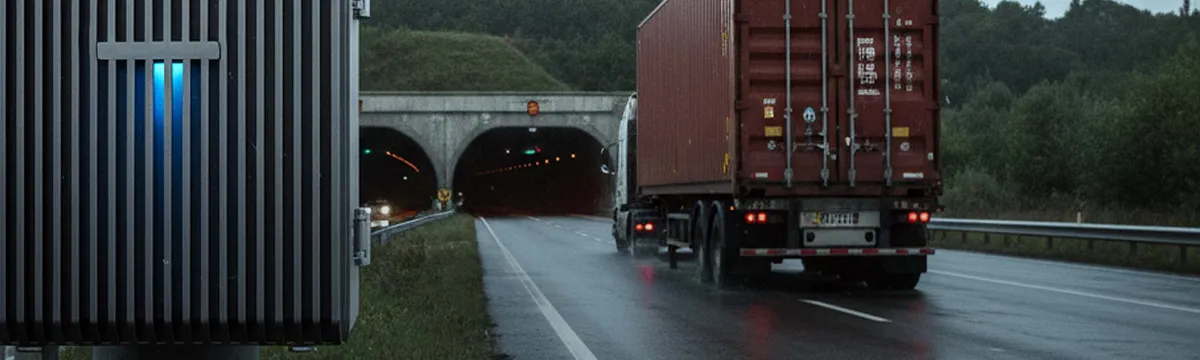
A truck/ semitrailer driver misjudging the bridge/ tunnel height clearance and getting stuck is a story heard way too often in the news! To ease this issue, a sensor detection and warning system has been developed and employed to warn vehicles exceeding height limits from entering. The system uses advanced sensors placed before tunnel entrances to detect the height of approaching vehicles. These sensors, typically infrared or laser-based, measure the vehicle’s height as it approaches. If a truck exceeds the designated height limit, warning signs and signals are activated, alerting the driver to stop and redirect. This early detection helps avoid accidents or damage to the tunnel infrastructure, ensuring safety for both vehicles and tunnel structures. In some cases, physical barriers or traffic management systems may also be triggered to block access. This system is vital in maintaining road safety, reducing risks, and ensuring compliance with height restrictions.
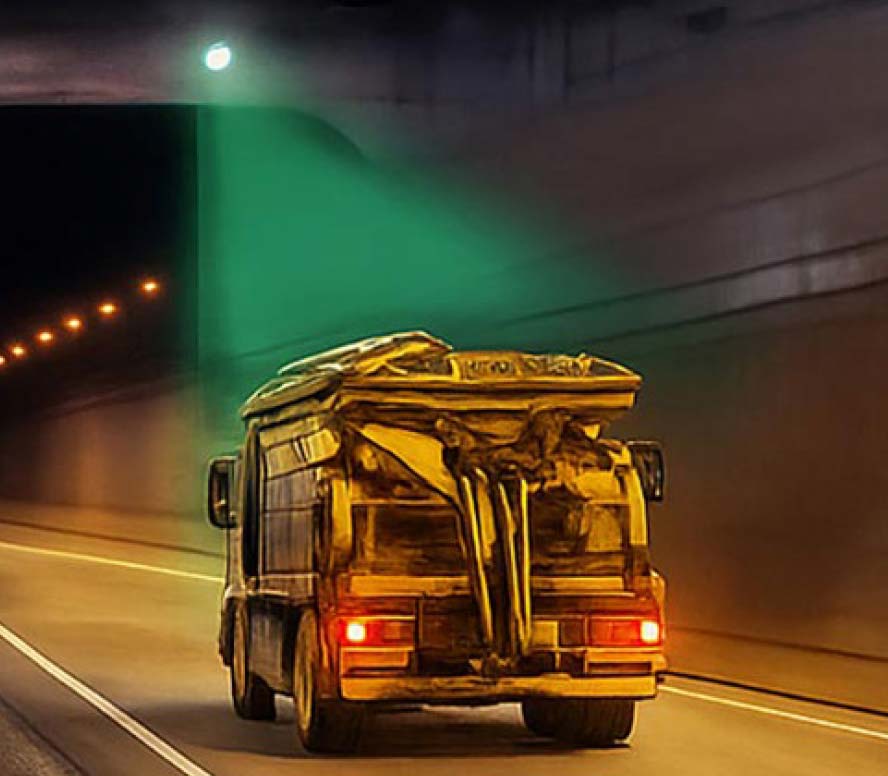
Truck approaching sensor before tunnel
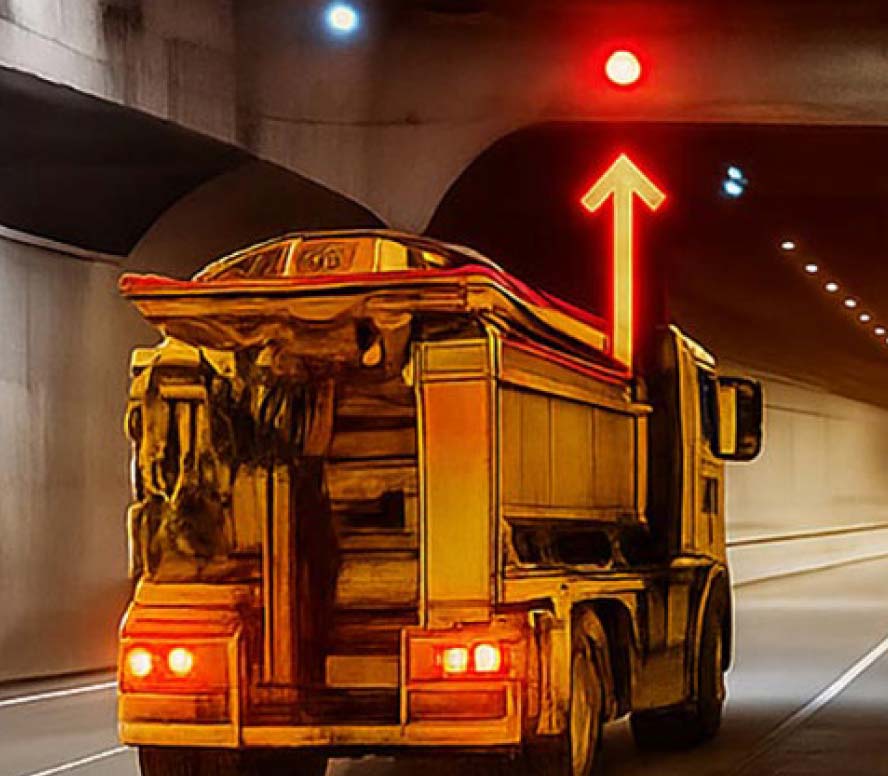
Sensor detects height exceeding limits
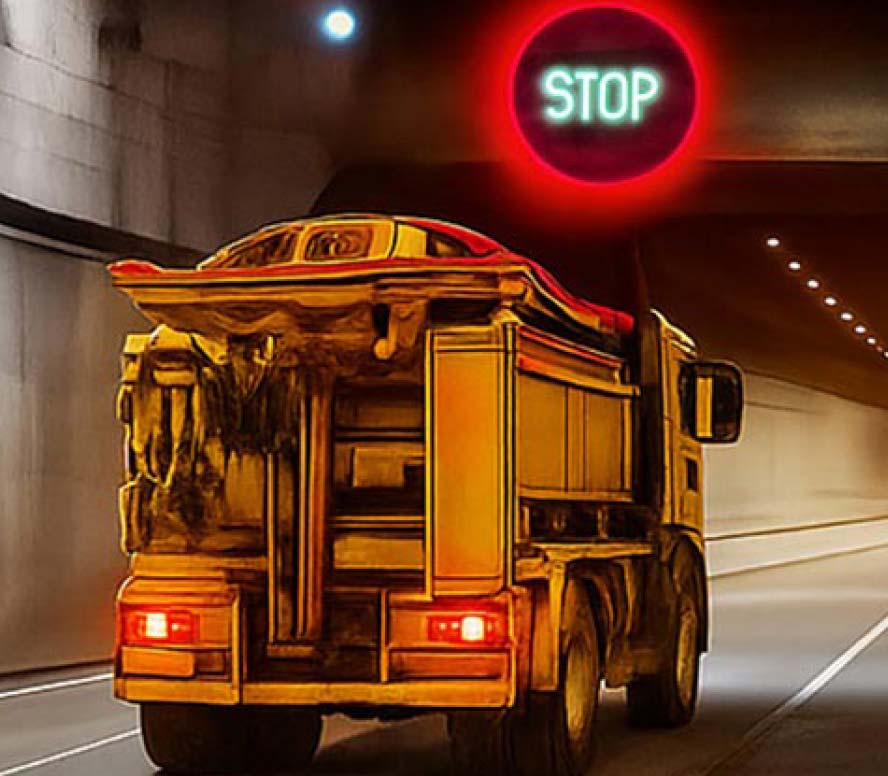
Triggers warning sign to indicate STOP
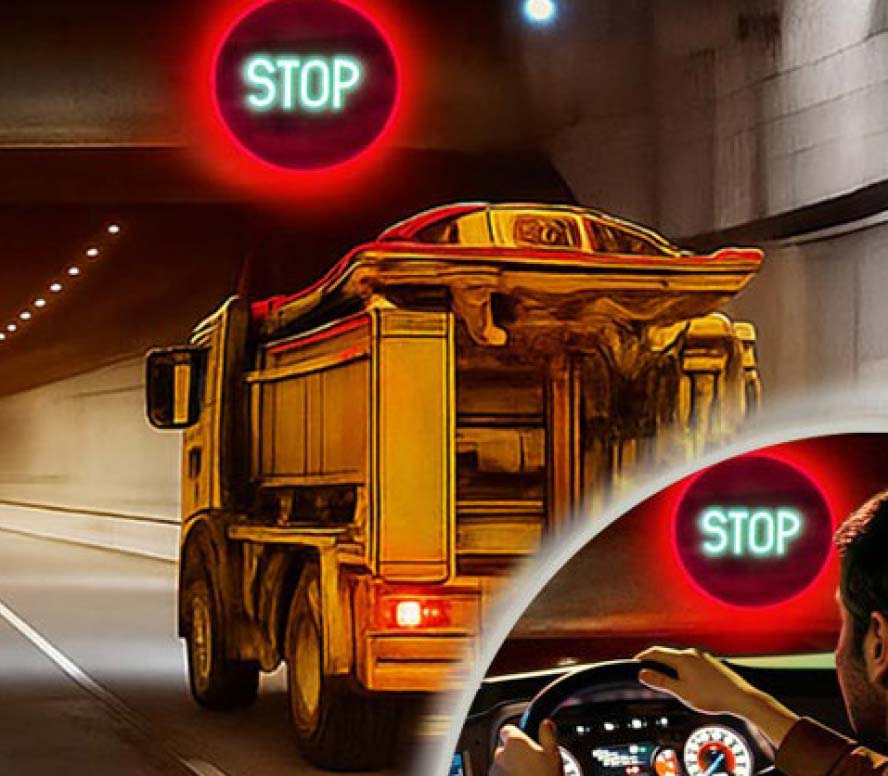
Truck driver sees warning and stop
Challenges
To deploy computer systems under the weather is always challenging. The equipment must endure extreme temperature fluctuations, from heat in summer to freezing conditions in winter. These changes can affect sensor accuracy and potentially cause component failure, requiring robust thermal protection and insulation. In addition, constant exposure to rain and humidity can lead to electronics (sensors/ computers) malfunction or corrosion (circuit board). Also, environmental pollutants like dust and dirt can obstruct sensors, leading to inaccurate readings or complete failure. Hence, proper sealing and weatherproof housings are essential to protect electronic components and maintain reliability in harsh conditions.
One of the other impacts is from the passing by vehicles. The constant vibration from passing vehicles can put stress on sensors and computers, potentially loosening connections or damaging internal components. Vibration-resistant designs and sturdy mounting solutions are crucial to prevent degradation. Related: highway enforcement systems. Related: road infrastructure monitoring.
Last but not least, being positioned out in the open, power source availability will be scarce. Therefore, a flexible power input range with a well thought out power delivery is vital.
Solution
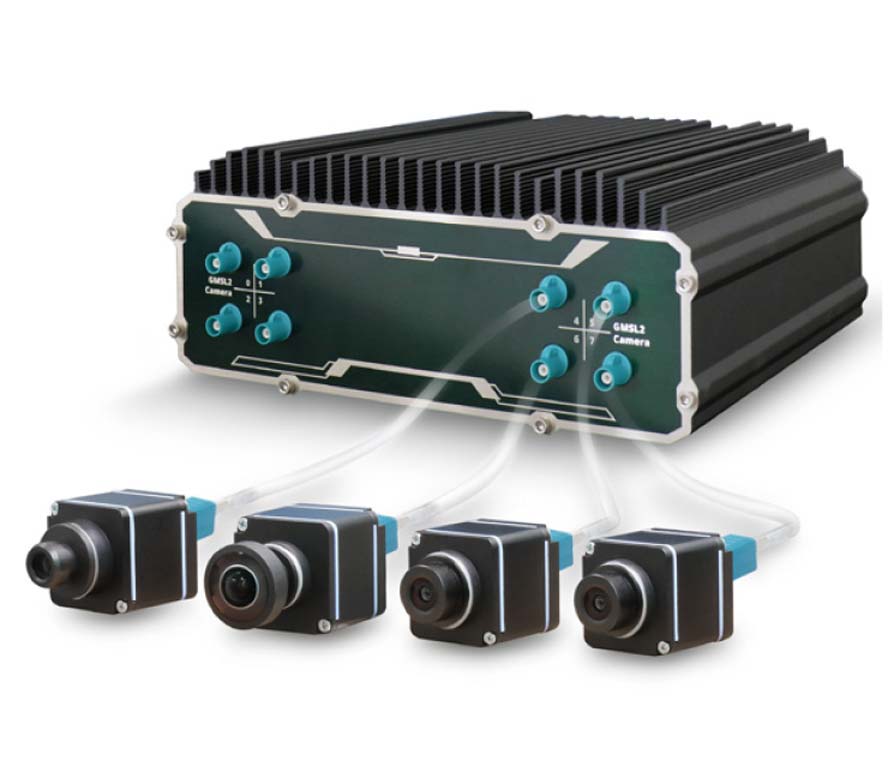
The system integrator chose to implement a Neousys' NRU system as the roadside unit connects to sensors and the electronic notice board while relaying live video feeds back to central for backup and monitoring. The system is mounted on the overhead railing, connected with IP67 waterproof GMSL cameras that are capable of operating flawlessly in various lighting conditions, high dynamic range (>120dB HDR), auto white balance (AWB), and LED flickering mitigation (LFM), and is not affected by lighting conditions, sunny, overcast, or in the dark.
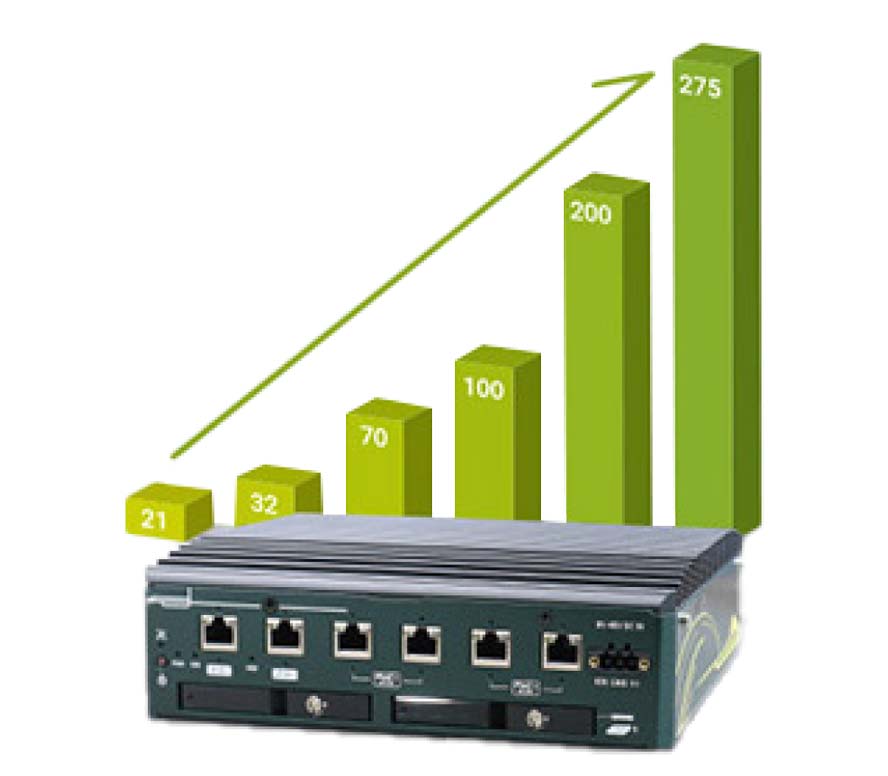
Powered by NVIDIA® Jetson, the NRU series edge computer offers up to 275 TFLOPS inference performance, which is perfect for image recognition applications. By utilizing the M.2/ mini-PCIe expansion slots, 5G/ 4G wireless communication modules can be installed for seamless connection with central control room.
The NRU series systems are also tested to be compliant with MIL STD-810G to withstand shock and vibration conditions; accepts a wide range voltage input; compatible with Neousys supercapacitor power backup modules; and have compact dimensions to fit into confined space installations.
For more insights on industrial edge computing, follow Neteon on LinkedIn. To discuss your edge computing requirements, contact us at www.neteon.net or email [email protected].
FAQs
How does automated vehicle height detection prevent bridge strikes?
LIDAR and camera sensors processed by Neousys edge computing measure vehicle height in real time, triggering warning systems when overheight vehicles approach low-clearance bridges or tunnels.
What detection accuracy does the height warning system achieve?
Using Neousys edge AI platforms with calibrated LIDAR, the system measures vehicle height to ±2cm accuracy at speeds up to 100 km/h, detecting overheight vehicles 200-500 meters before the obstruction.
Can the system operate in all weather conditions?
Yes, LIDAR-based detection on Neousys rugged computers maintains accuracy in rain, fog, and snow — conditions where camera-only systems degrade significantly.
What happens when an overheight vehicle is detected?
The Neousys edge platform triggers variable message signs, flashing lights, and optional barrier deployment within 500ms of detection, giving drivers sufficient stopping distance at highway speeds.
How does the system differentiate vehicles from non-threats?
AI classification on Neousys computing platforms distinguishes actual vehicles from birds, debris, or false triggers, reducing false alarm rates below 0.1% while maintaining 99.5%+ detection rates.