Key points
- The plant's excitation, governing and water turbine systems ran on different network protocols. The upgrade put them on one network.
- Moxa TSN-G5008 switches carry that network with 8 Gigabit ports each and low latency, so control data reaches the AI system reliably.
- TSN resolved the interoperability problems between the existing control network and the new AI system.
- The plant can adjust power output to the grid quickly, with lower costs and easier maintenance. The case gives no measured figures.
Introduction
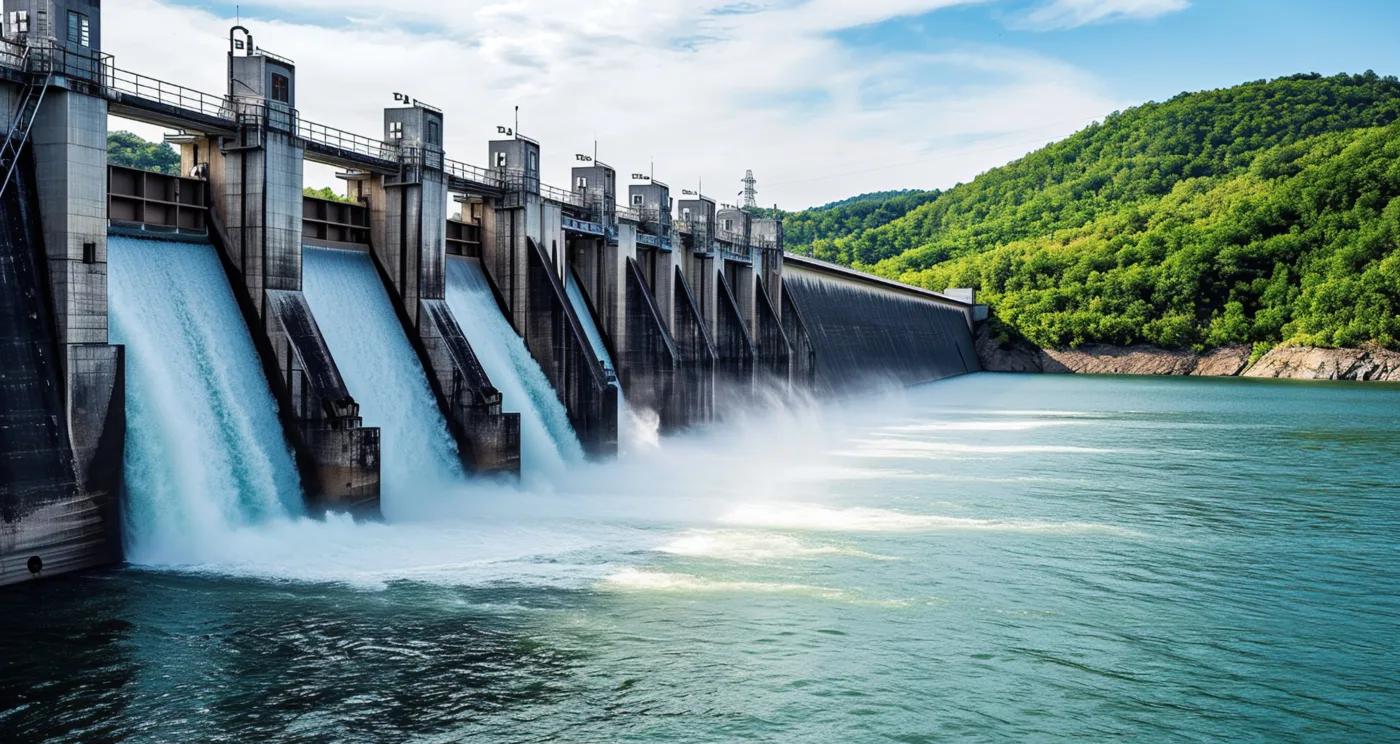
- A hydropower plant wanted to upgrade and modernize their systems to generate power more efficiently by integrating all the isolated networks and implementing an AI system for their control network.
- Compared to the original network architecture where all key systems such as excitation, governing, and water turbines run on different network protocols, the modernized plant infrastructure integrates multiple systems into a single network to achieve higher performance and stability at a lower cost.
System Requirements
- One unified network to merge different applications for seamless communications.
- Deterministic communication and Gigabit network speeds to reliably transmit critical control data for AI systems.
Moxa Solution
Moxa provided a robust TSN switch solution that met the operator’s requirements. TSN-G5008 Series switches were deployed to unify the isolated networks and introduce deterministic capabilities to power the AI system for the control network.
- The TSN switches connect all control systems over a unified network with 8-port Gigabit bandwidth and low latency. This simplified network structure ensured high speeds, precise control, real-time communication of high-volume data, and advanced network security for the AI system.
- TSN technology integrated all system networks and resolved interoperability issues between the control network and the new AI system, creating an effective AIoT solution.
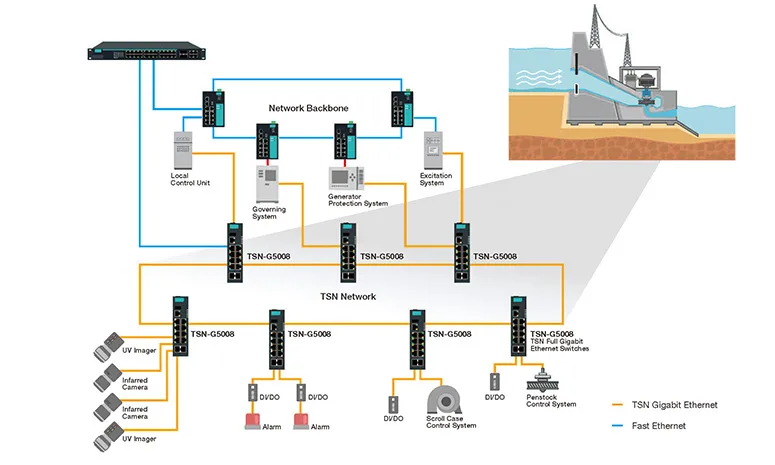
By leveraging TSN-powered infrastructure, the hydropower plant has improved efficiency and can quickly adjust power output to the grid, resulting in lower costs, easier maintenance, and enhanced adaptability.