TLDR
TSN (Time-Sensitive Networking) is a set of IEEE 802.1 standards that bolts deterministic, sub-millisecond delivery onto plain Ethernet. It lets a control loop, a vision feed, and ordinary IT traffic share one cable without the control loop missing a deadline. For edge AI, TSN is what turns a fast inference result into a useful one. The model can decide in 8 ms, but if the network adds 40 ms of jitter, the actuator already missed its window. For one protocol that builds on this, see our guide to PROFINET.
New to network time sync? See our companion explainer on what PTP (IEEE 1588) is and why edge AI needs it.
Related reading: What is EtherCAT? A Plain-English Guide to Real-Time Industrial Ethernet.
Overview
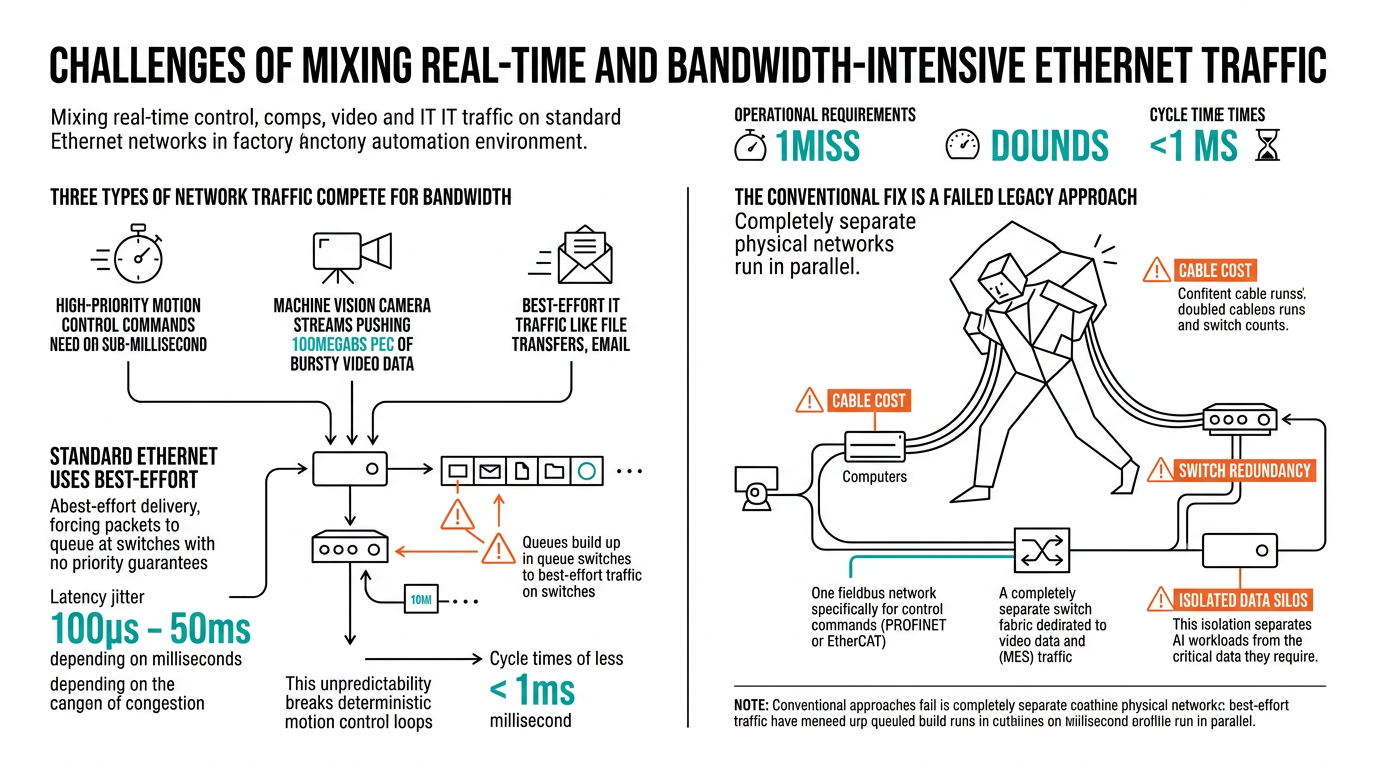
Most factory networks run a fieldbus for control (PROFINET, EtherCAT, Modbus TCP) and a separate switch fabric for video, MES traffic, and engineering laptops. That split made sense when standard Ethernet couldn't promise when a packet would arrive. TSN closes the gap by adding scheduling, traffic shaping, and clock synchronization to a normal switched network, so a stamping press's safety stop and a quality-inspection camera can sit on the same VLAN without fighting each other.
If you've read our guide to OPC-UA, TSN is the layer underneath. OPC-UA carries the meaning, TSN carries the timing. We've also covered why this convergence matters for plant operators in Edge AI in Manufacturing 2026–2030.
Plain-English Definition
TSN is regular Ethernet with three guarantees grafted on:
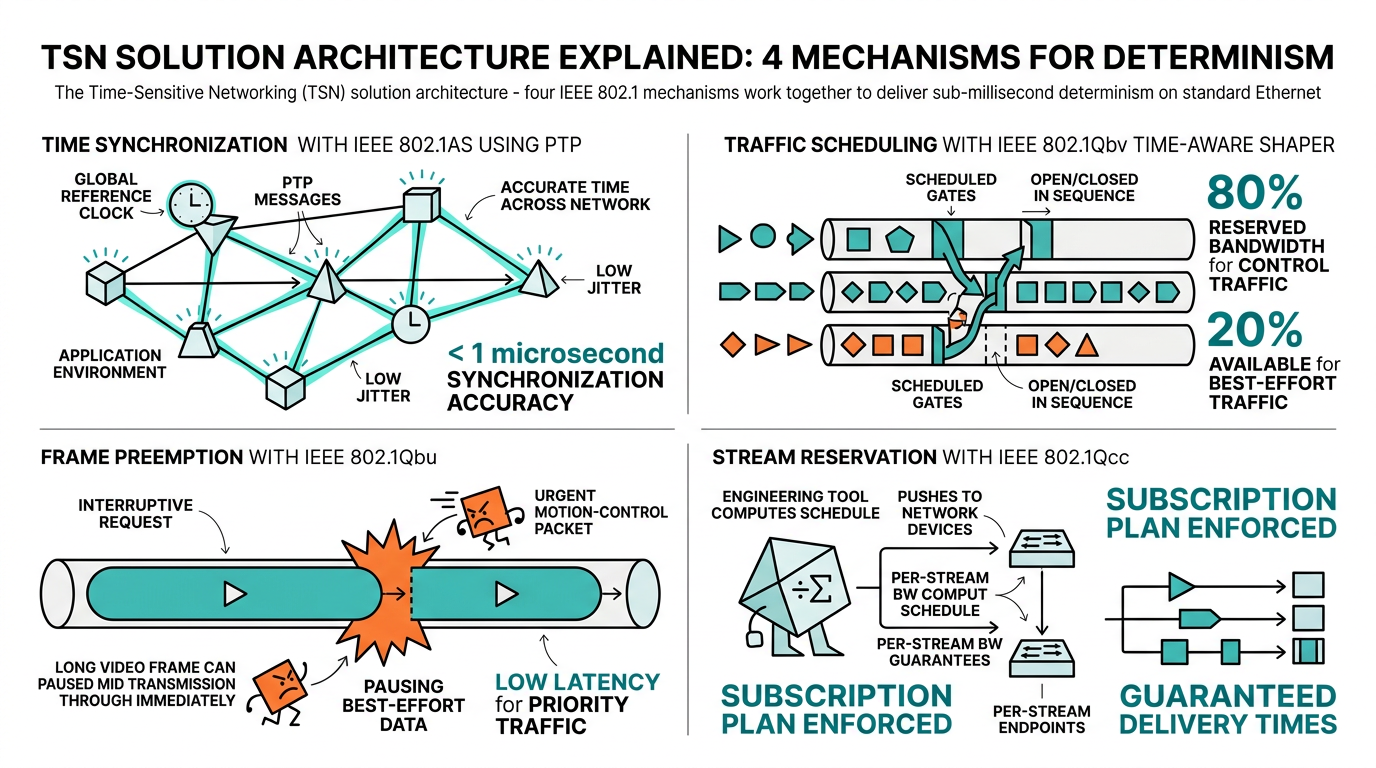
- Every device agrees on the same clock, accurate to under a microsecond (IEEE 802.1AS).
- Time-critical traffic gets a reserved slot on the wire (IEEE 802.1Qbv "time-aware shaper").
- The network can drop, reroute, or duplicate frames without the receiving device noticing a failure (IEEE 802.1CB frame replication).
That's it. No new cables, no new connectors. A TSN-capable switch and a TSN-capable endpoint speak standard Ethernet to everything else.
How It Works
Think of an air-traffic controller and runways. Each critical flow gets a slot. Best-effort traffic waits its turn.
| Layer | IEEE Standard | What it does |
|---|---|---|
| Time sync | 802.1AS-2020 | Distributes a sub-microsecond grandmaster clock to every node |
| Scheduling | 802.1Qbv | Opens timed gates so control frames egress in their reserved window |
| Reservation | 802.1Qcc | Reserves bandwidth and latency budget for a stream end-to-end |
| Reliability | 802.1CB | Sends critical frames over two paths and discards duplicates at the receiver |
| Preemption | 802.3br + 802.1Qbu | Lets a control frame interrupt a long video frame mid-transmission |
In practice, the engineering tool computes a schedule (bandwidth, period, max latency per stream), pushes it to the switches and endpoints, and the network keeps that schedule for as long as the stream is alive.
Why It Matters for Edge AI
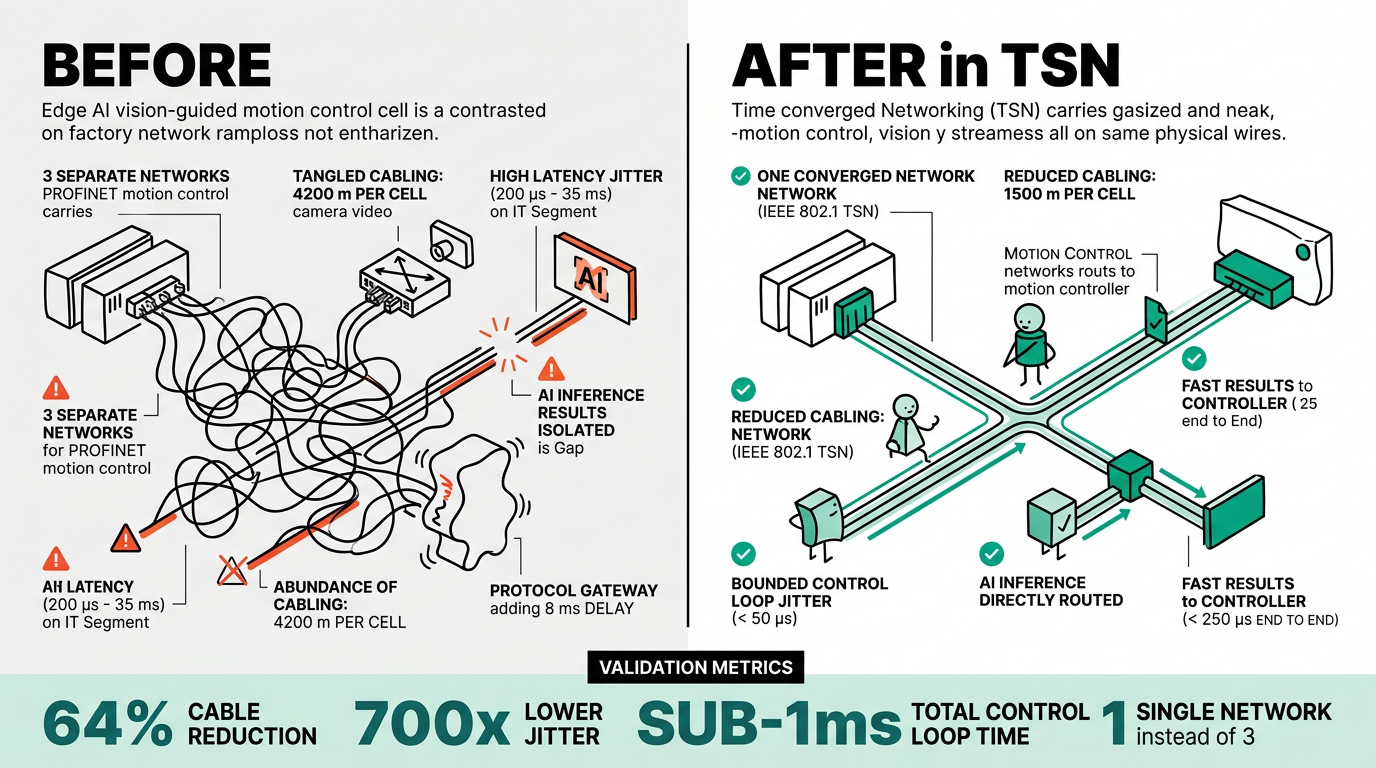
Edge inference workloads care about two numbers: time-to-result and time-to-action. The compute side of that equation has improved sharply — a Nuvo-11000 with an Intel Core Ultra NPU can classify a defect in under 10 ms. But if the network connecting the camera, the inference box, and the PLC is best-effort, the verdict can sit in a queue while a backup job is uploading log files.
TSN gives the AI traffic a protected slice of the wire. The camera stream and the inference result are scheduled; the SCADA poll and the firmware push wait around them. That moves the system from "usually fast" to "predictably fast", which is the bar a control loop actually needs.
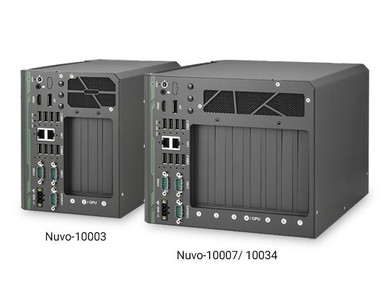
It also collapses the cabling. Instead of running a separate motion bus, a vision bus, and an IT trunk, you can put a Nuvo-10000 at the cell, drop two TSN ports to the line, and carry safety, vision, and telemetry over one fabric.
Real-World Examples
- A robotic welding cell where the trajectory controller, the seam-tracking camera, and the shop-floor MES all share one TSN ring. The trajectory loop is guaranteed 1 ms cycle time; the camera stream is reserved 200 Mbps; the MES gets whatever is left.
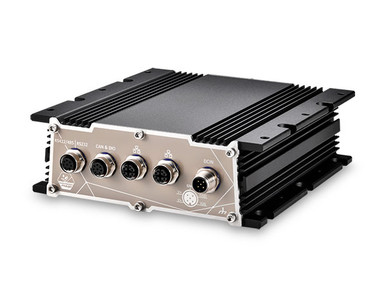
- An IP67-rated outdoor inspection station running a POC-766AWP that pulls four GigE cameras and pushes inference verdicts to a remote PLC over a TSN-aware managed switch. The verdict packet is replicated on two paths, so a single fiber cut doesn't stall the line.
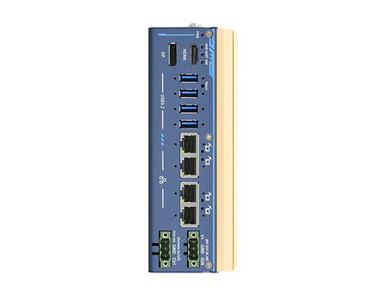
- A retrofit of a brownfield press line where a POC-700 replaces three legacy gateways. TSN lets the new box carry safety and engineering traffic on the same NIC pair, which freed up two cabinets of panel space.
If you're choosing the silicon underneath the network, our Intel vs AMD vs Jetson breakdown covers what to match to which workload.
Related Products
Conclusion
Follow Neteon on LinkedIn for more deep dives, or reach us at [email protected] or www.neteon.net to talk through a TSN pilot.
FAQs
Is TSN just faster Ethernet?
No. TSN is regular Ethernet with three guarantees added: a shared sub-microsecond clock (802.1AS), reserved time slots for critical traffic (802.1Qbv), and frame replication for resilience (802.1CB). The bandwidth doesn't change — the predictability does.
Do I need new cabling or switches to use TSN?
Cabling stays the same — Cat6 or fiber. Switches and endpoints have to be TSN-capable, which means they implement 802.1AS time sync and 802.1Qbv scheduling. Most managed industrial switches released since 2022 support at least a TSN profile.
How does TSN compare with PROFINET IRT or EtherCAT?
PROFINET IRT and EtherCAT are vendor- or consortium-specific protocols layered on Ethernet. TSN is the IEEE standard the same vendors are now building on, so newer PROFINET-over-TSN and EtherCAT-G/TSN profiles use TSN as the underlying transport. The trend is convergence, not replacement.
What latency can I expect on a TSN network?
Sub-millisecond cycle times are routine for the scheduled traffic class — 250 µs to 1 ms is typical for motion control. Best-effort traffic on the same link sees normal Ethernet latency, which TSN doesn't try to improve.
Which Neteon products support TSN today?
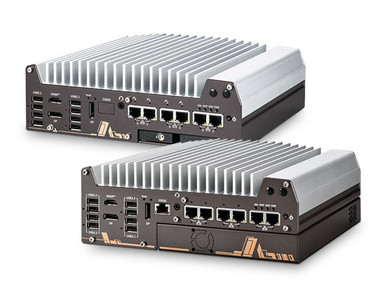
The Nuvo-10000, Nuvo-11000, POC-700, and POC-766AWP series ship with Intel I225/I226 or equivalent NICs that expose TSN features (time sync, time-aware shaping). Confirm the exact 802.1 profiles you need with [email protected] before specifying — TSN is a family of standards and not every device implements every part.
For a full reference design that uses TSN-aware switches with an edge inference node, see our converged IT/OT network architecture guide.
Sources and further reading
Neousys rugged computer product catalog.
NIST AI Risk Management Framework.
Related Neteon guides
EtherCAT Explained for Industrial Edge AI.
MQTT vs Modbus TCP for Edge AI Pipelines.
Browse the edge ai fundamentals topic hub for more deployment guidance.