

TL;DR
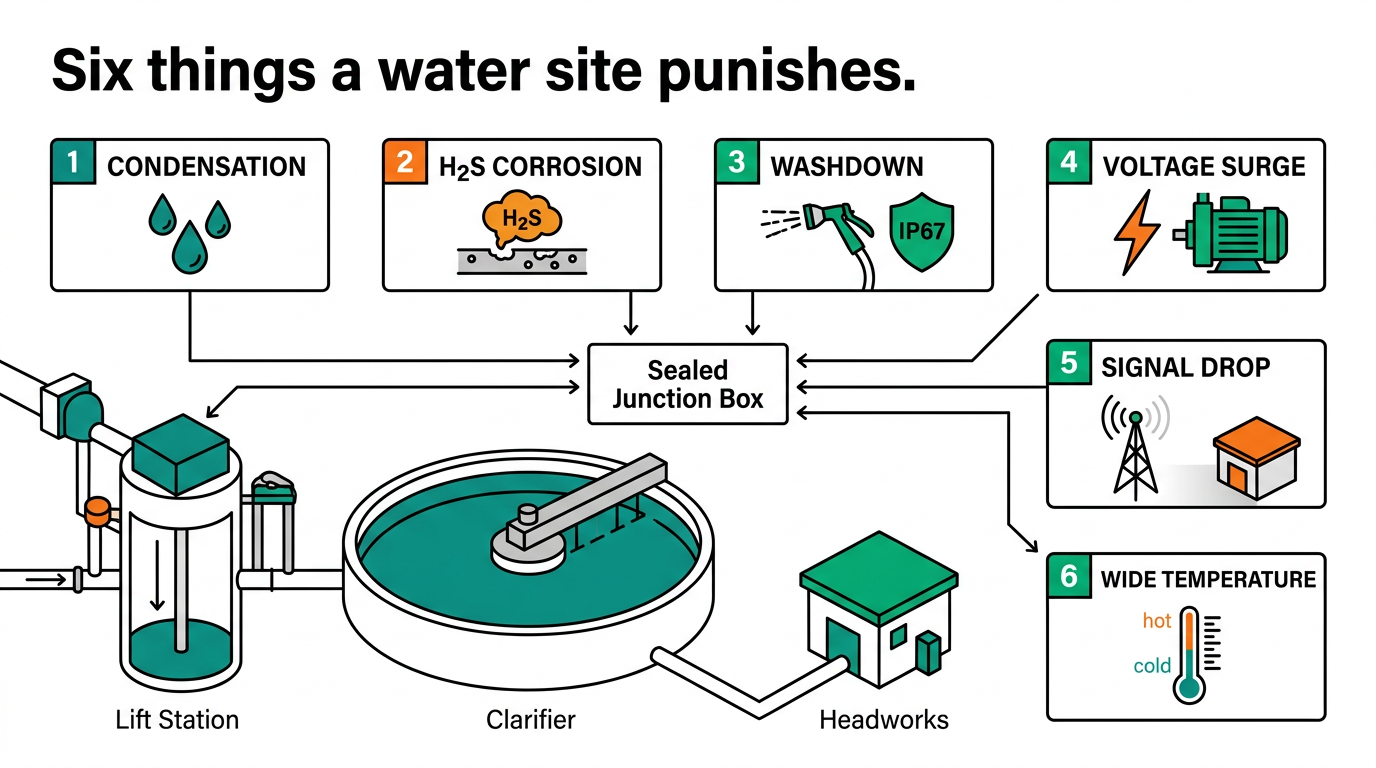
Water and wastewater sites punish computers in ways a clean control room never does. Condensation, hydrogen sulphide corrosion, hose-downs, voltage surge off pump motors, and connectivity that drops the moment you leave the headworks building. This guide walks through the specs that matter when you put edge AI at a lift station, a clarifier, or a remote intake, and shows where the Nuvo-11000 and POC-766AWP fit. Under 1,000 words, no vendor fluff.
Overview
Utilities are pushing inference to the edge for a plain reason. The data worth acting on, pump vibration, screen blockage, foam and scum on a clarifier, effluent turbidity, is either too heavy to ship to a central SCADA historian or too time-sensitive to wait for a round trip. One camera watching a bar screen generates more data in an hour than a small plant's whole telemetry stream does in a week.
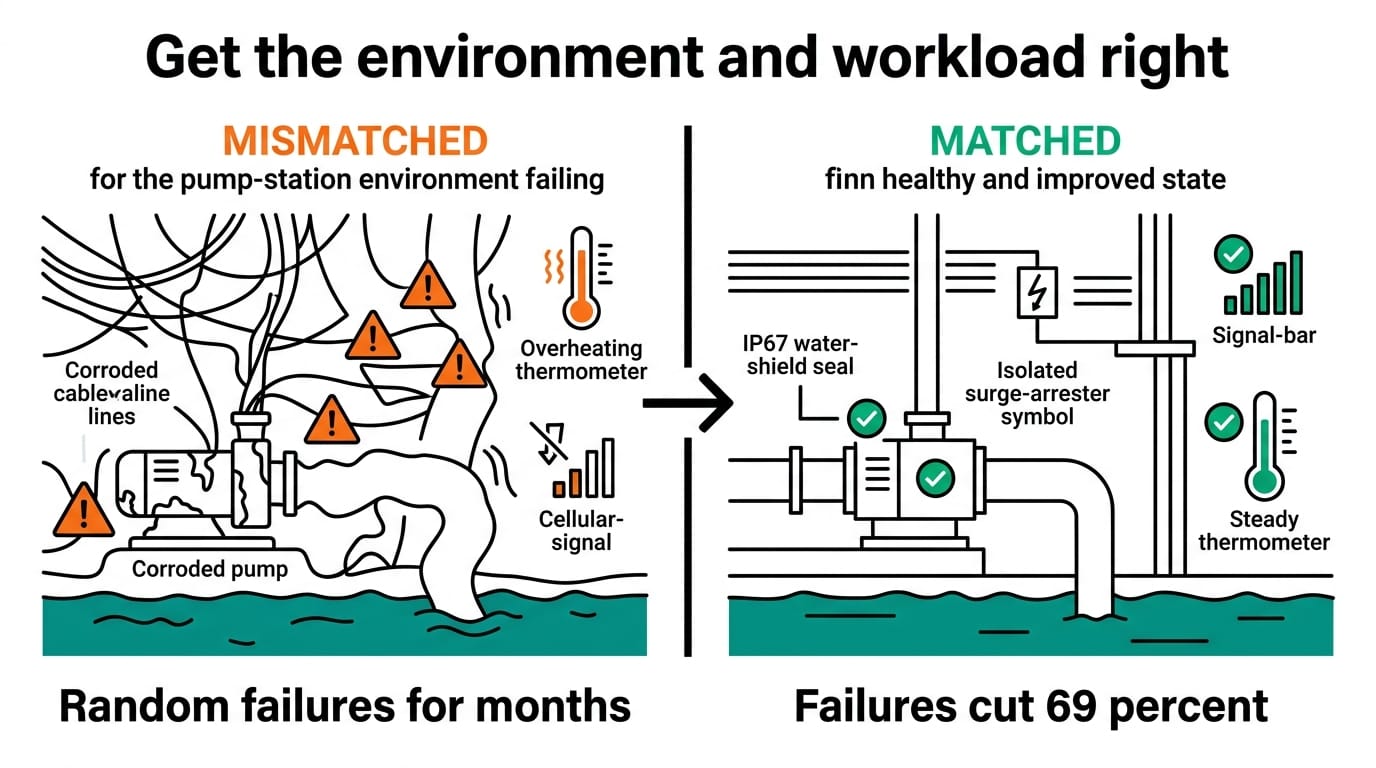
Choosing the box is where projects stall. A conditioned control room and a wet-well-adjacent lift station have almost nothing in common environmentally, yet teams often spec one computer for both. If you want the wider selection framework first, read how to choose an industrial edge AI computer. Our IP67 design guide for water-treatment monitoring goes deeper on sealing and mounting, and one wastewater operator saw a Nuvo-11000 cut pump-station failures 69% once analytics ran on-site. This guide sits one level up: how to pick the compute itself.
Selection criteria
Six things decide whether a deployment survives its first winter. Ranked by how often they get missed.
| Criterion | Why it bites at a water site | What to look for |
|---|---|---|
| Ingress and wash-down | Headworks get hosed; enclosures sweat | IP65 or IP67 fanless chassis, sealed M12 connectors |
| H2S corrosion | Wet wells and digesters eat electronics | Conformal-coated boards, no exposed fans, no vents |
| Power quality | VFDs and pump starts throw surge and sag | Wide-range 8-48 VDC input, isolated DIO, surge protection |
| Temperature | Unconditioned intakes swing hard | Fanless operation across -25 to 70 C |
| Connectivity | Lift stations sit far from fibre | Dual LAN, 5G or LTE, PoE for cameras |
| AI throughput | Vision needs a GPU; sensor fusion does not | Match silicon to workload, do not overbuy |
The last row is where budgets leak. A predictive-maintenance model reading vibration and current runs comfortably on a CPU or NPU. A four-camera vision job on a clarifier does not, and no amount of clock speed substitutes for a GPU.
Decision matrix
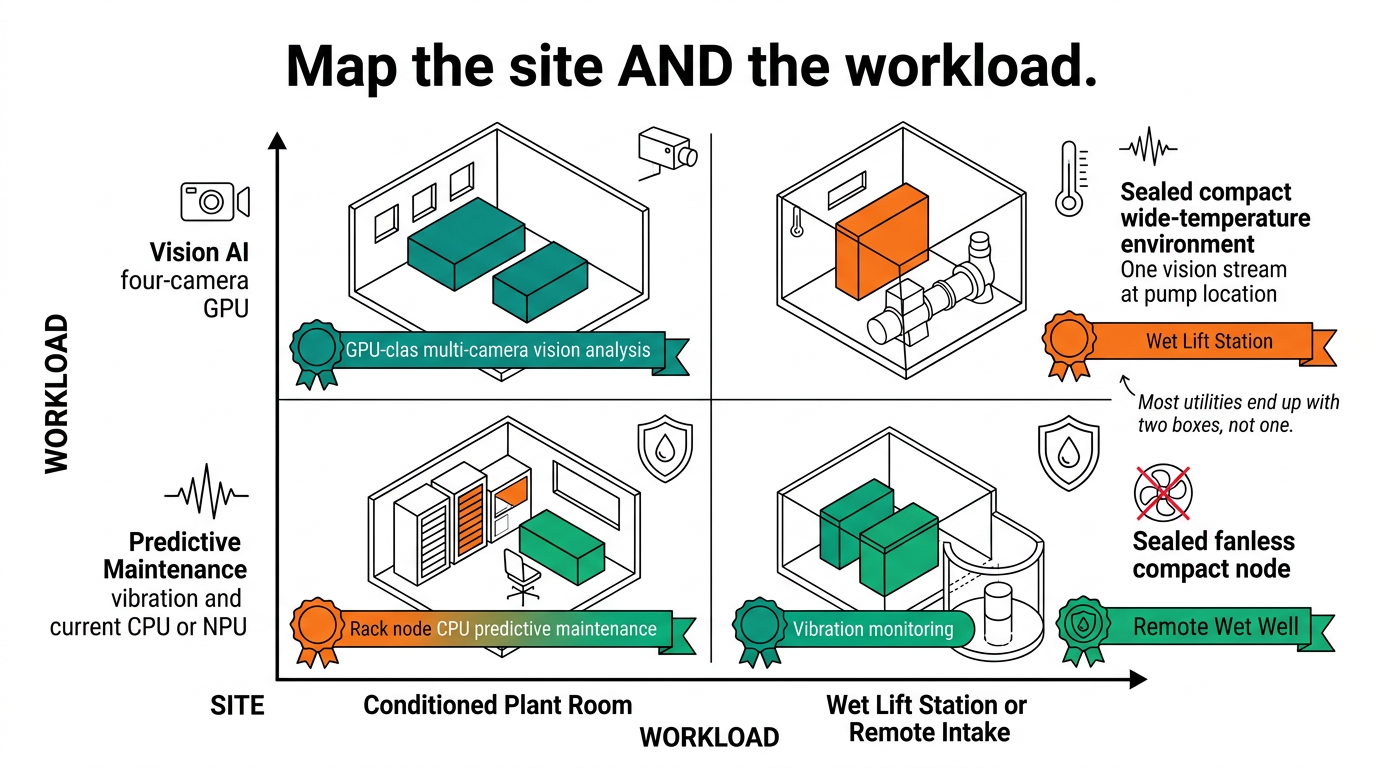
Map the site and the workload to the platform, not the other way around.
| Site and workload | Environment | Platform | Why it fits |
|---|---|---|---|
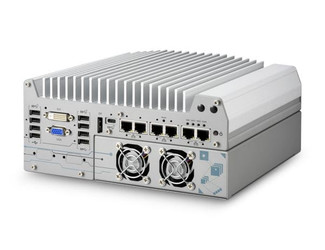
| Plant room, sensor-fusion predictive maintenance | Light industrial, conditioned | Nuvo-11000 | Core Ultra with an on-die NPU handles fusion without a discrete GPU |
| Multi-camera vision (bar screen, foam, sludge blanket) | Indoor, warm | Nuvo-9160GC | RTX-class GPU for real-time inference across several feeds |
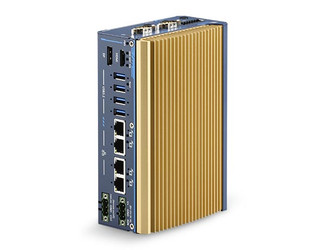
| Outdoor intake, wet-well-adjacent lift station | Wet, corrosive, wide-temp | POC-766AWP | IP67 fanless build rated for hose-down and condensing air |
| Compact remote telemetry, RTU-class edge | Space and power limited | POC-700 | Small fanless node that logs and pre-filters before backhaul |
Most utilities end up with two of these, not one. A GPU box in the plant, a sealed compact node out at the pump.
Common pitfalls
The IP rating on a marketing sheet often describes an optional enclosure, not the computer inside it. Confirm the ingress spec applies to the chassis you are actually buying.
Power is the quiet killer. Pump motors and variable-frequency drives dump surge onto shared DC rails, and a computer without isolated I/O and surge protection will fail in ways that look random for months. Budget for it up front.
Teams also under-size compute because the day-one job is small, then a safety review adds two more cameras and the box chokes. Leave headroom, or pick a platform whose series scales. And do not treat a fan as harmless; in an H2S atmosphere it is both a corrosion path and the first moving part to die.
Conclusion
Water and wastewater does not need the most powerful edge computer on the shelf. It needs the one matched to the site: sealed and wide-temp where the air is wet and sour, GPU-backed where cameras are involved, compact where power and space run short. Get the environment and the workload right and the AI is the easy part.
Follow Neteon on LinkedIn for more of these buyer's guides, or reach us at [email protected] or www.neteon.net to size a water or wastewater edge AI pilot.
Related Products

FAQs
Do I need an IP67 computer for a wastewater plant?
Only where the computer sits in the wet or corrosive zone, like an outdoor intake, a wet-well-adjacent lift station, or a hosed-down headworks area. A conditioned control room can run a standard fanless box such as the Nuvo-11000. Match the ingress rating to the actual mounting spot, and confirm the rating covers the chassis rather than an optional enclosure.
CPU, NPU, or GPU for water and wastewater edge AI?
Sensor-fusion jobs like pump vibration and current analysis run well on a CPU or the NPU in a Core Ultra platform. Camera work, bar-screen blockage, clarifier foam, and sludge-blanket level needs a GPU such as the Nuvo-9160GC. Size the silicon to the workload rather than buying the biggest box.
Why does power quality matter so much at pump stations?
Pump motors and variable-frequency drives inject surge and voltage sag onto shared DC rails. A computer without wide-range input, isolated I/O, and surge protection can fail intermittently in ways that are hard to trace. Specify those protections up front.
Can one computer cover both the plant and the remote lift stations?
Rarely well, because the environments differ too much. Most utilities pair a fusion or GPU box in the plant with a sealed, wide-temp compact node like the POC-766AWP or POC-700 at outdoor and remote sites.
How much AI headroom should I plan for?
Leave room for cameras added after the first safety or compliance review, which is when scope usually grows. Either choose a platform above your day-one needs or pick a series that scales, so a two-camera install can become four without replacing the computer.
Sources and further reading
U.S. EPA wastewater plant optimization guidance.
Neousys rugged computer product catalog.
Related Neteon guides
Nuvo-11000 Wastewater Pump Monitoring Architecture.
Custom vs Off-the-Shelf Industrial PCs.
Browse the nuvo 11000 topic hub for more deployment guidance.
About the author and technical review
Author: Olivia Parker covers product-to-market strategy for edge AI, AIoT, and embedded systems.
Technical review: Neteon Industrial Computing Editorial Team. Reviewed August 5, 2026 for source quality, product-specification links, standards references, and clear separation of measured results from reference-architecture assumptions.
Evidence note: Unless a linked primary source explicitly identifies measured field results, performance figures and system outcomes in this article are design targets or planning estimates, not guaranteed results.