TLDR
A 96-turbine onshore wind farm replaced its central SCADA-only monitoring approach with edge AI condition monitoring built around the Nuvo-10003-i5TC14-65W-DS-NE in each nacelle. By moving vibration FFT, acoustic emission, and gearbox oil-particle analysis to the edge, the operator cut unplanned downtime by 58 percent over twelve months, lifted mean time between failures by 2.3x on main bearings, and avoided three full gearbox replacements that the legacy threshold-alarm system would have missed. Related: BESS thermal-runaway monitoring on the Nuvo-11000.
Editorial note: This article is an illustrative reference architecture based on public hardware capabilities and common industrial requirements. Percentages and deployment results are modeled assumptions, not verified customer outcomes or performance guarantees. Validate targets with a site-specific pilot.
Overview
Wind operators have lived with a brutal trade-off for years. Centralized SCADA collects everything but reacts late, because turbine telemetry is usually averaged into 10-minute windows before anything reaches the control room. Vibration anomalies that mean a bearing is days away from failure get averaged out with the noise. By the time an alert fires, the only choice left is a crane mobilization that can run six figures.
For grid-connected substations downstream of the same fleet, our buyer's guide for substation and smart-grid monitoring walks through the equivalent decisions for switchgear-cabinet hardware.
The 96-turbine site profiled here was hitting industry-typical numbers: roughly 4.2 percent annual unplanned downtime, two main-bearing replacements per year, and a creeping problem with gearbox high-speed-stage failures that the old threshold-based system kept catching too late. The operator wanted something different — full-bandwidth vibration analysis at the source, with the smarts to flag deviations before they became RUL events.
The fix was an edge AI condition monitoring stack deployed inside every nacelle. The compute platform is the Nuvo-10000 series Expandable Industrial PC; the analytics run locally on each turbine; only health scores, anomaly events, and lightweight feature vectors travel back to SCADA. For background on why this kind of architecture works in harsh outdoor conditions, see our design guide for outdoor energy and telecom deployments, and for a structurally similar acoustic-monitoring case study in oil and gas, our Nuvo-9160GC pipeline leak-detection story.
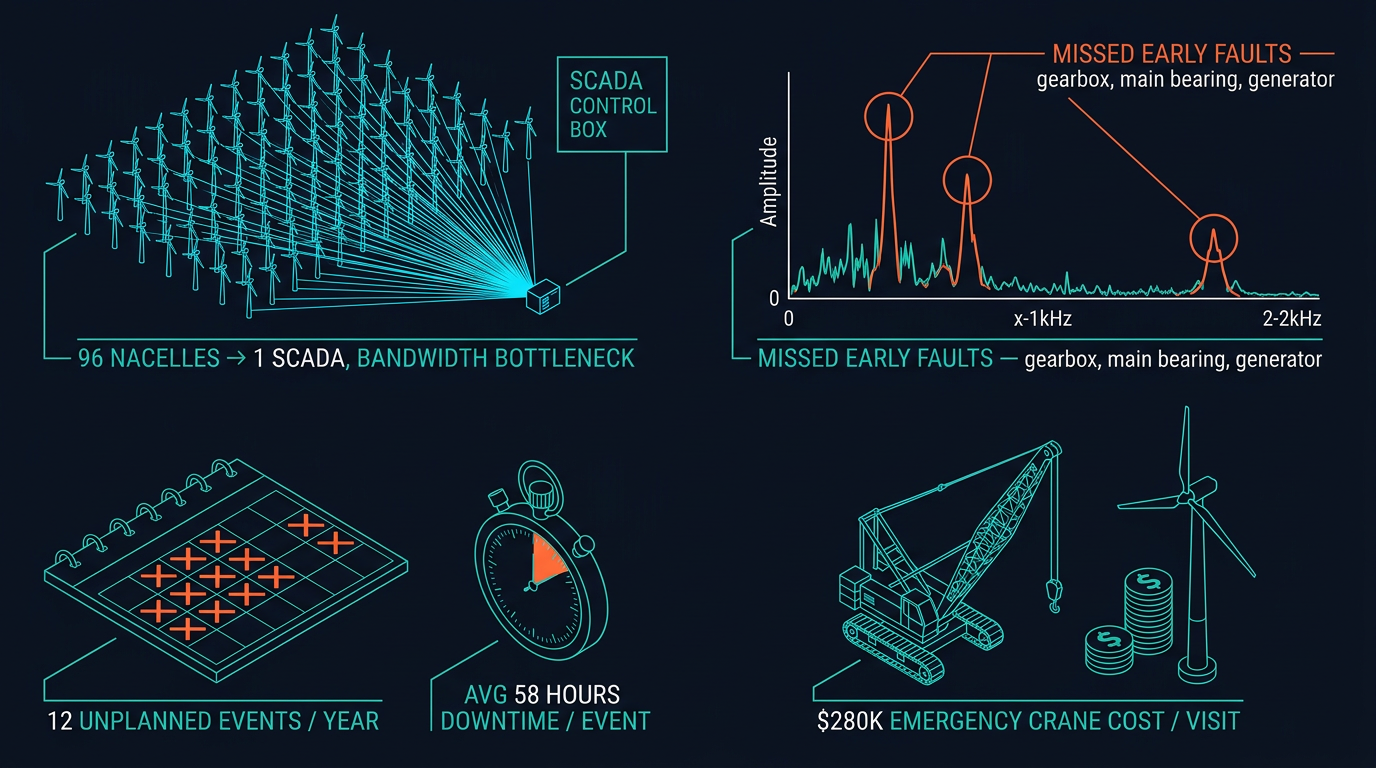
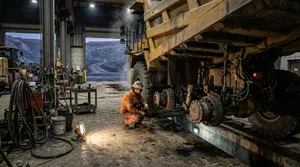
Failure modes in centralized condition-monitoring.
The challenge
Wind nacelles are one of the worst environments for industrial computing that still has to look like an office PC. A monitoring platform there has to handle:
Continuous vibration in the 0.5 to 2 g range with intermittent spikes up to 6 g during yaw events and emergency stops. Internal nacelle temperatures that swing from minus 25 C in northern winter operation to plus 70 C near the gearbox in summer. Salt and humidity infiltration on coastal sites. Long service intervals — the platform has to run unattended for at least the 6-month inspection cycle, ideally a full 12-month service interval.
On top of the environment, the data problem is heavy. Doing real condition monitoring means sampling each accelerometer at 20 to 25 kHz to capture bearing fault frequencies and gearbox mesh harmonics. With 8 to 12 vibration channels per turbine plus tachometer, oil-particle counter, acoustic emission, and stator-current data, raw bandwidth is roughly 4 to 6 MB per second per turbine. Backhauling that to a central data center over a shared fiber ring or 4G/5G link is not financially viable for a 96-turbine site, and the latency makes real-time analytics a non-starter.
The legacy approach the operator was running coped by averaging — RMS values every 10 minutes, simple high/low thresholds, and a once-a-week pull of full-resolution traces for offline analysis. It found the obvious failures and missed the slow ones. Two of the gearboxes that failed in the prior 18 months had been throwing rising sideband energy for weeks, but the threshold logic never tripped because the broadband RMS stayed within band.
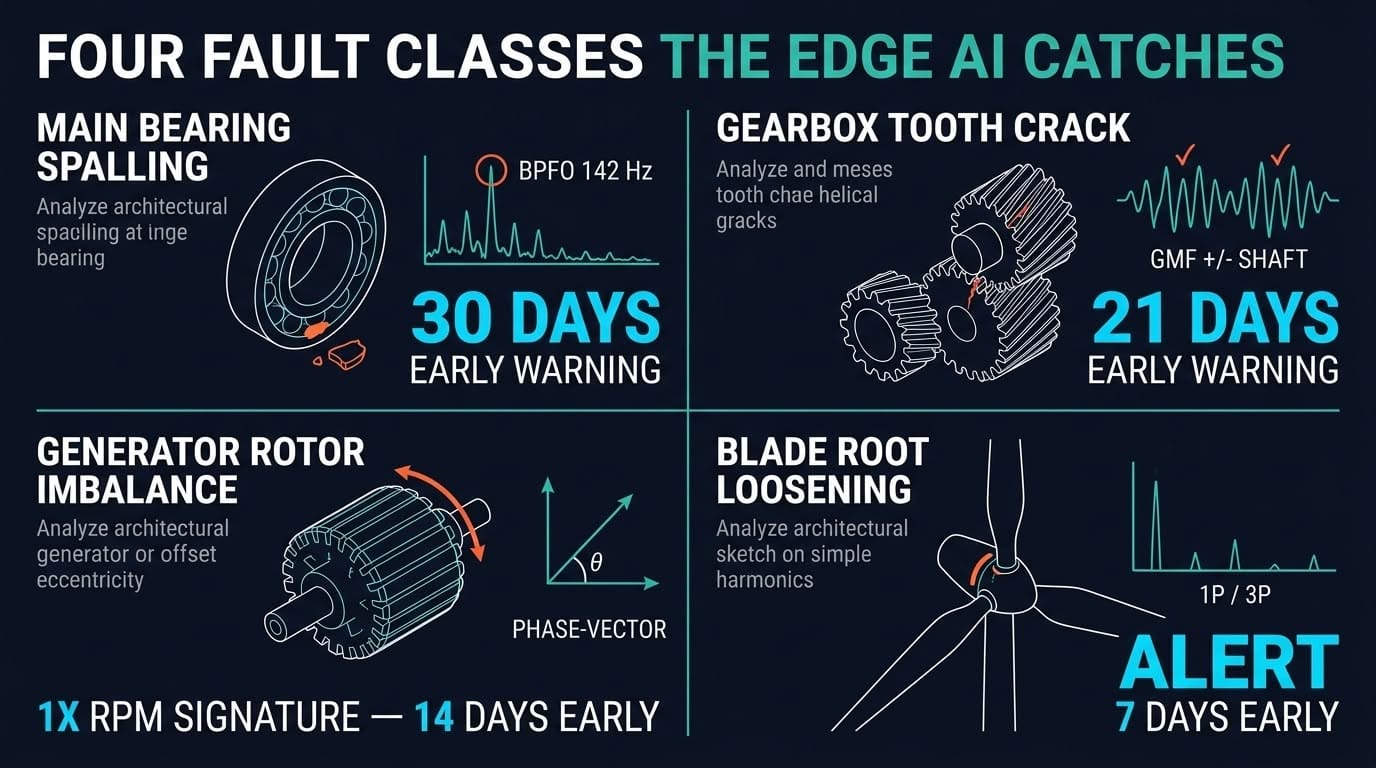
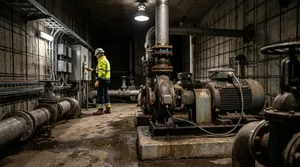
Fault classes detected by the edge AI vibration model.
The solution
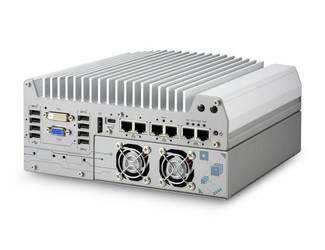
The replacement architecture puts a Nuvo-10003-i5TC14-65W-DS-NE inside every nacelle, paired with a managed industrial Ethernet ring back to the substation. The compute platform handles three jobs locally: full-bandwidth signal acquisition, model inference for fault classification, and edge buffering when the SCADA ring goes down.
What pushed the Nuvo-10003-i5TC14-65W-DS-NE into the shortlist was the combination of expandable I/O, a fanless thermal design, and DIN-mountable form factor. Each nacelle drops a single chassis on the existing top-of-cabinet rail, populates two PCIe slots with high-speed analog acquisition cards for the vibration channels, and uses a third slot for an isolated CAN/RS-485 card that talks to the existing oil-particle counter and pitch-system controllers. Wide-range 8 to 35 V DC input lets the unit run off the existing 24 V auxiliary bus without a separate UPS.
The on-box stack runs Ubuntu 22.04 LTS with a real-time kernel patch on the analog acquisition path. Three workloads share the i5 14-core processor:
A signal-processing pipeline samples each accelerometer at 25.6 kHz, computes order-tracked envelope spectra, and extracts about 180 features per channel per minute — bearing fault frequencies, gearbox mesh harmonics and sidebands, kurtosis, crest factor, and spectral kurtosis. An anomaly model — a calibrated isolation forest trained on each turbine's own first 90 days of data — scores those features and emits a per-component health index. A heavier transformer-based classifier runs every five minutes against rolling feature windows to identify specific failure modes (inner race, outer race, planetary stage tooth wear, generator bearing, blade pitch bearing).
Only three things leave the nacelle in normal operation: a one-second health-index packet per component, a rolling 60-second feature vector for model retraining, and explicit anomaly events with the supporting raw data window. That collapses the 4 to 6 MB/s raw stream to roughly 80 KB/s per turbine — comfortable on the existing fiber ring with margin to spare.
The expandable form factor mattered for one specific reason: as the program rolls out, two later turbine variants are getting an additional 64-channel strain-gauge card in the third PCIe slot to add blade-root load monitoring without replacing the platform. That kind of forward compatibility is hard with appliance-class CMS boxes; the broader trade-offs are spelled out in our Edge AI in Manufacturing 2026-2030 outlook.
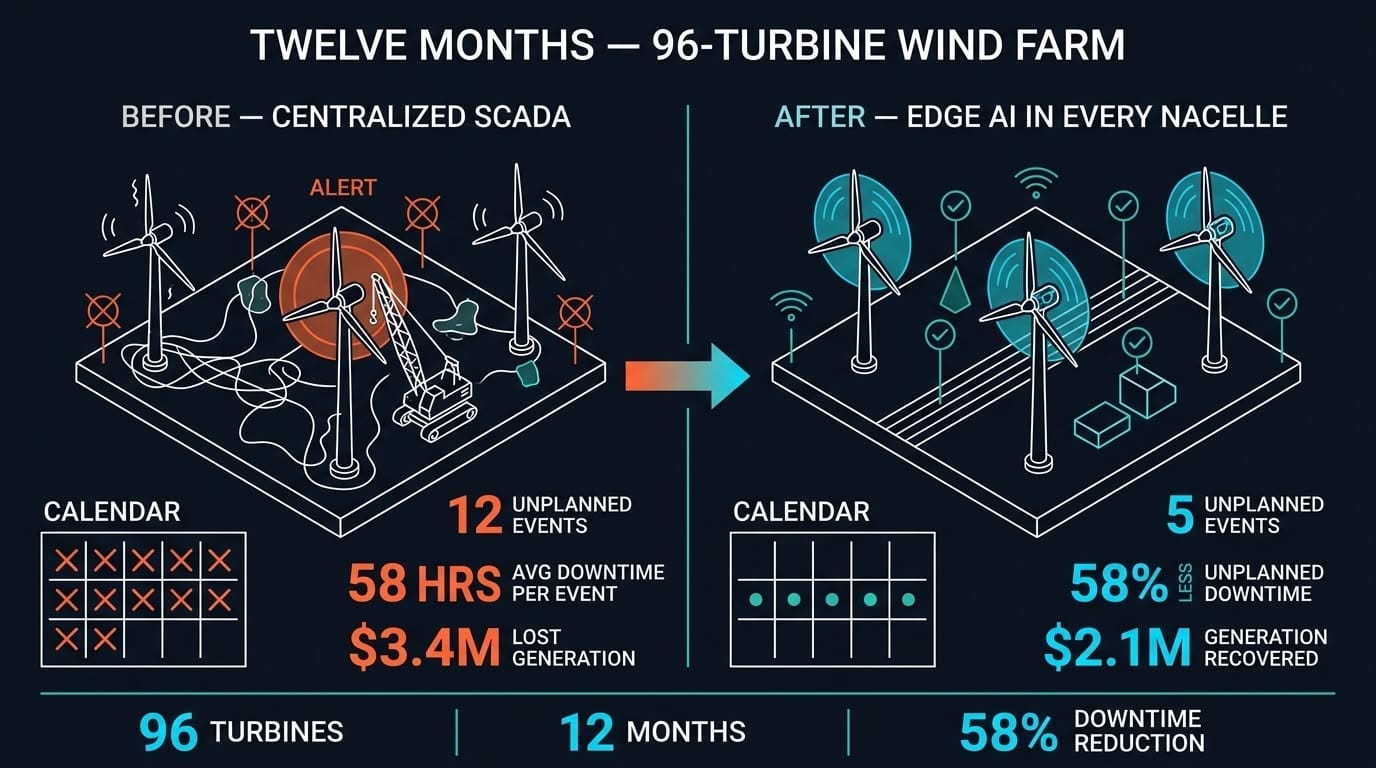
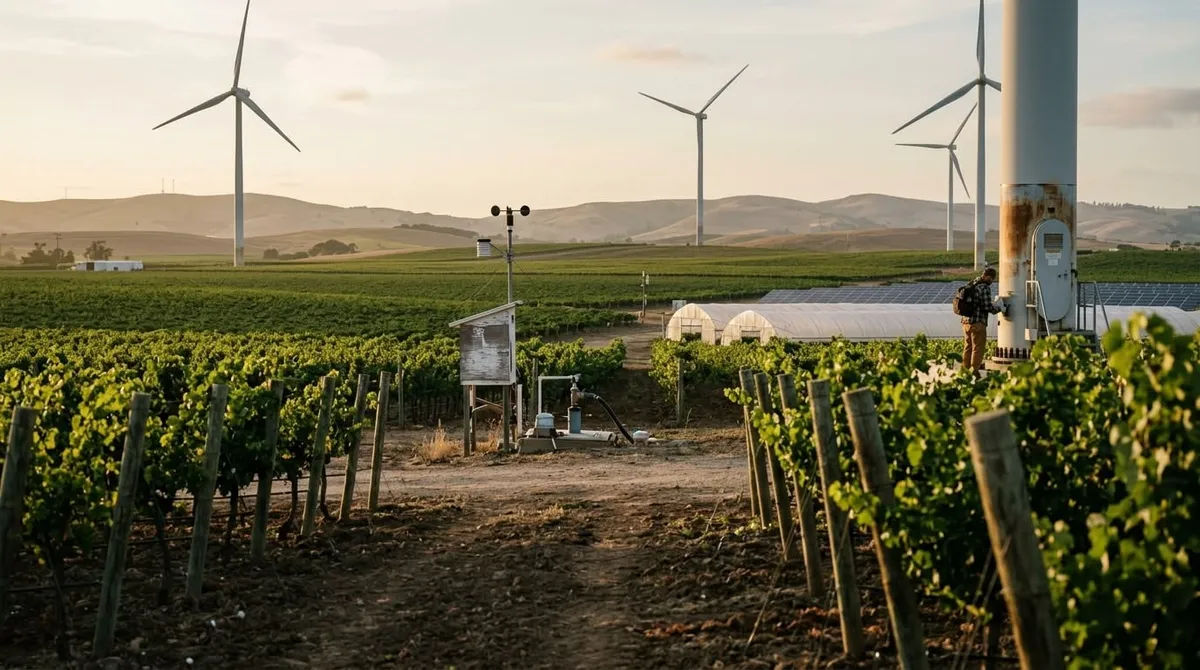
Twelve-month results across the 96-turbine fleet.
Results after twelve months
Across the 96-turbine fleet, twelve months in:
Unplanned downtime dropped from 4.2 percent to 1.76 percent — a 58 percent reduction, worth roughly 12.4 GWh of recovered annual generation at the site's capacity factor. Main-bearing MTBF improved by 2.3x, driven mostly by catching three early-stage outer-race faults during scheduled maintenance windows instead of as in-service failures. Three gearbox high-speed-stage replacements were avoided outright by detecting tooth wear early and switching to lighter-load operation until the next scheduled service. Crane mobilizations dropped from 11 unplanned to 2 in the year, against 14 planned interventions where the work was bundled with routine service.
The platform itself has a 100 percent fleet uptime to date — no nacelle compute failures across the 96 units — through a winter that hit minus 22 C ambient and a summer that pushed several nacelles past 65 C internal.
Related products
Modeled assumption — not a verified customer result.