Key points
- Four conditions defeat standard embedded systems at sea: connector corrosion, heat in a sealed enclosure, interference from radar and sonar, and unstable generator power.
- The Neousys SEMIL-2200GC is a fanless GPU computer built for IP69K. Heat pipes move GPU and CPU heat to the finned chassis, and the NVIDIA L4 runs from -40 to 70 °C without throttling.
- M12 screw-locking connectors replace RJ45 and USB. They resist vibration and salt fog, but they need pre-terminated cables and are less convenient for quick field patching.
- The chassis is MIL-STD-461 compliant for EMI, and the isolated wide-range DC input filters surges from the ship's power grid.
The Engineering Challenge: Deploying Data Center Compute at Sea
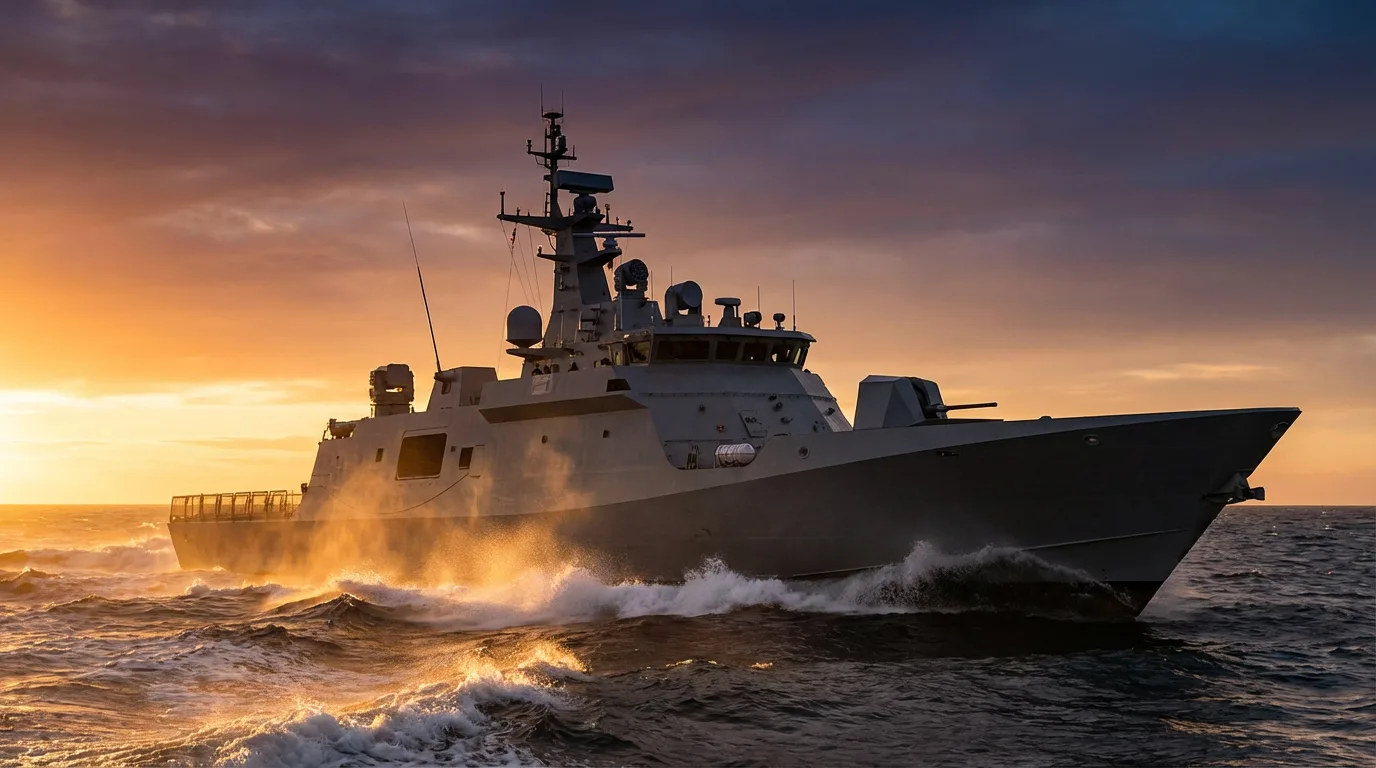
Objective: Deploying inference modules on vessels presents a specific set of environmental constraints that fail standard embedded systems.
The primary failure points identified were:
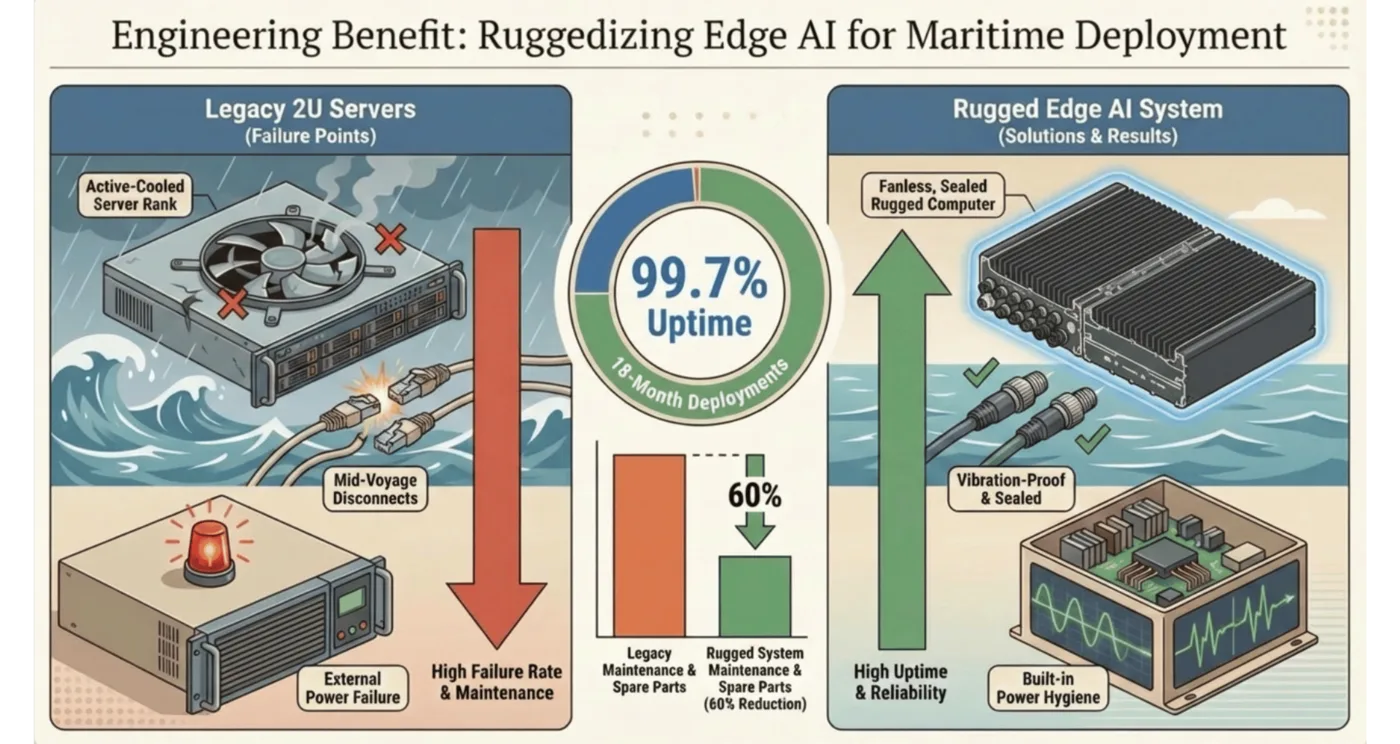
- Corrosion & Signal Loss:High salinity and humidity degrade standard RJ45 and USB connectors, leading to intermittent signal loss in sensor arrays.
- Thermal Management:Running high-TDP accelerators (like the NVIDIA L4) in a sealed enclosure usually leads to thermal throttling.
- EMI Interference: Onboard radar and sonar systems generate significant electromagnetic interference, corrupting high-speed data transfer between the CPU and AI accelerators.
- Power Instability: Vessel generators create transient surges and voltage fluctuations that can reset or damage sensitive silicon.
Technical Solution: The SEMIL-2200GC Architecture
To address these root causes, the implementation utilized the Neousys SEMIL-2200GC, a fanless GPU computer designed for IP69K constraints.
1. Thermal Design for Sealed Enclosures
Instead of active air cooling (which pulls in moisture), the system uses a proprietary conduction-cooled chassis.
- Mechanism: Heat pipes transfer thermal load from the GPU and CPU directly to the external finned chassis.
- Result: Sustained operation of the NVIDIA L4 GPU from -40°C to 70°C without throttling, preventing moisture ingress and condensation on FPGAs during rapid temperature shifts.
2. I/O Signal Integrity
Standard commercial connectors were replaced with M12 connectors.
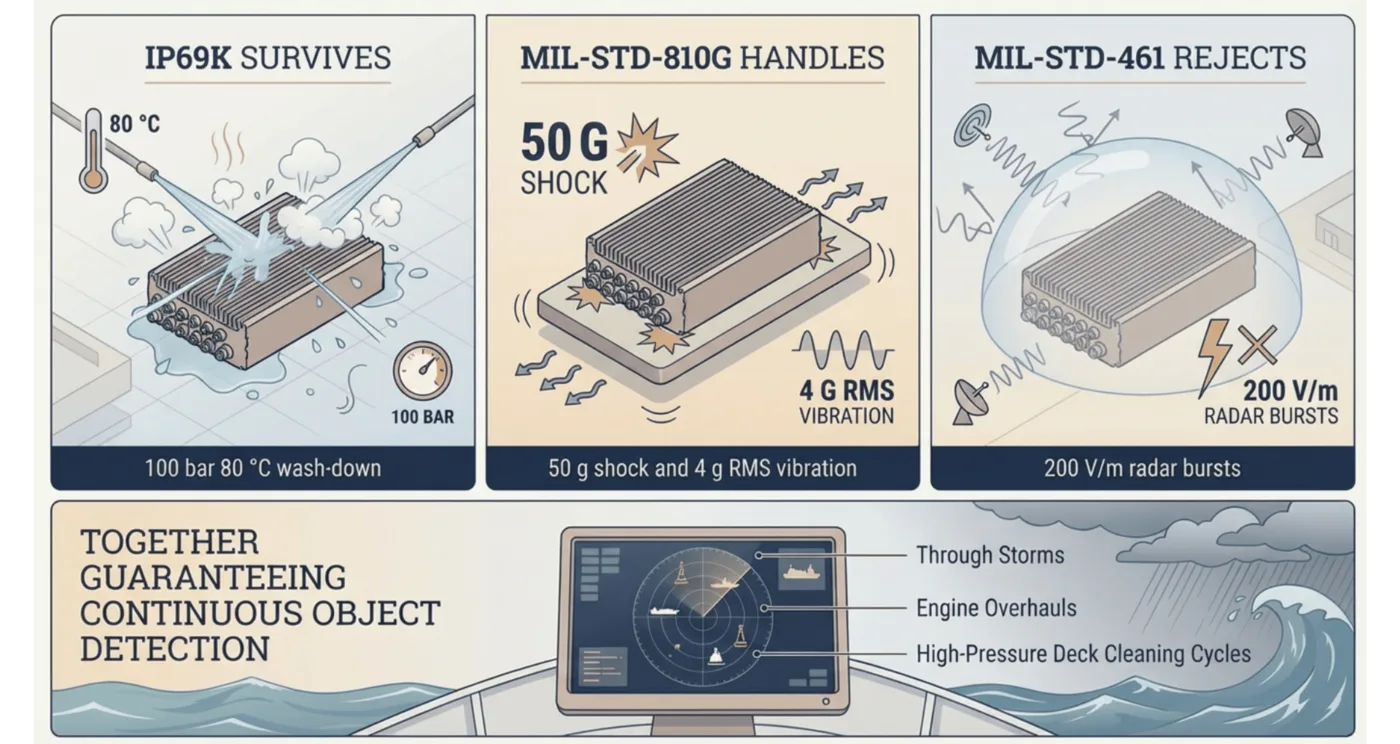
- Benefit: These provide a screw-locking mechanism that is vibration-proof (MIL-STD-810G compliant) and fully sealed against salt fog, ensuring consistent data ingestion from sonar and optical sensors.
3. EMI and Power Isolation
- Shielding: The chassis design is MIL-STD-461 compliant, effectively shielding internal buses from external radar/sonar interference.
- Power Regulation: The wide-range DC input includes reverse polarity protection and isolation to filter out transient surges from the ship’s power grid, eliminating the need for external power conditioners.
System Specifications Summary
Why this matters: This architecture proves that data-center class inference can be moved to the extreme edge by addressing the physical layer (thermal, mechanical, electrical) rather than just software optimization.
| Feature | Specification | Engineering Benefit |
|---|---|---|
| Compute Power | 485 TOPS (INT8) | Enables real-time sensor fusion without cloud dependency. |
| Environmental Rating | IP69K | Withstands high-pressure washdowns and submersion. |
| Shock/Vibration | MIL-STD-810G | Survivability during high-speed maneuvers and rough seas. |
| Cooling | Passive Conduction | Zero moving parts (fans) removes the most common failure point. |
Implementation Checklist: The "Go/No-Go" Assessment
| Engineering Advantage (Pros) | Implementation Constraint (Trade-offs) |
|---|---|
| Active Cooling Eliminated Passive conduction design removes fan failure points (MTBF increases significantly). | Thermal Headroom While capable (70°C), reliance on conduction means the mounting surface must account for heat dissipation. |
| Vibration Immunity M12 connectors prevent "back-out" failure common with RJ45 in high sea states. | Cabling Complexity Requires pre-terminated M12 cables; less flexible for quick, ad-hoc field patching than standard ethernet. |
| Power Hygiene Built-in isolation handles "dirty" generator power (surges/transients) without external UPS. | Weight/Size The IP69K ruggedized chassis is heavier and denser than standard industrial PCs. |