
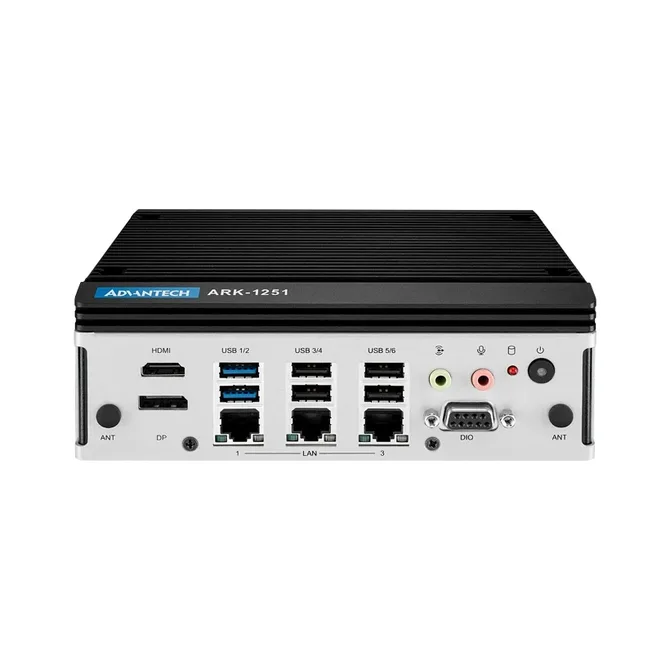
Intel Core Ultra AI PCs
ARK-1251-S7A1U
Intel Core Ultra 7-155U HDMI+DP+3*GbE+4*COM MIT
Advantech- Processor
- Intel Core Ultra
- AI performance
- Up to 22 TOPS
- Operating temp
- -20 to 60 °C
Inline inspection has a fixed time budget: the part is in front of the camera for a moment, and the result has to reach the reject gate before the part does. The computer is chosen to fit that window with margin.
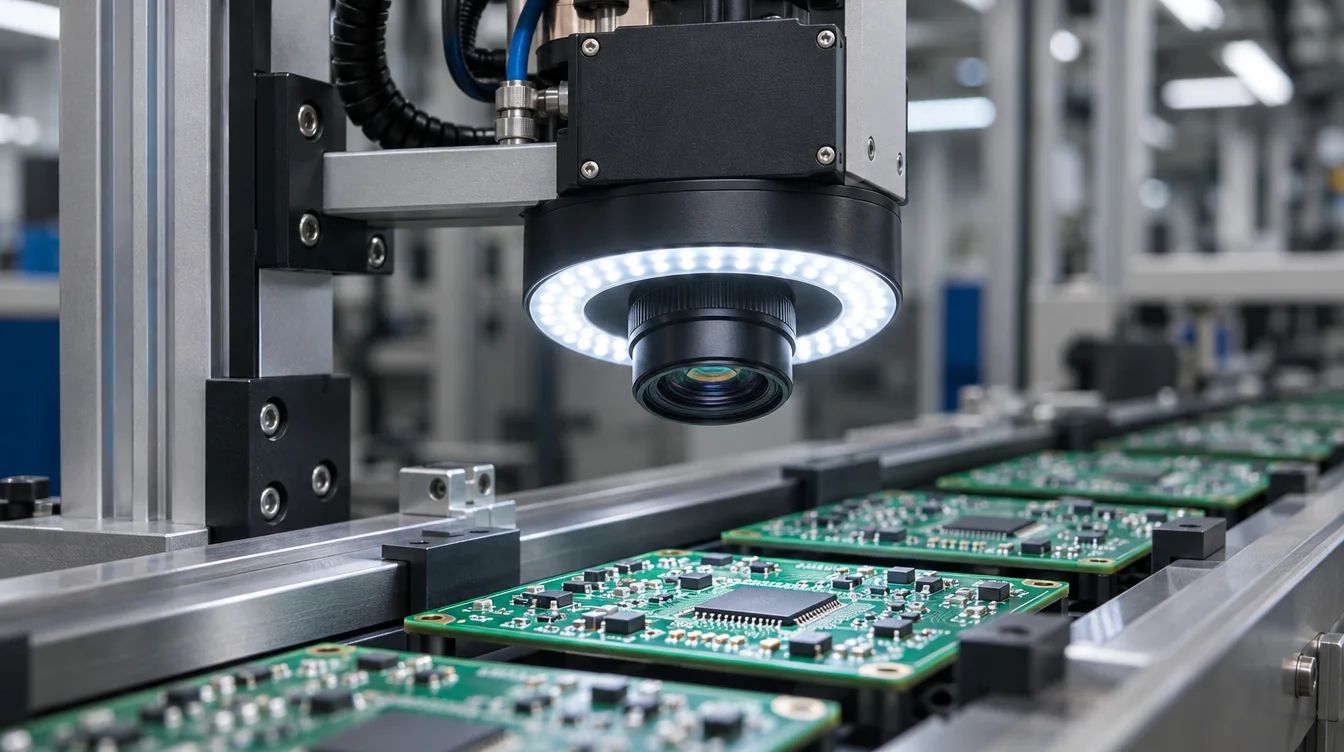
A sensor or encoder triggers the camera. The computer grabs the frame, runs the model and sets an output for pass or reject, usually within tens of milliseconds. It often logs the image and result for traceability as well.
The camera interface decides which ports the computer needs, so settle it before comparing processors.
For the cable run, our machine vision design guide specifies shielded Cat6A and M12 locking connectors, so that electrical noise does not corrupt GigE packets and vibration does not work a connector loose.
Start from the line. Parts per minute and the distance from the camera to the reject gate set the time between the trigger and the reject signal. Exposure and transfer, the network stack, inference and the output to the actuator all have to fit inside it.
Our machine vision design guide works through one example: four GigE Vision cameras on a line running 200 parts per minute, with a 50 ms window to reject a part.
| Stage | What happens | Budget |
|---|---|---|
| Image acquisition | Exposure and transfer from four GigE Vision cameras | 8 ms |
| Data transport | Network stack | 2 ms |
| Inference | One four-frame batch on an NVIDIA RTX GPU | 25 ms |
| Actuation | Isolated output to a pneumatic reject | 5 ms |
| Total | Against the 50 ms rejection window | 40 ms |
Inference takes the largest share, and it is the stage the computer changes. A larger model or more cameras per station lengthens it, and that is what moves a station from an NPU PC to a GPU computer.
These figures belong to that example. Measure your own model on the hardware before fixing the design. Neteon's 30-day evaluation program exists so you can test a unit in your application first.
All three run inspection models. The table compares them on the points that usually decide it.
| What to compare | Intel Core Ultra AI PC | NVIDIA Jetson system | GPU computer |
|---|---|---|---|
| Accelerator | NPU integrated in the processor | Jetson module: an NVIDIA GPU with an Arm CPU | Discrete NVIDIA GPU beside an Intel Core processor |
| Fits | A few cameras and a compact classification or detection model | Several cameras where space and power are tight | Many cameras per station, large models, or parallel inference streams |
| Camera ports in this catalog | Up to six 2.5GbE ports; PoE standard or optional on many models | PoE on some models, such as the four PoE+ ports on the Neousys NRU-220S | PoE on the Neousys Nuvo-9160GC PoE variant; optional 10GbE on larger models |
| Trigger and reject I/O | Isolated DIO on most models | Isolated DIO on some models | Isolated DIO on some models, and PCIe slots for I/O cards |
| Software | x86. A model built for NVIDIA GPUs is exported to ONNX and optimized with OpenVINO | Arm, with CUDA and TensorRT | x86, with CUDA and TensorRT |
| Heat | Fanless models available | Jetson modules draw 15 to 60 W, and some systems are passively cooled | RTX-class cards draw 130 to 350 W, and most systems need airflow for the card |
For inspection, an Intel Core Ultra AI PC is the usual place to start, because the trigger and reject signals connect straight to its isolated DIO. Move to a GPU computer when the measured inference time no longer fits the budget.
Changing platform later costs engineering time. CUDA code runs only on NVIDIA hardware, and our platform comparison guide puts a model port at two to eight weeks.
Showing 8 of 43 matching parts, one per model family.
Intel Core Ultra AI PCs
Intel Core Ultra 7-155U HDMI+DP+3*GbE+4*COM MIT
Advantech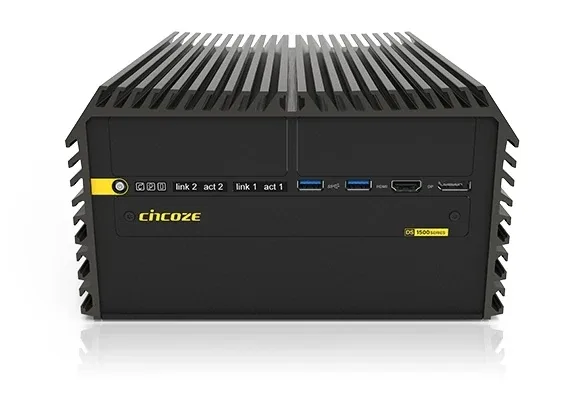
Intel Core Ultra AI PCs
Intel Arrow Lake-S Core Ultra 200S Series Processors, High Performance and PCIe Expandable Rugged Embedded Computer
Cincoze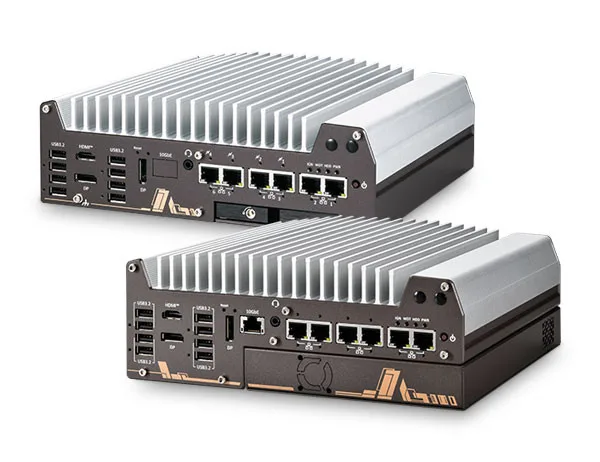
Intel Core Ultra AI PCs
Intel Core Ultra 200S Series Rugged Embedded Computer with 2x 2.5GbE/GbE, USB 3.2, single-slot PCIe Cassette & MezIO Interface, including Core Ultra 5 245T.
Neousys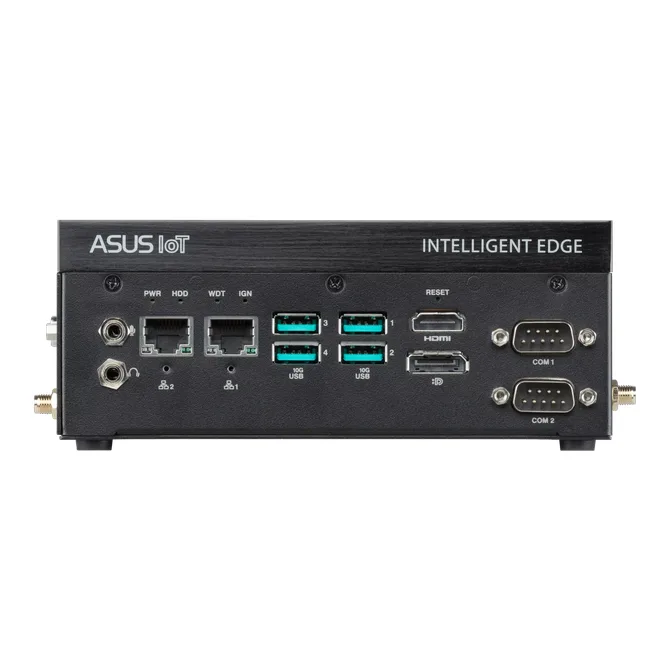
Intel Core Ultra AI PCs
Ultra-Compact DIN-Rail IPC with Intel Core Ultra Processor (Series 2)
ASUS IoT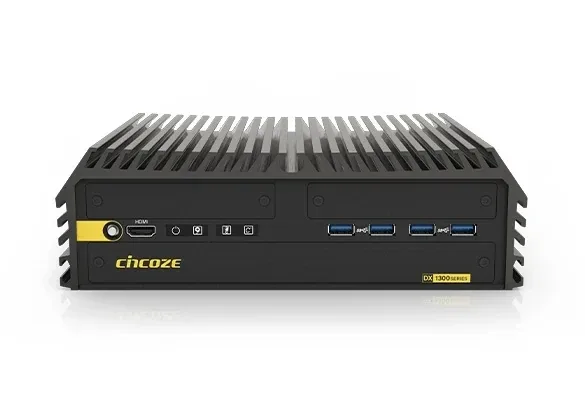
Intel Core Ultra AI PCs
Intel Arrow Lake-S Core Ultra 200S Series Processors, High Performance and Compact Rugged Embedded Computer
CincozeIntel Core Ultra AI PCs
Intel Core Ultra 200S Series Rugged Embedded Computer with 2x 2.5GbE/GbE, USB 3.2, MezIO Interface & 2.5" HDD tray, including Core Ultra 5 245T.
NeousysIntel Core Ultra AI PCs
Ultra-Compact DIN-Rail IPC with Intel Core Ultra Processor (Series 2)
ASUS IoT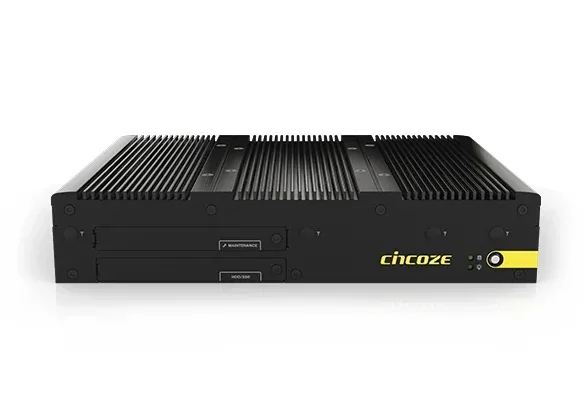
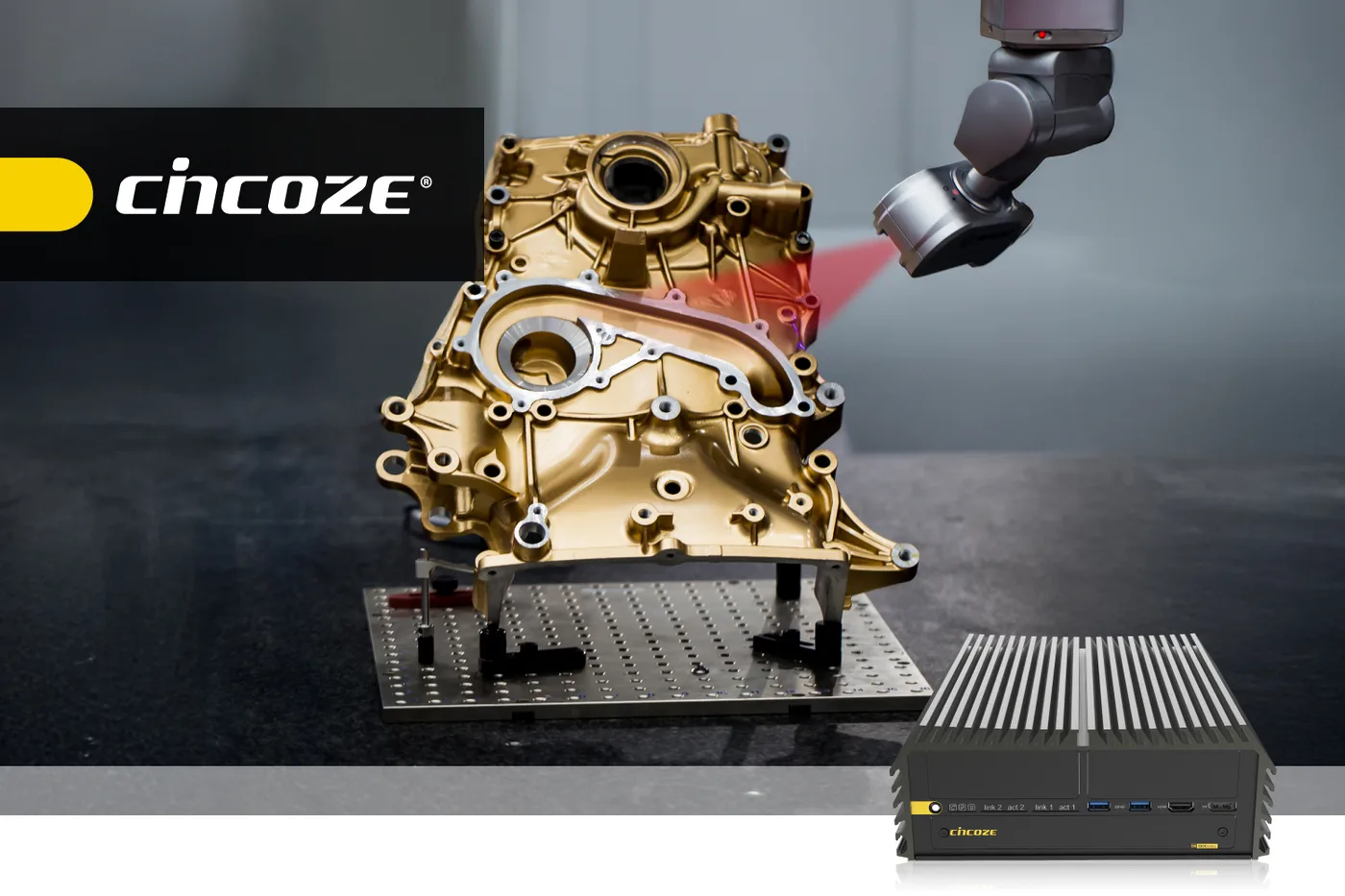 Vision AI · ManufacturingMachine Vision at Production SpeedIn machine vision, the embedded computer is not just a control box. It has to process image data quickly, connect cleanly to cameras and automation devices, and keep running reliably in production environments.
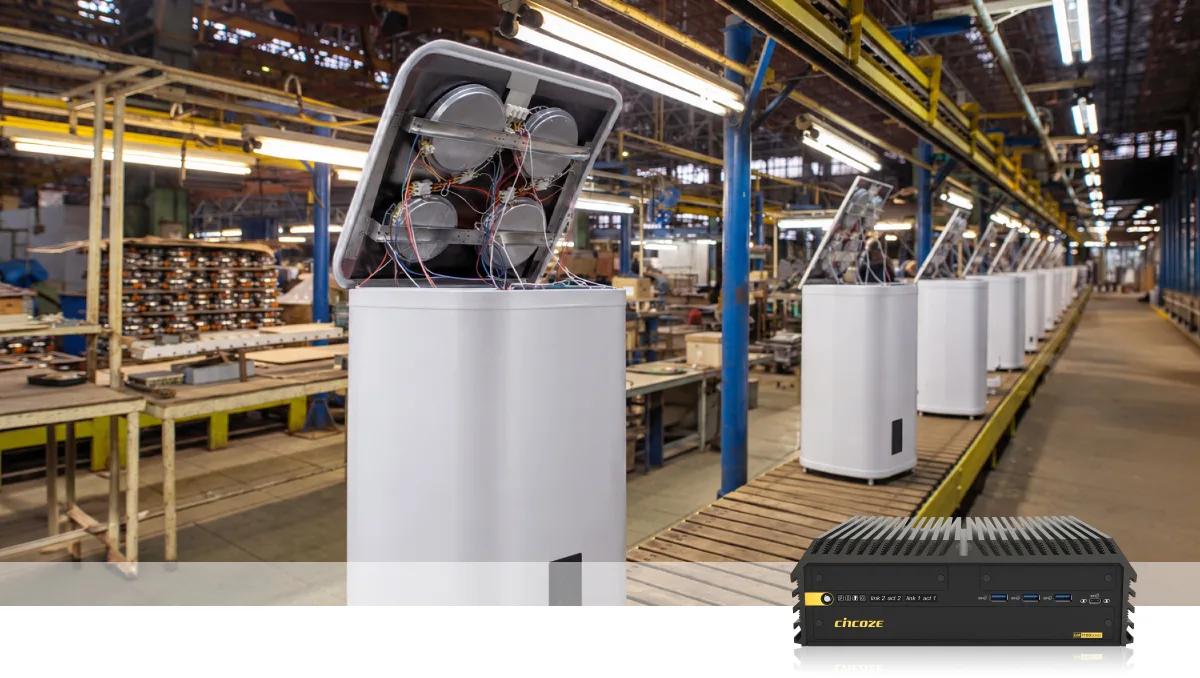 Vision AI · ManufacturingBoiler Component Traceability with Cincoze GM-1100A vision computer on a boiler production line has to fit the cabinet, connect the cameras, and turn images into usable production records. Those constraints shape the hardware decision alongside the AI workload.
For a few cameras and a compact classification or detection model it often is, and it keeps the system fanless and low power. Larger models or many cameras per station call for a GPU computer.
It depends on line speed and the distance to the reject gate. In the worked example in our machine vision design guide, a four-camera line at 200 parts per minute has a 50 ms rejection window and the system uses 40 ms of it, 25 ms of that on inference. Send your parts per minute and we size against your window.
Count ports and watts. A computer with four PoE+ ports and a 100 W total budget, such as the Neousys Nuvo-11531 with its PoE option, can feed four cameras as long as their combined peak draw stays inside the budget. Our PoE guide suggests adding about 20% to the cameras' total peak draw for cable loss and cold-weather margin.
Often not. Most Intel Core Ultra AI PCs in the catalog have isolated digital inputs and outputs built in, and the Neousys Nuvo-11531 has four of each. The trigger from a sensor or encoder comes in on an input, and an output drives the reject gate or stack light. If the cell needs more channels, tell us the count.
Yes, after conversion. CUDA code runs only on NVIDIA hardware, so the model is exported to ONNX and optimized with OpenVINO for the Intel platform. Our platform comparison guide puts a typical port at two to eight weeks, depending on the model.
Neteon runs a 30-day evaluation program. Ask about it when you request a quote.