TLDR
Container terminals are automating faster than almost any other heavy-industry site, and most of that automation now runs computer vision on-site instead of in a distant control room. This outlook maps where edge AI is landing in ports through 2030, what the hardware has to survive at a quayside, and which rugged GPU platforms fit the work. The short version: response time and ingress protection pick the box, and Nuvo-9160GC GPU computers alongside Jetson-based NRU-220 units cover the camera-heavy jobs that define a modern terminal.
For the wider context, see our complete guide to edge AI in transportation and vehicles.
For a gate-level example of these ideas in the field, see how a POC-700 automates harbor cargo gate recognition at a marine terminal.
Overview
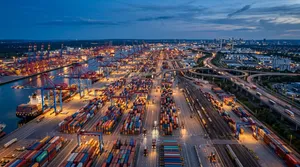
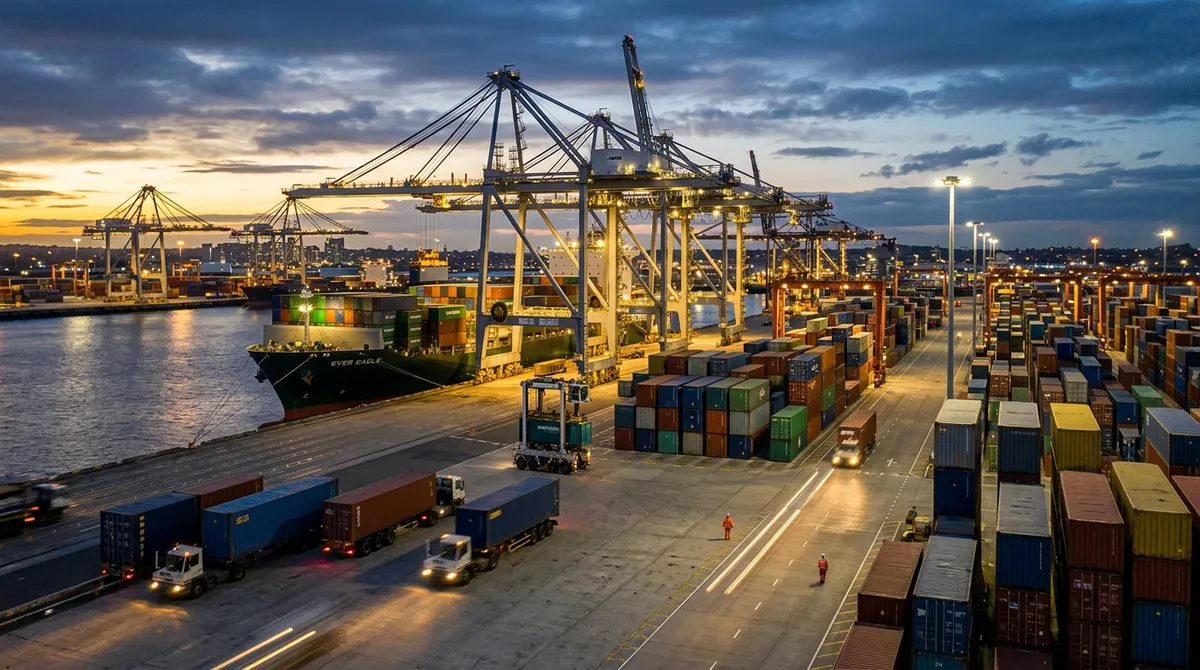
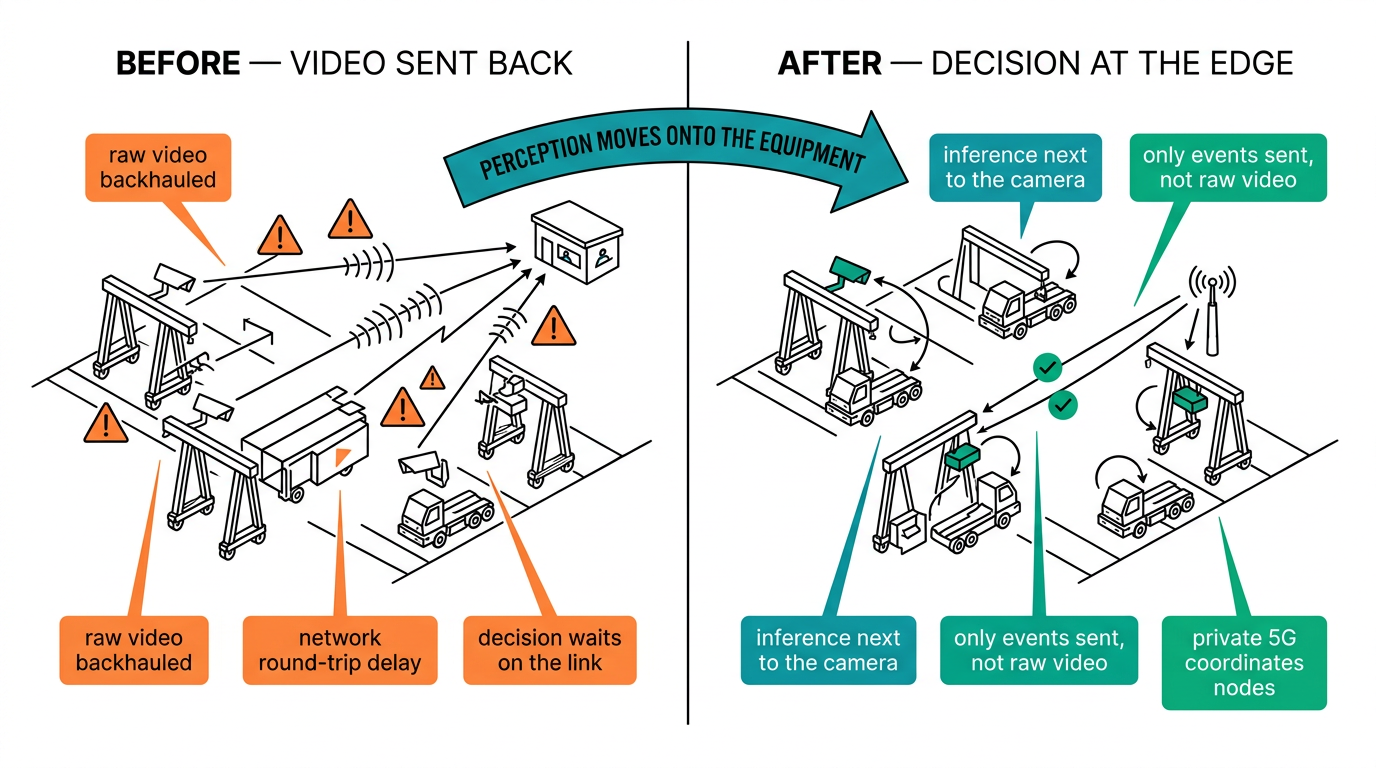
Global box throughput keeps rising while terminals deal with a shrinking labor pool and stricter quayside safety rules. The response has been to move perception onto the equipment itself, so a crane, a straddle carrier, or a gate lane makes its own decision in milliseconds rather than waiting on video sent back over the yard network.
We have looked at neighboring problems before. A container crane defect-detection deployment showed why inference has to sit next to the camera, and our piece on autonomous mobile robots in warehouse logistics traced the same shift on the storage side. Ports sit where both meet: outdoor, corrosive, always on, and full of moving steel. The multi-camera perception work behind airport ground-vehicle safety maps closely onto terminal yard traffic.
Key trends through 2030
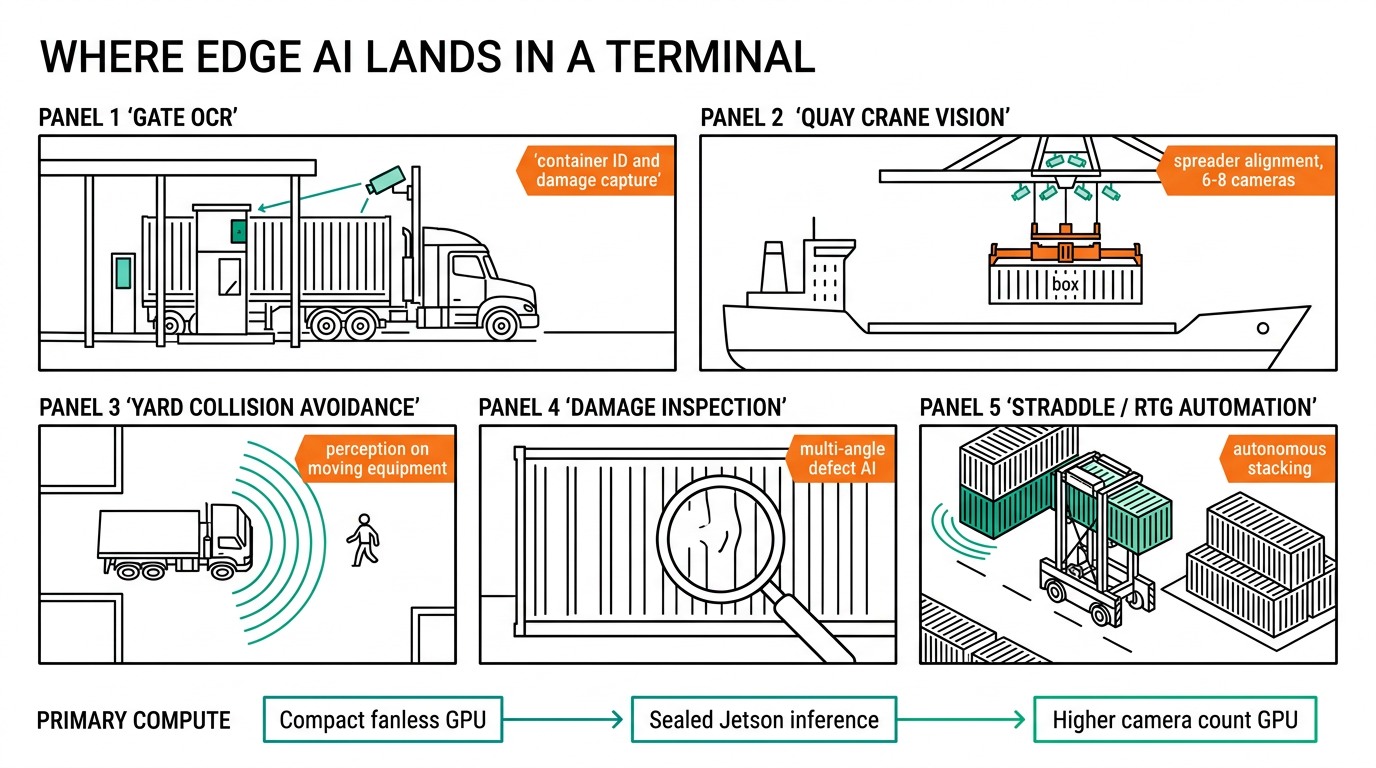
Five workloads account for most terminal edge AI spending. The table below sketches where each stands now and where operators expect it to go.
| Application | 2026 status | 2030 outlook | Primary compute |
|---|---|---|---|
| Gate OCR (container ID, damage capture) | Widely deployed | Standard, multi-angle, damage AI added | Compact GPU |
None of this is speculative. Pilots that proved out in 2024 and 2025 are turning into line items in terminal capital budgets, and the compute is settling onto a handful of rugged GPU form factors.
What this asks of the hardware
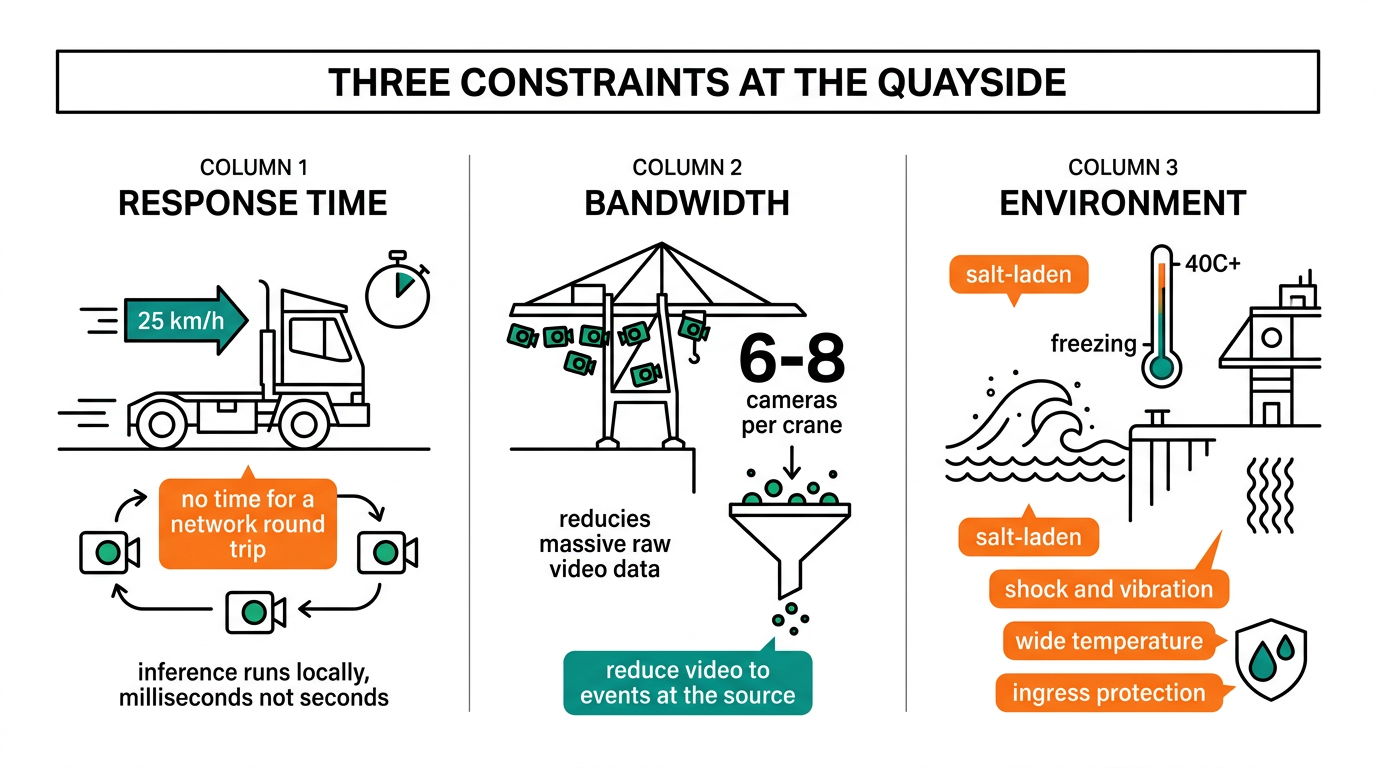
Three constraints decide the platform. First, response time. Collision avoidance on a yard truck moving 25 km/h has no room for a network round trip, so the model runs locally. Second, bandwidth. A single crane can carry six to eight cameras, and backhauling that raw feed across a terminal wireless network is neither cheap nor reliable, so the box reduces video to events at the source.
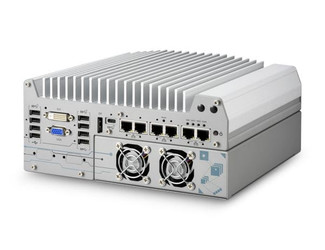
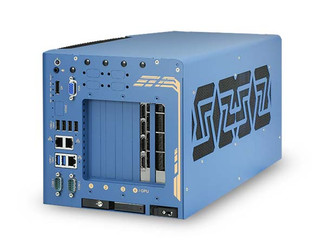
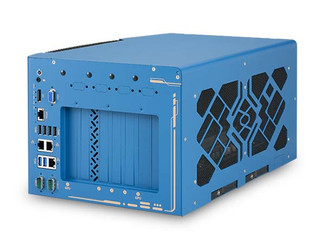
Third, and the one that trips up office-grade hardware, is the environment. Quaysides are salt-laden, they vibrate, and they swing from freezing to well above 40 C in the same week. Equipment needs wide-temperature operation, real ingress protection against wind-driven rain and washdown, and shock tolerance for crane and vehicle mounting. A fanless GPU computer such as the Nuvo-9160GC handles the multi-camera vision load, while the NRU-220 brings Jetson Orin inference in a sealed, low-power package for the moving equipment where space and heat are tight. For denser inspection or higher camera counts, the Nuvo-10108GC and Nuvo-10208GC add more GPU headroom in the same rugged family.
What to watch
Private 5G is the enabler most operators name first. It gives the yard the deterministic wireless it has lacked, which lets edge nodes coordinate instead of acting alone. Watch also for tighter integration between perception boxes and the terminal operating system, so a damage flag at the gate or a stopped truck in a lane becomes an operational record, not just an alert on a screen. The retrofit market matters too. Most of the world's cranes are not new, and the winning deployments are the ones that bolt onto existing steel without a rebuild.
Conclusion
Ports reward edge AI because the work is visual, the latency budget is small, and the environment punishes anything that is not built for it. Terminals that treat compute selection as a rugged-engineering decision, not an IT purchase, are the ones putting these systems into daily service. Follow Neteon on LinkedIn for more of these deep dives, or reach us at [email protected] or www.neteon.net to talk through a port or terminal pilot.
Related Products

FAQs
Why run AI inference at the port instead of in a central control room?
Collision avoidance and crane alignment work on millisecond budgets, and a single crane can feed six to eight cameras. Sending raw video across the yard network adds latency and cost, so terminals run the model next to the camera and send events rather than footage.
What environmental protection does a terminal edge computer need?
Quaysides are salt-laden, they vibrate, and temperatures swing from freezing to above 40 C. Look for wide-temperature operation, ingress protection against wind-driven rain and washdown, and shock tolerance for crane and vehicle mounting.
Which platforms fit container terminal workloads?
Fanless GPU computers like the Nuvo-9160GC handle multi-camera vision at cranes and gates, while the Jetson-based NRU-220 suits moving equipment where space and power are tight. Higher camera counts move up to the Nuvo-10108GC or Nuvo-10208GC.
What are the main port edge AI applications today?
Gate OCR for container ID and damage capture, quay crane spreader alignment, yard truck collision avoidance, quayside worker safety zones, and predictive maintenance on cranes and reefers.
How does private 5G change port automation?
It gives the yard the deterministic wireless it has lacked, so edge nodes can coordinate rather than act alone, and perception results can flow into the terminal operating system as operational records.
Sources and further reading
OSHA maritime safety standards and guidance.
NIST Application Container Security Guide.
Related Neteon guides
Warehouse AMRs and Edge AI Through 2030.
Underground Mining Edge AI Outlook Through 2030.
Browse the industry outlook 2 topic hub for more deployment guidance.
Recommended next: IP69K Edge AI for Maritime Ship Detection.
About the author and technical review
Author: Olivia Parker covers product-to-market strategy for edge AI, AIoT, and embedded systems.
Technical review: Neteon Industrial Computing Editorial Team. Reviewed August 5, 2026 for source quality, product-specification links, standards references, and clear separation of measured results from reference-architecture assumptions.
Evidence note: Unless a linked primary source explicitly identifies measured field results, performance figures and system outcomes in this article are design targets or planning estimates, not guaranteed results.