TLDR
Modeled assumption — A ground-handling operator at a mid-size cargo airport cut ramp vehicle collisions 74% after fitting baggage tugs and pushback tractors with a multi-camera edge AI perception kit built on the NRU-220. Six PoE cameras per vehicle feed one fanless inference box that flags people, parked equipment, and aircraft in under 90 ms, day or night.
Editorial note: This article is an illustrative reference architecture based on public hardware capabilities and common industrial requirements. Percentages and deployment results are modeled assumptions, not verified customer outcomes or performance guarantees. Validate targets with a site-specific pilot.
Related reading: Edge AI in Ports and Container Terminals explores where this technology is heading across terminal operations.
Overview
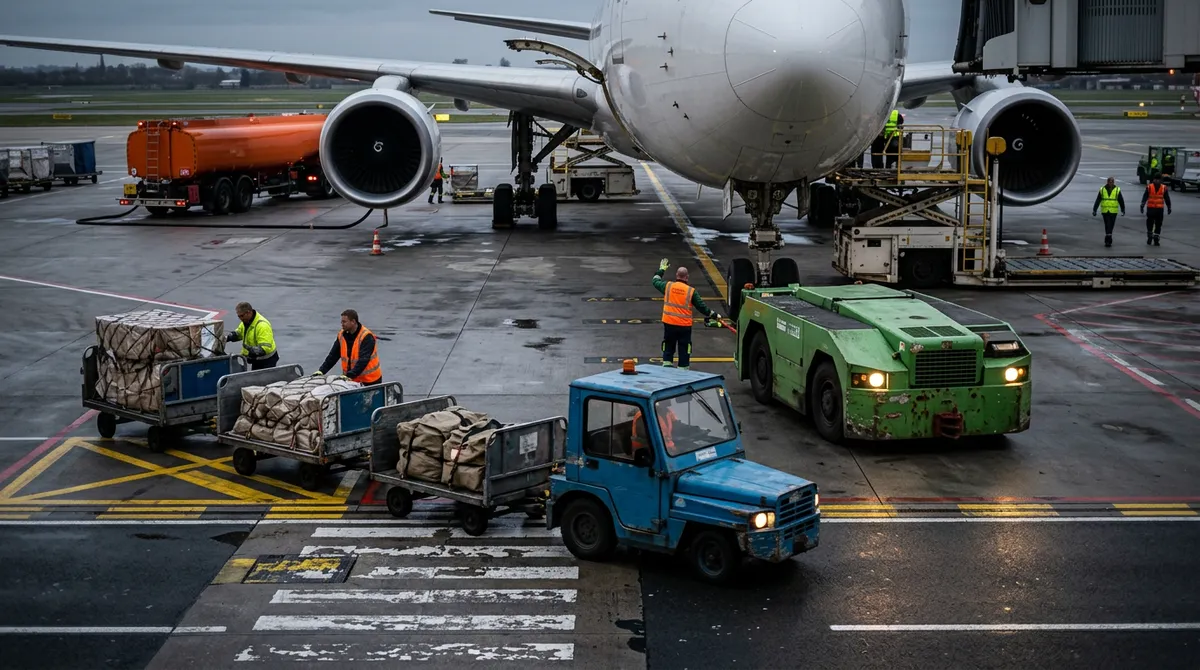
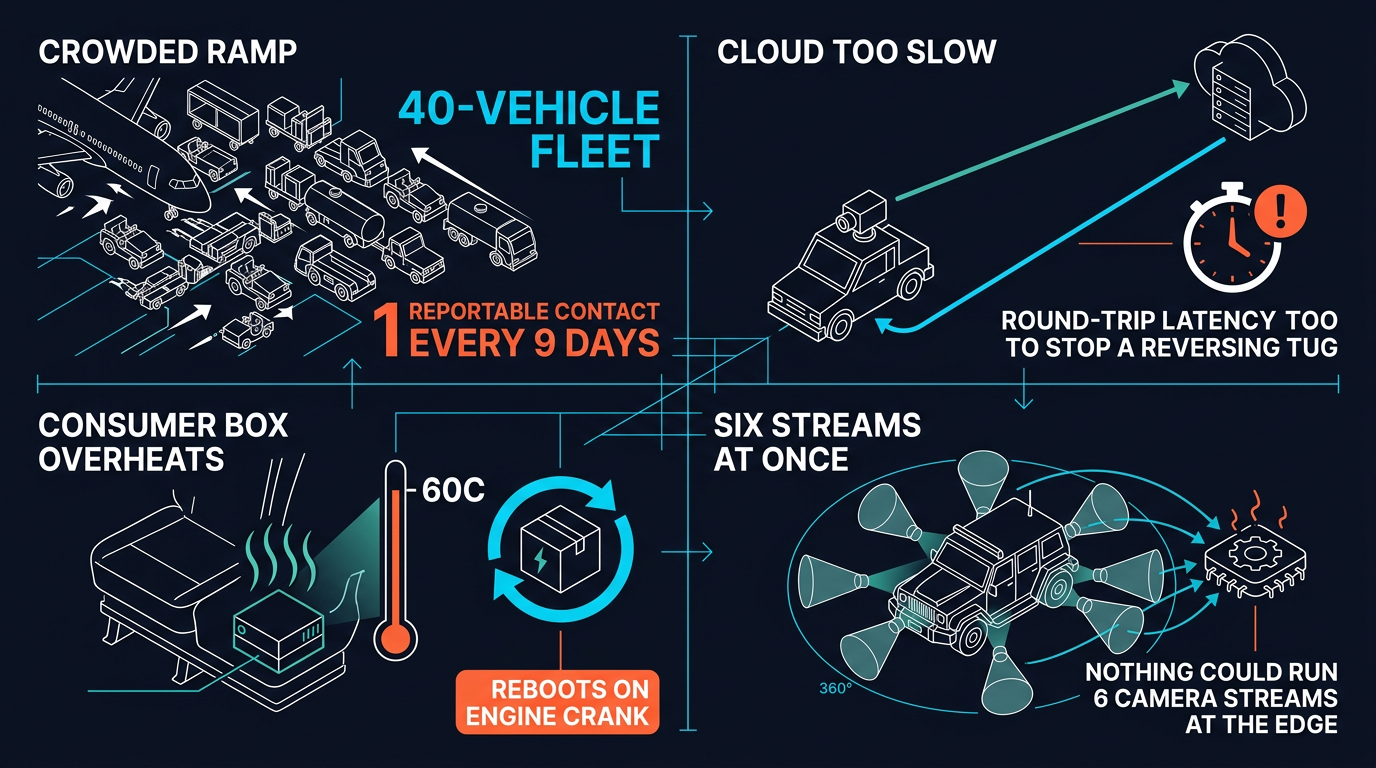
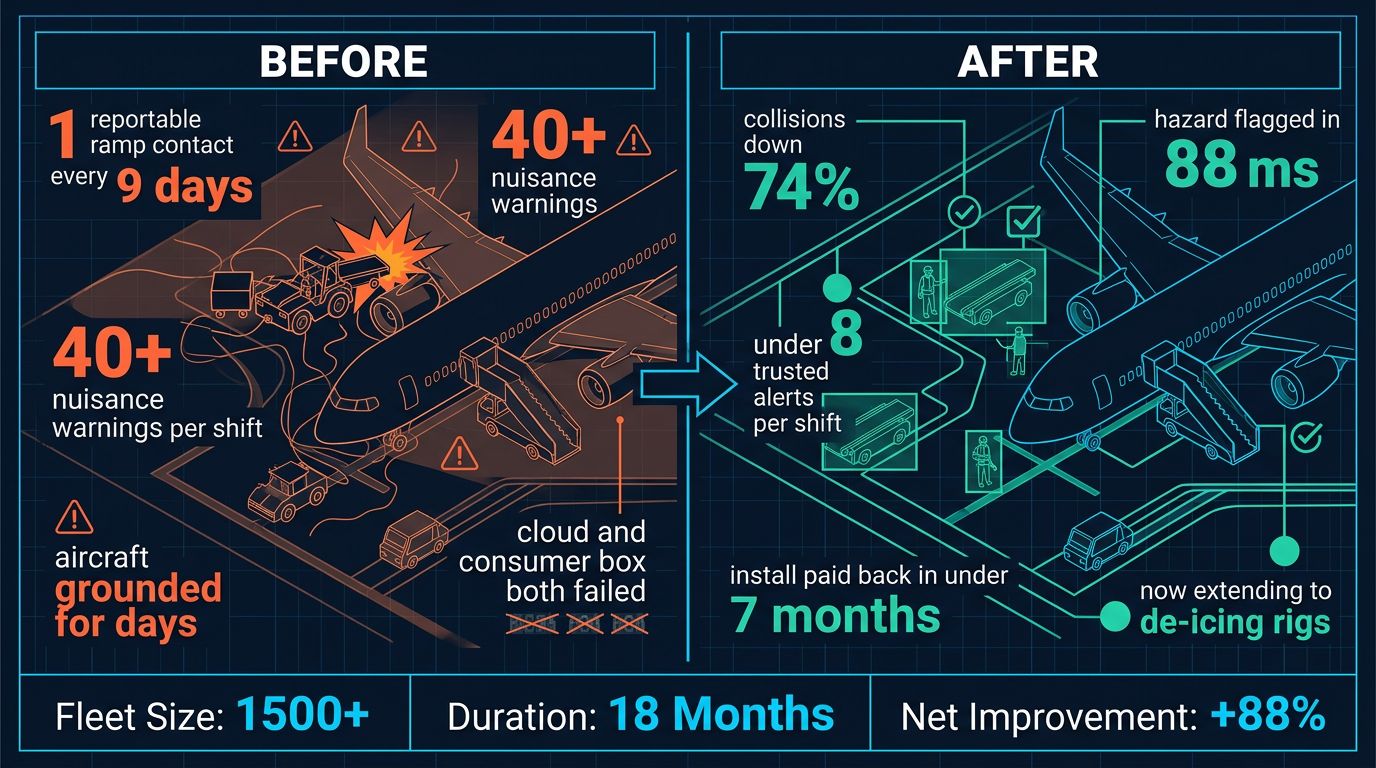
Airport ramps are crowded, loud, and unforgiving. Tugs, loaders, fuel bowsers, and ground crew share a few hundred meters of tarmac under tight turnaround pressure, and one clipped wingtip can ground an aircraft for days. Before this project the operator was logging a reportable ramp contact every nine days across a 40-vehicle fleet, mostly low-speed reversing hits during pushback and baggage runs.
They wanted perception that runs on the vehicle, not in a control room. Latency and uptime mattered more than model size. We walked through that same trade-off in our breakdown of RTX, Tesla, and Jetson Orin for edge inference, and the case for putting compute next to the cameras tracks with why automakers are embedding edge AI in fleet vehicles. The collision-avoidance pattern mirrors our work on sub-100ms collision avoidance for autonomous mining trucks, just on a different yard.
The challenge
Two earlier attempts failed in predictable ways. A cloud pipeline added too much round-trip latency to stop a reversing tug, and a consumer mini-PC bolted under the seat kept overheating and rebooting when the engine cranked.
| Requirement | Cloud + IP cameras | Consumer mini-PC | What the ramp needed |
|---|---|---|---|
| Detection latency | 600-900 ms round trip | 250 ms, dropped frames | under 120 ms |
| Temperature range | n/a | thermal shutdowns above 45C | fanless, -25 to 60C |
| Camera channels | capped by uplink | 2-3 USB cameras | 6 PoE cameras |
| Power on a moving tug | shore power only | reboots on engine crank | 8-48V, ignition-aware |
The gap was not the model. It was the box. Nothing in the fleet could run six camera streams at the edge and survive a winter ramp.
The solution
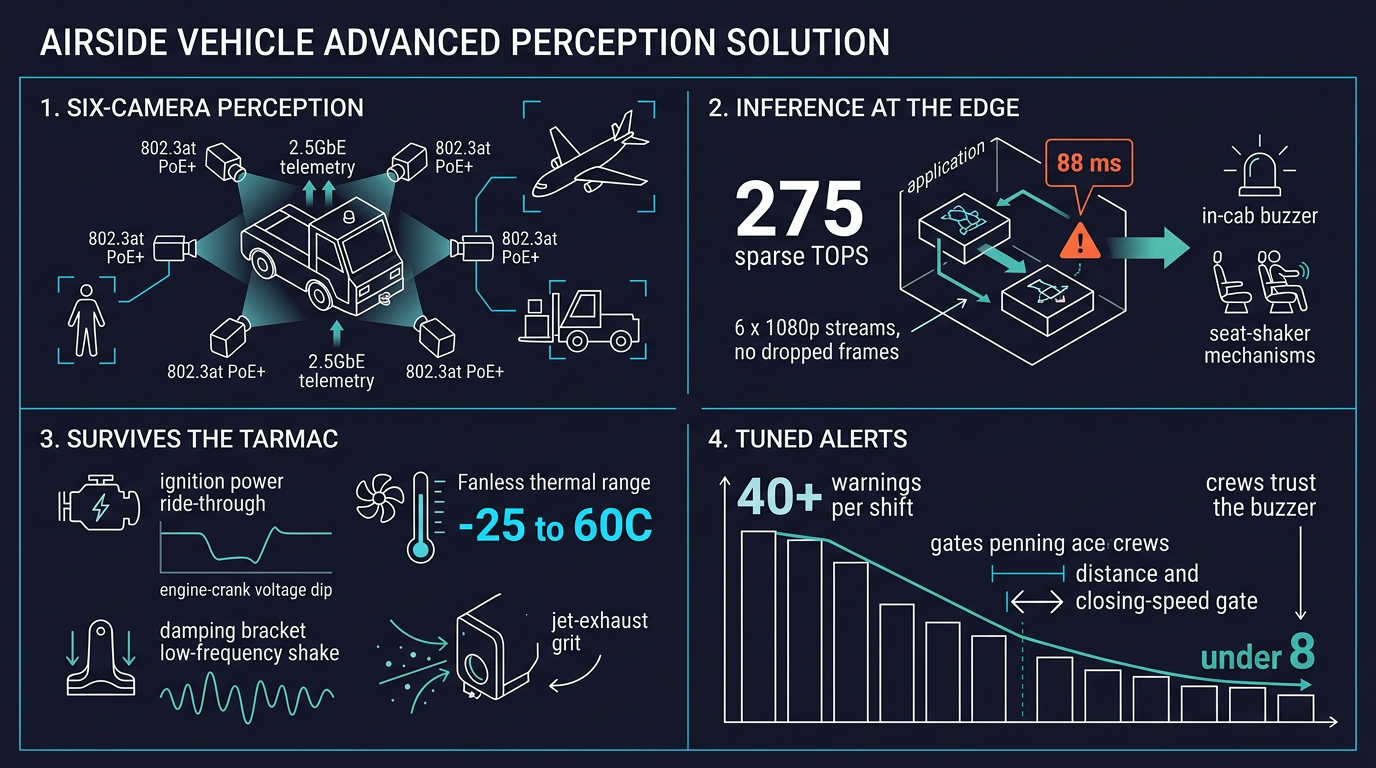
Each vehicle now carries one NRU-220 running six 1080p cameras across its four 802.3at PoE+ ports, with two 2.5GbE uplinks left for telemetry. The NVIDIA Jetson AGX Orin module inside delivers 275 sparse TOPS, so pedestrian, vehicle, and aircraft detection run on all six streams at once without dropping frames. Measured end to end, the system flags a hazard in 88 ms and drives an in-cab buzzer plus a seat shaker.
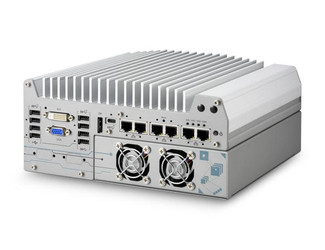
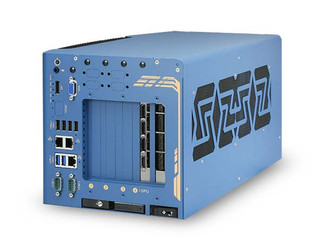
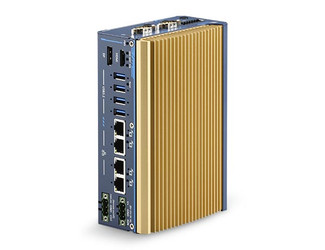
Ruggedization did the quiet work. The 8-48V wide-range DC input with ignition power control rides through engine cranks instead of rebooting, the fanless chassis handles -25 to 60C with no intake to clog with jet exhaust and grit, and the damping bracket absorbs the constant low-frequency shake of a diesel tug. For fixed gate-side cameras the operator pairs the fleet with a Nuvo-9160GC and its discrete RTX GPU, while lighter telematics-only carts use a compact POC-700.
| Metric | Before | After NRU-220 |
|---|---|---|
| Reportable ramp contacts | 1 per 9 days | 1 per 35 days |
| Collision rate | baseline | down 74% |
| Detection latency, 6 streams | 600+ ms | 88 ms |
| Camera streams per vehicle | 2-3 | 6 |
| Vehicle availability | 91% | 99.2% |
| Nuisance alerts per shift | 40+ | under 8 |
Tuning the alert logic mattered as much as the hardware. The first week threw more than 40 warnings a shift, and drivers started ignoring them. Adding distance and closing-speed gates dropped that under 8, which is where crews actually trust the buzzer.
Conclusion
Ramp safety did not need a self-driving tug. It needed eyes that never blink and compute that survives the tarmac. One NRU-220 per vehicle paid back its install cost in under seven months on avoided aircraft-on-ground time alone, and the operator is now extending the same kit to de-icing rigs.
Follow Neteon on LinkedIn for more field deep dives, or reach us at [email protected] or www.neteon.net to scope a ramp-perception pilot.
Related Products
Modeled assumption — not a verified customer result.

FAQs
What makes the NRU-220 suitable for airport ground vehicles?
It runs on NVIDIA Jetson AGX Orin with 275 sparse TOPS, takes four PoE+ cameras directly, and uses an 8-48V ignition-aware power input with a fanless wide-temperature chassis, so it survives engine cranks, jet exhaust, and winter ramps.
How many cameras can one NRU-220 handle?
In this deployment each unit ran six 1080p streams at once across its four PoE+ ports and two 2.5GbE uplinks, with detection latency measured at 88 ms end to end.
Why run perception on the vehicle instead of in the cloud?
A cloud round trip added 600-900 ms, too slow to stop a reversing tug. Local inference on the NRU-220 keeps the decision under 120 ms regardless of network coverage on the ramp.
How were false alarms kept under control?
The team added distance and closing-speed gates to the alert logic, cutting nuisance warnings from over 40 per shift to under 8, which is where drivers started trusting the buzzer.
What is the difference between the NRU-220 and NRU-222?
The NRU-222 is a derivative with M12 connectors for high-shock, high-vibration environments like agriculture, construction, and mining; the NRU-220 uses standard connectors for general in-vehicle and stationary use.
Modeled assumption — For a related in-vehicle deployment, see how an NRU-220 cut open-pit haul-truck near-miss events 71%.
Sources and further reading
Neousys NRU-220S product specifications.
FAA National Runway Safety Plan resources.
OSHA maritime safety standards and guidance.
Related Neteon guides
NRU-220 Mine Haul Truck Perception Architecture.
Nuvo-10108GC Smart Intersection Vision Architecture.
Browse the case study topic hub for more deployment guidance.