
TL;DR
IEC 62443 is the international standard for cybersecurity in industrial automation and control systems. Once you push AI inference to the edge, every rugged computer on the plant floor becomes a network node someone can reach. This guide covers what IEC 62443 asks of a component like an edge AI computer, which hardware features map to those requirements, and what stays the integrator's job. Products referenced: Nuvo-11000, Nuvo-10108GC, POC-700, and NRU-220.
Overview
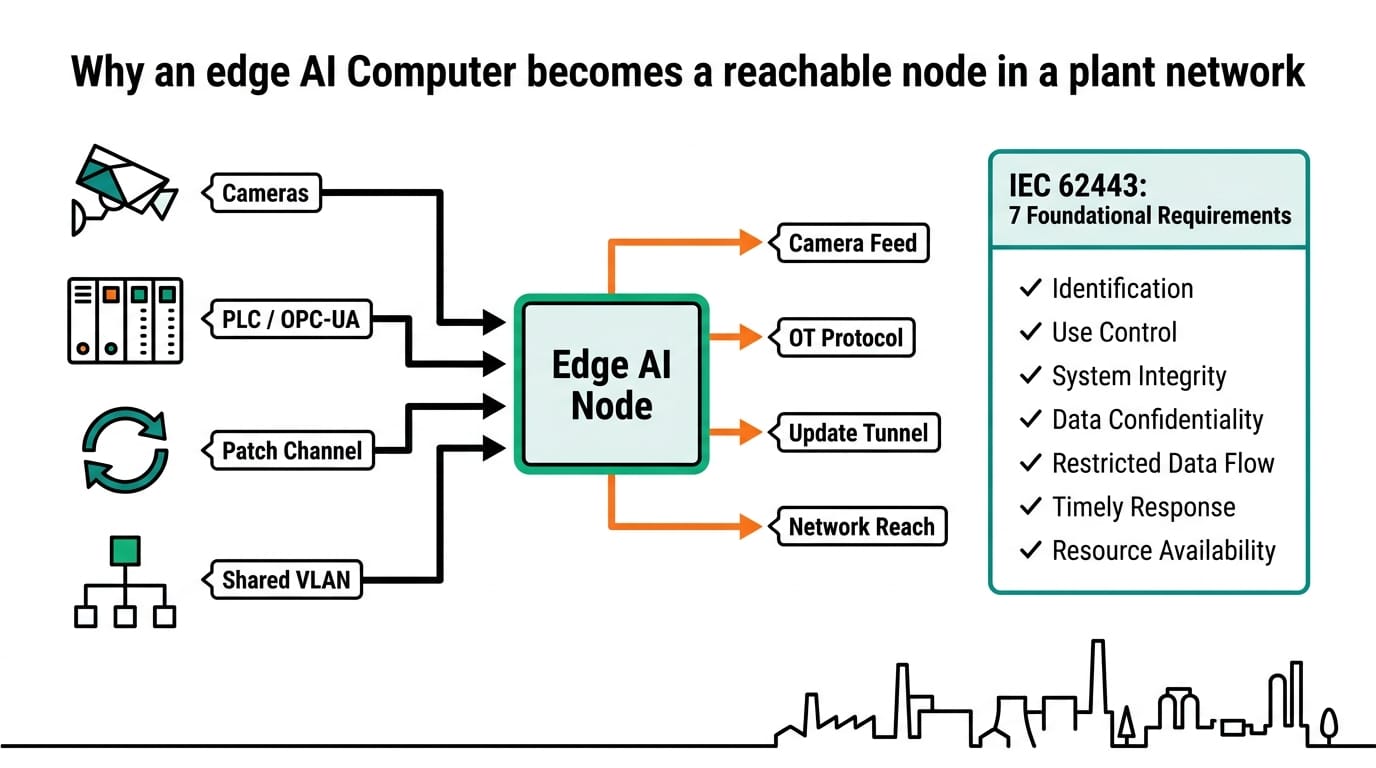
An edge AI box is not an isolated appliance anymore. It pulls camera feeds, talks to PLCs over a protocol like OPC-UA, runs containers you patch over the network (we covered that in container deployment on industrial PCs), and often shares a fabric with the rest of the plant, the layout we walked through in designing a converged IT/OT network. Each of those links is also a way in.
IEC 62443 is the framework asset owners and regulators keep pointing at for that risk. It is not one checkbox. It splits the work across the whole chain: the product supplier, the integrator who builds the system, and the owner who runs it. If you are speccing an edge AI computer, the part that matters most is IEC 62443-4-2, the component requirements.
What the standard requires
62443-4-2 defines seven foundational requirements and grades each one by Security Level, SL 1 through SL 4, where the level reflects how capable an attacker you are defending against. A component earns a capability level per requirement. The integrator then assembles those components into a system that hits a target level for each zone.
| Requirement | What it covers | Example at the edge |
|---|---|---|
| FR1 Identification & authentication | Prove who or what is connecting | Unique device credentials, no shared logins |
| FR2 Use control | Enforce least privilege | Role-based access to the inference service |
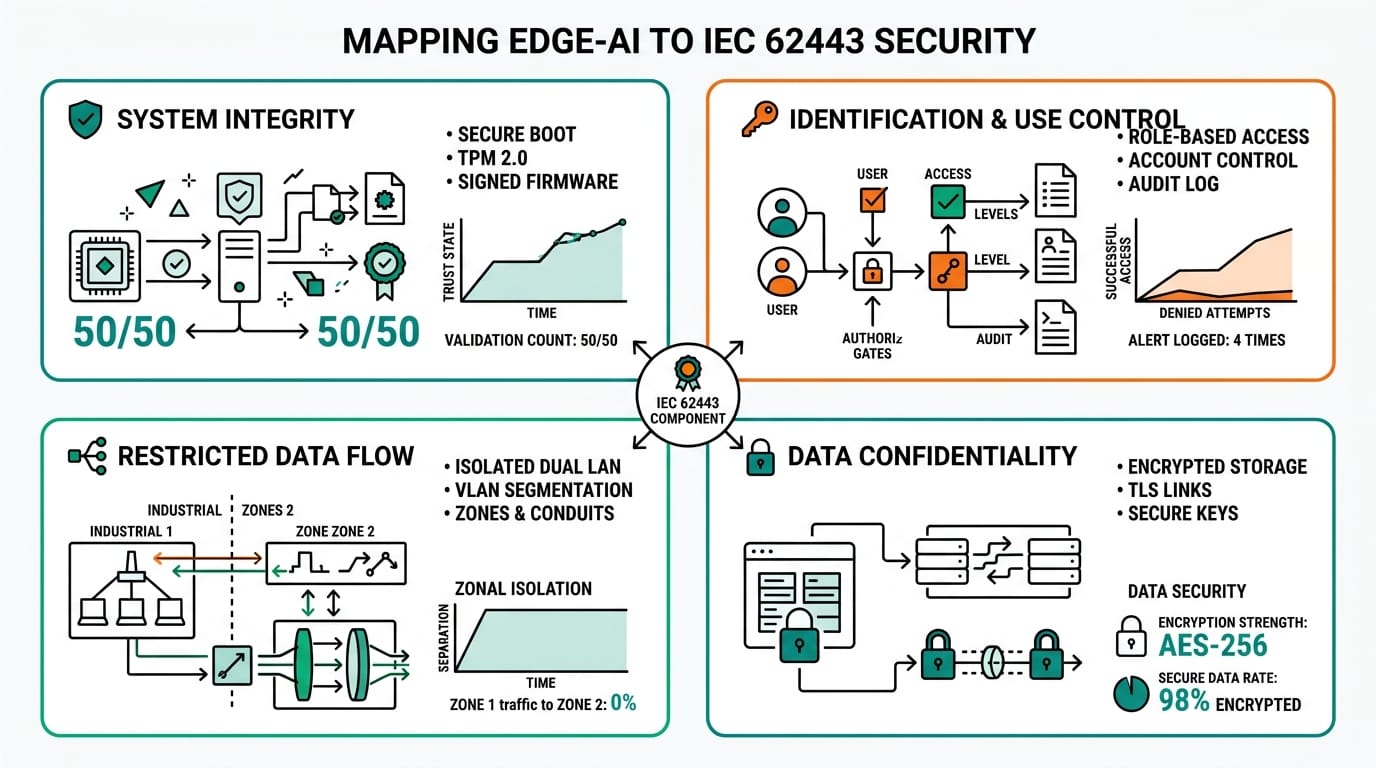
| FR3 System integrity | Catch tampering with code and data | Secure Boot, signed firmware, TPM-measured boot |
| FR4 Data confidentiality | Protect data at rest and in transit | Disk encryption, TLS to the broker |
| FR5 Restricted data flow | Segment the network | Separate NICs for OT and management traffic |
| FR6 Timely response to events | Log and alert | Audit logs shipped off the box |
| FR7 Resource availability | Survive stress and denial of service | Watchdog, brownout-tolerant power |
Which products support these requirements
No off-the-shelf computer is "IEC 62443 certified" on its own. Certification lands on the system and its integrator. What a good edge platform gives you is the hardware and firmware to reach a target level without bolting on extra boxes. Here is how the referenced platforms line up against the component controls.
| Platform | Role | 62443-4-2 features it brings |
|---|---|---|
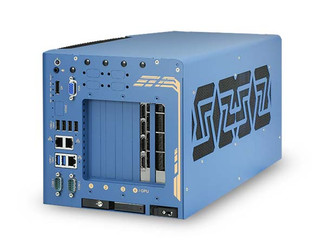
| Nuvo-11000 | General edge inference, Intel Core Ultra | TPM 2.0 support, UEFI Secure Boot, multiple isolated GbE ports for FR5 segmentation |
| Nuvo-10108GC | GPU vision inference | Secure Boot, self-encrypting NVMe for FR4, dual LAN to split management from OT |
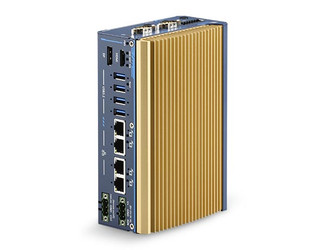
| POC-700 | Compact in-vehicle or field node | Isolated wide-range power and watchdog for FR7, TPM header, small attack surface |
| NRU-220 | NVIDIA Jetson Orin AI at the edge | Hardware root of trust on the Orin module, secure boot chain, encrypted storage |
Treat these as building blocks. FR1, FR2, and FR6 are mostly software and process, meaning your identity provider, your access policy, and your log pipeline. The box makes them possible. It does not do them for you.
Real-world implications
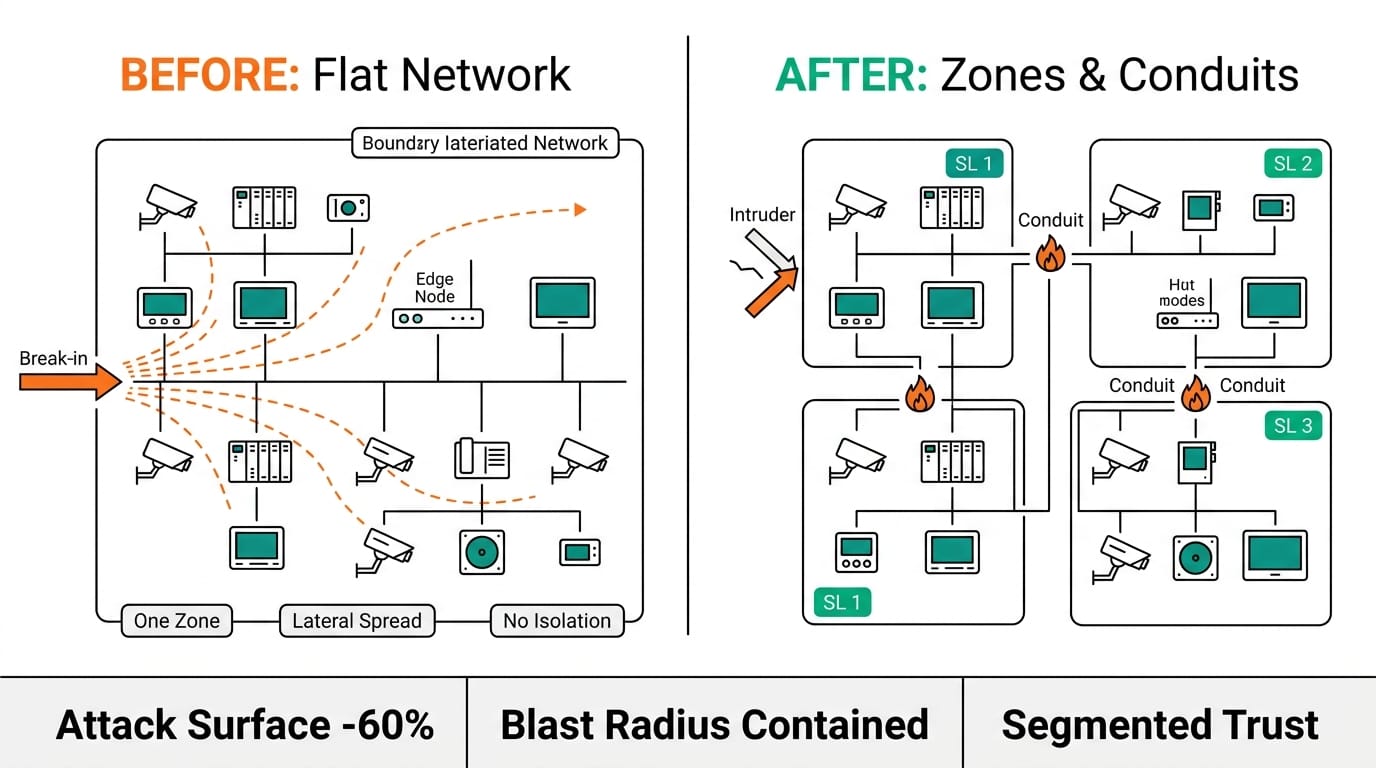
Two things trip teams up. Security level is set per zone, not per device. A camera network at SL 2 and a safety controller at SL 3 need different treatment even when they share a rack, so map zones and conduits before you pick hardware. And patching is a lifecycle requirement, not a one-time setup. IEC 62443-2-3 expects a managed way to deliver updates, which is the whole reason container-based deployment and remote update matter for a fleet you cannot physically reach.
The payoff is a smaller blast radius. Put OT traffic on its own NIC, turn on Secure Boot, encrypt the drive, and ship audit logs off the box. Now a compromised camera stays a compromised camera instead of a foothold into the line.
Conclusion
IEC 62443 rewards planning more than any single spec line. Pick an edge platform with the right primitives, Secure Boot, a TPM, isolated ports, and encrypted storage, then do the zoning, identity, and patch work around it. The Nuvo-11000, Nuvo-10108GC, POC-700, and NRU-220 all ship with those primitives, so the security engineering starts from a real baseline instead of a bare box.
Follow Neteon on LinkedIn for more edge security deep dives, or reach us at [email protected] or www.neteon.net to talk through a hardened edge AI build.
Related Products


FAQs
What is IEC 62443?
It is the international standard for cybersecurity in industrial automation and control systems. It defines security requirements and levels for the products, systems, and processes that make up an OT environment.
Can an edge AI computer be IEC 62443 certified on its own?
Not really. Component certification under 62443-4-2 covers specific capabilities, but full certification applies to the assembled system and its integrator. A computer supplies the primitives; the system earns the security level.
What is IEC 62443-4-2?
It is the part of the standard that lists component requirements. It groups controls into seven foundational requirements and grades each from Security Level 1 to Security Level 4.
Which hardware features matter most for IEC 62443 at the edge?
Secure Boot and a TPM for system integrity, self-encrypting storage for confidentiality, isolated network ports for segmentation, and a watchdog with resilient power for availability.
How does patching fit into IEC 62443?
Security is a lifecycle, not a one-time setup. IEC 62443-2-3 expects a managed update process, which is why container-based deployment and remote update matter for edge fleets you cannot physically reach.
Sources and further reading
ISA/IEC 62443 industrial cybersecurity standards.
NIST Cybersecurity Framework 2.0.
Related Neteon guides
Industrial Ruggedness and Compliance Standards.
IK Impact Ratings and Vandal Resistance for Outdoor Edge AI.
Browse the edge ai topic hub for more deployment guidance.
About the author and technical review
Author: Olivia Parker covers product-to-market strategy for edge AI, AIoT, and embedded systems.
Technical review: Neteon Industrial Computing Editorial Team. Reviewed August 5, 2026 for source quality, product-specification links, standards references, and clear separation of measured results from reference-architecture assumptions.
Evidence note: Unless a linked primary source explicitly identifies measured field results, performance figures and system outcomes in this article are design targets or planning estimates, not guaranteed results.