TLDR
CAN bus is the wiring backbone that carries a vehicle's own signals, engine data, wheel speed, fault codes, battery status. An edge AI computer that can read that bus sees far more than its cameras alone. This guide covers classic CAN 2.0 and the newer CAN FD, why a vehicle edge deployment needs one of them, and which Neousys platforms expose a CAN interface.
The same in-cab, wide-range compute turns up across job sites; see our outlook on edge AI in construction and heavy equipment.
Overview
Put an AI computer on a truck, a forklift, or a patrol car and you quickly hit a wall: the interesting data already exists, it just lives on the vehicle's internal network. Controller Area Network, CAN for short, is that network. It has run in cars since the late 1980s, and it still carries the signals a modern perception stack wants to fuse with its camera feed.
This post sits under our Industrial Protocols & Connectivity for Edge AI reference, which maps how the major fieldbuses fit an edge stack. If you are speccing a vehicle box, pair it with our notes on wide-range DC power and ignition control and our walkthrough on connecting a cellular gateway to a POC-700 for fleet monitoring. CAN is the piece that gets the vehicle's own telemetry into the AI computer in the first place.
What it is
CAN is a two-wire, differential serial bus defined in ISO 11898. Every node hears every message. There is no master handing out slots; instead each message carries an identifier, and when two nodes talk at once the lower identifier wins arbitration and keeps sending. That bit-by-bit arbitration is why CAN degrades gracefully under load and why it has survived four decades of harsher and harsher electrical environments.
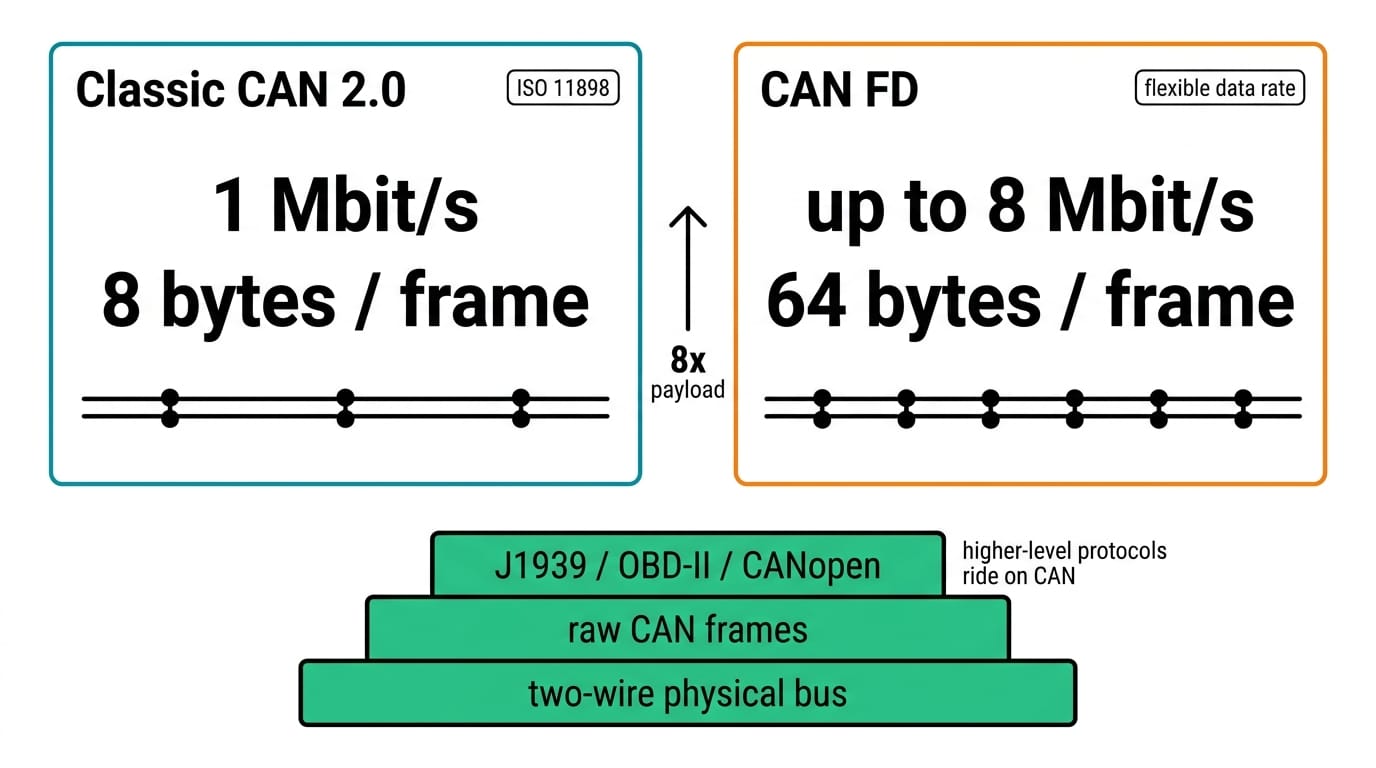
Classic CAN 2.0 tops out at 1 Mbit/s and carries eight bytes per frame. Eight bytes was fine for a brake light in 1991 and cramped for anything moving real sensor data today. CAN FD, Flexible Data-rate, fixes both problems: up to 64 bytes per frame, and a faster data phase that runs several Mbit/s while keeping the same rugged arbitration. Most 2020-and-later vehicles and controllers speak CAN FD, and it runs on the same physical wiring.
How it works
A CAN frame is small and predictable, which is the whole point on a moving machine.
| Element | Classic CAN 2.0 | CAN FD |
|---|---|---|
| Payload per frame | 8 bytes | up to 64 bytes |
| Data-phase rate | up to 1 Mbit/s | up to ~8 Mbit/s |
| Physical layer | 2-wire differential | 2-wire differential |
| Typical use | body electronics, OBD-II | ADAS, telemetry, edge fusion |
Higher-level protocols ride on top of raw CAN. J1939 is the standard on heavy trucks and off-highway equipment, CANopen shows up in robotics and factory motion, and OBD-II is the diagnostic layer every passenger car exposes. An edge computer usually opens the bus in listen-only mode, decodes the frames it cares about with a DBC database, and never transmits, so it reads the vehicle without touching safety-critical traffic.
Why edge AI needs it
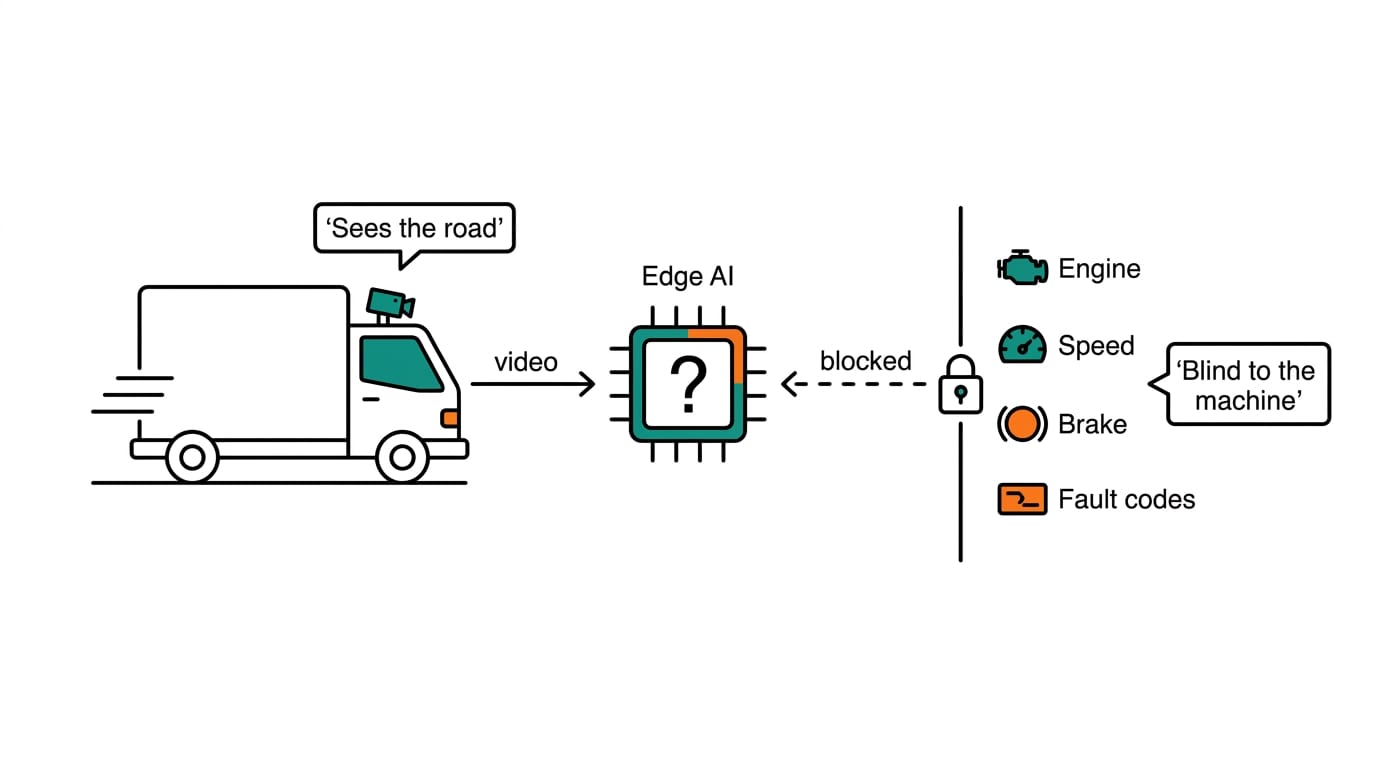
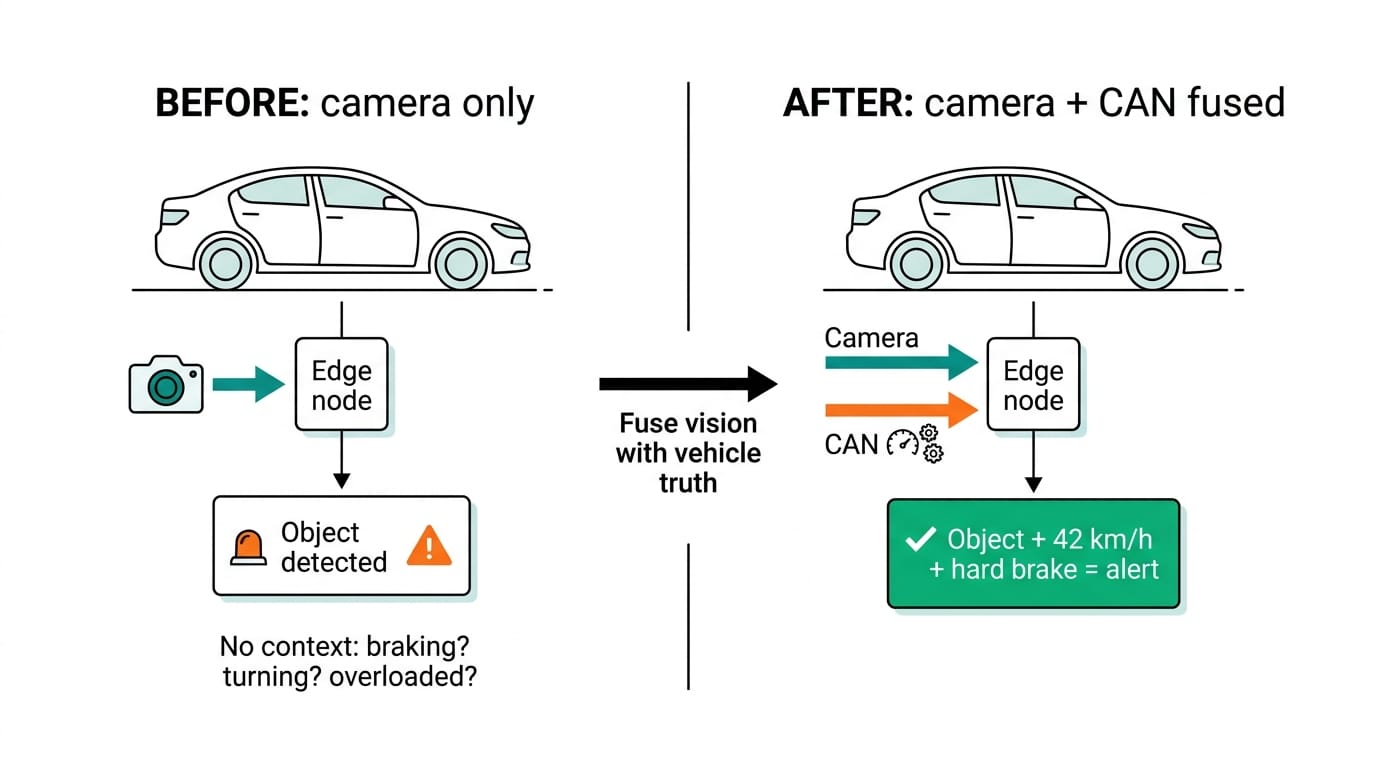
A camera tells you what the road looks like. The CAN bus tells you what the vehicle is doing. Fuse the two and the model gets honest context: steering angle, wheel speed, and gear position let a collision model tell a hard stop from a parked truck, and engine and battery signals let a predictive-maintenance model flag a fault before the driver feels it. Reading fault codes locally also means you log the event the instant it happens, not on the next cloud sync.
There is a second reason. A vehicle edge computer is often the bridge between the CAN world and the IT world, decoding proprietary frames and republishing clean values over MQTT to a fleet dashboard. That job only works if the box has a real, isolated CAN port and enough compute to run inference at the same time.
Which products support it
Neousys builds its in-vehicle line to MIL-STD-810H with 8 to 35V DC input and ignition power control, so the compute survives the same shock, vibration, and dirty power the CAN wiring does. CAN access differs by model:
| Platform | CAN interface | Notes |
|---|---|---|
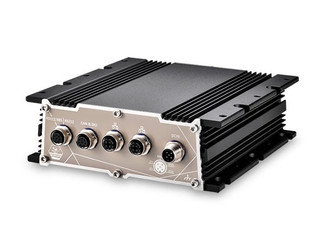
| POC-766AWP | 1x isolated CAN 2.0B via M12 | IP67 sealed, i3-N305, for exposed mounts |
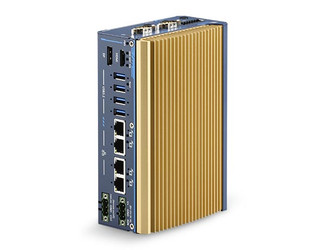
| POC-700 | CAN via mini-PCIe add-in | ultra-compact, isolated DIO, fits tight cabs |
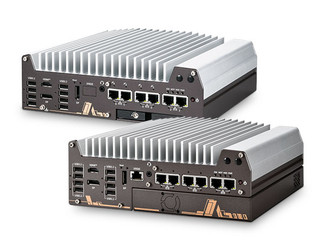
| Nuvo-11000 | CAN via MezIO or mini-PCIe | Core Ultra 200S, 36 TOPS for heavier fusion |
The POC-766AWP is the clean pick when you want CAN on the frame without an expansion card: its M12 A-coded connector carries one isolated CAN 2.0B line alongside isolated RS-232 and RS-422/485, all inside an IP67 shell. The POC-700 keeps CAN on a mini-PCIe card when space matters more than sealing, and the Nuvo-11000 adds a CAN interface through its MezIO or mini-PCIe slots when the model itself needs Core Ultra horsepower.
Related Products
Conclusion
CAN is not glamorous, but it is where the vehicle keeps its truth. Get a real isolated CAN port onto your edge computer, decode the frames that matter, and your AI model stops guessing at context it could simply read. Classic CAN 2.0 still covers plenty of body and diagnostic traffic; reach for CAN FD when you need the bigger payload and the faster data phase.
Follow Neteon on LinkedIn for more protocol deep dives, or reach us at [email protected] or www.neteon.net to talk through a vehicle edge AI build.
FAQs
What is the difference between CAN bus and CAN FD?
Classic CAN 2.0 carries up to 8 bytes per frame at up to 1 Mbit/s. CAN FD (Flexible Data-rate) extends the payload to 64 bytes and runs a faster data phase up to about 8 Mbit/s on the same two-wire physical layer, so it moves more sensor data per message.
Why does a vehicle edge AI computer need CAN bus access?
The CAN bus carries the vehicle's own signals: wheel speed, steering angle, engine and battery data, and fault codes. Reading them lets an AI model fuse real vehicle context with camera inference and log faults locally the moment they occur.
Do Neousys in-vehicle computers have a built-in CAN port?
The POC-766AWP has a native isolated CAN 2.0B port on an M12 connector. The POC-700 and Nuvo-11000 add CAN through a mini-PCIe or MezIO expansion card rather than a fixed port.
What higher-level protocols run on top of CAN?
J1939 is standard on heavy trucks and off-highway equipment, CANopen is common in robotics and factory motion, and OBD-II is the diagnostic layer every passenger car exposes.
Is it safe to connect an edge computer to a vehicle's CAN bus?
Yes, when it reads in listen-only mode. The edge computer decodes the frames it needs with a DBC database and does not transmit, so it never interferes with safety-critical vehicle traffic.
Sources and further reading
Bosch CAN FD protocol overview.
Neousys rugged computer product catalog.
Related Neteon guides
Vehicle Edge AI Power and Ignition Design.
MQTT vs Modbus TCP for Edge AI Pipelines.
Browse the edge ai fundamentals topic hub for more deployment guidance.
About the author and technical review
Author: Olivia Parker covers product-to-market strategy for edge AI, AIoT, and embedded systems.
Technical review: Neteon Industrial Computing Editorial Team. Reviewed August 5, 2026 for source quality, product-specification links, standards references, and clear separation of measured results from reference-architecture assumptions.
Evidence note: Unless a linked primary source explicitly identifies measured field results, performance figures and system outcomes in this article are design targets or planning estimates, not guaranteed results.