TL;DR
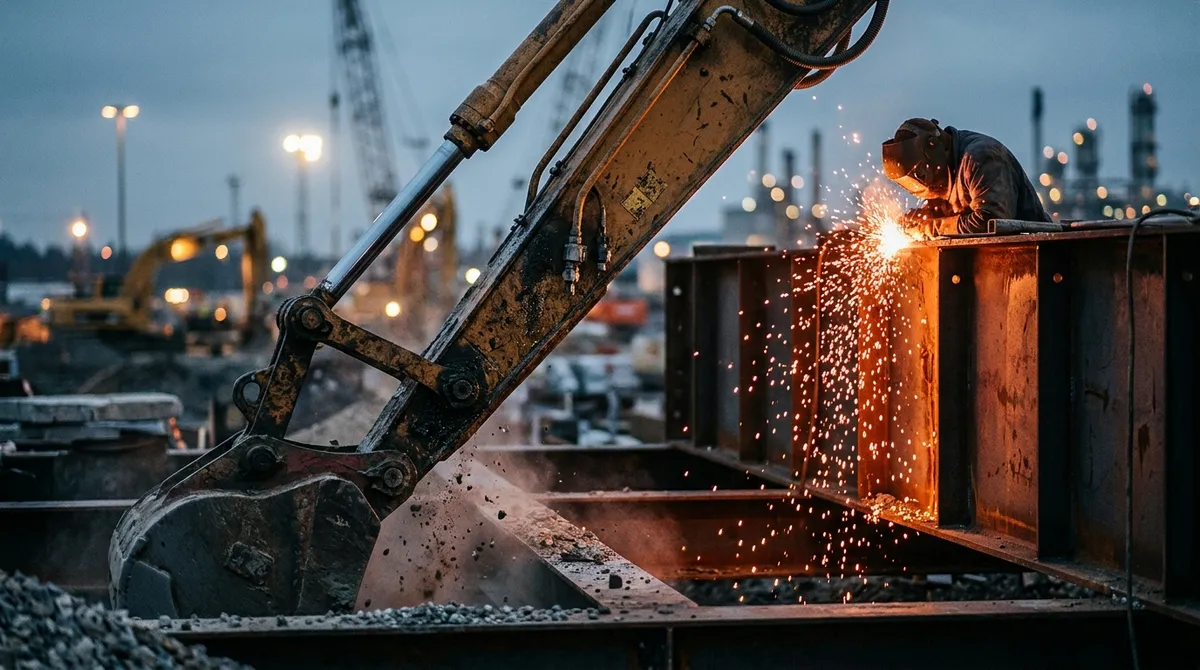
Construction sites are turning into compute sites. Between 2026 and 2030, autonomous machines, on-vehicle machine vision, and predictive maintenance move from pilot fleets to standard equipment options. The hard part is rarely the AI model. It is putting hardware that survives dust, vibration, and wide-range vehicle power right next to the work. This outlook covers what is changing, which workloads land at the edge, and how to spec a computer that outlasts the machine's first engine rebuild.
Overview
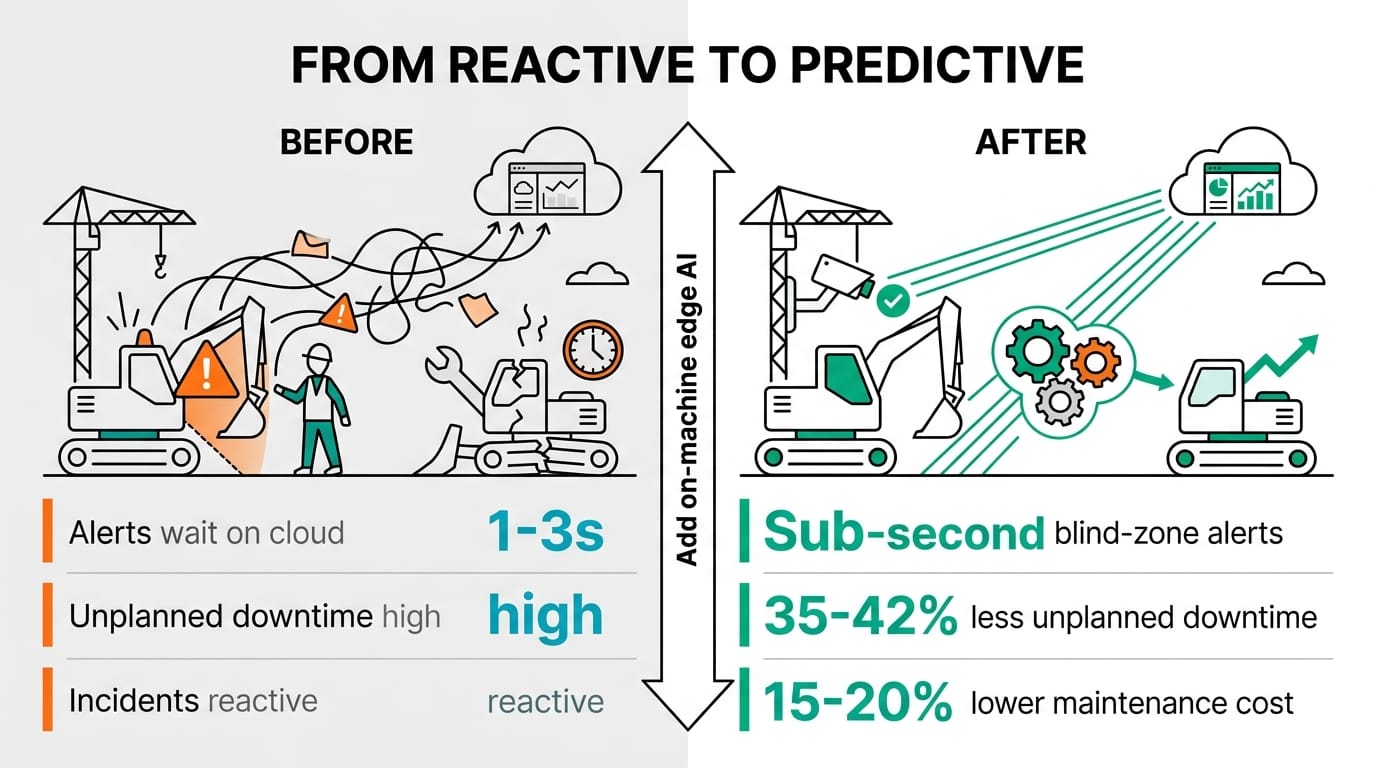
Heavy equipment has run telematics for years, but most of that data went to a dashboard, not a decision. That is the shift now underway. Cameras, LiDAR, and CAN-bus signals feed models that run on the machine itself, so a dozer can flag a worker in its blind zone in milliseconds instead of waiting on a cloud round trip.
Market forecasts put the autonomous construction equipment market near $25.9 billion by 2030, with construction telematics roughly doubling over the same window. The money follows two pressures every site manager knows: skilled labor is short, and safety incidents are expensive.
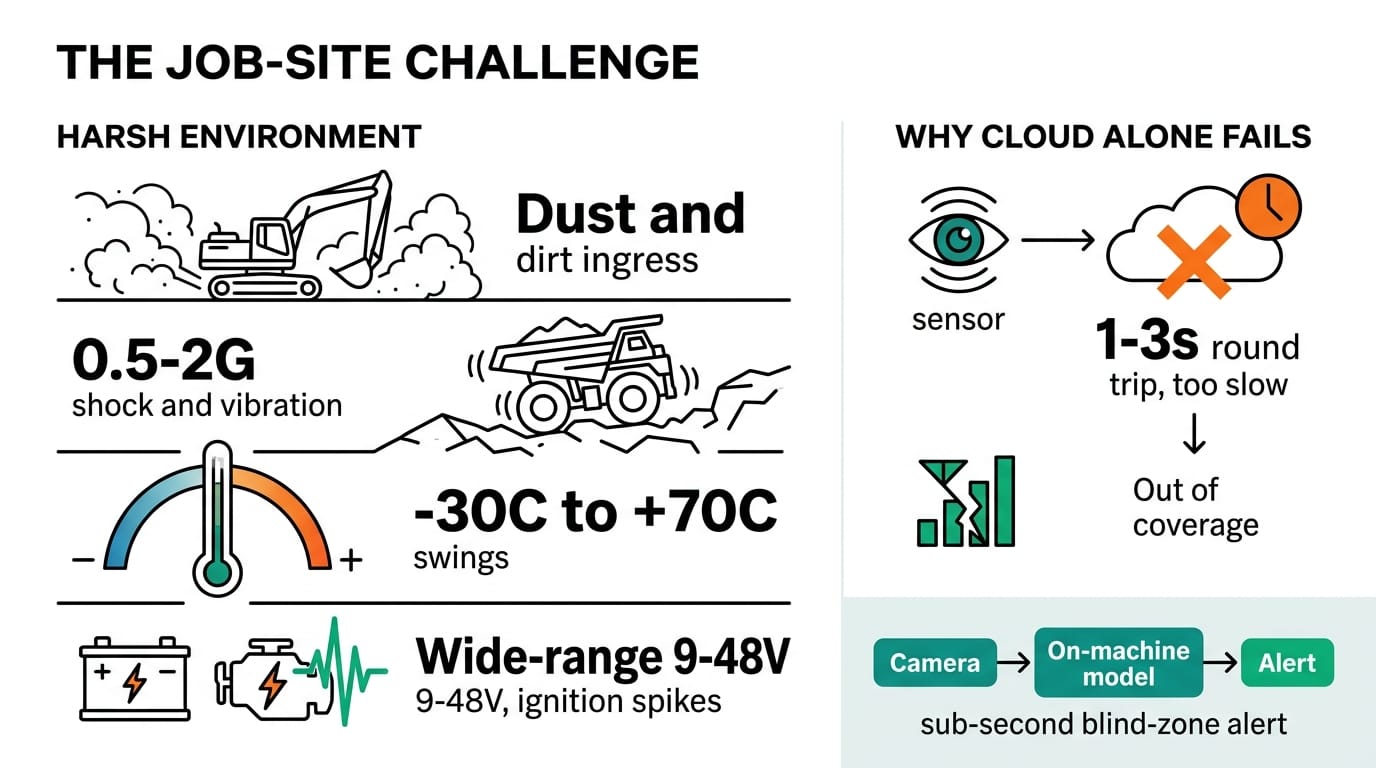
Getting there is a hardware problem as much as a software one. If you are new to spec'ing rugged compute, our complete guide to choosing an industrial edge AI computer walks through the trade-offs, and the reference on industrial ruggedness and compliance standards covers the vibration, shock, and ingress ratings a job site demands. Power deserves its own look, which we give it in wide-range DC and ignition control for vehicle edge AI.
Key trends shaping construction edge AI
Five threads run through the next four years. None of them is science fiction, and all of them put a computer on the machine.
| Trend | 2026 status | 2030 projection | Reported impact |
|---|---|---|---|
| Autonomous and semi-autonomous machines | Mining and quarry pilots | Standard option on large earthmovers | ~9% CAGR toward a ~$26B market |
| On-machine safety perception | Retrofit camera kits | Factory-integrated sensor fusion | Sub-second blind-zone alerts |
| Predictive maintenance | Cloud dashboards | On-machine inference | 35-42% less unplanned downtime |
| OTA updates and fleet management | Early adopters | Fleet default | 15-20% lower maintenance cost |
| Electrification and power management | Diesel-dominant | Growing battery and hybrid share | Wider DC input, tighter thermal budgets |
Predictive maintenance is the quiet winner here. Running the model on the machine, rather than shipping every sensor frame to the cloud, is what makes real-time fault detection affordable on a fleet that spends its day out of cell range.
Impact on edge computing
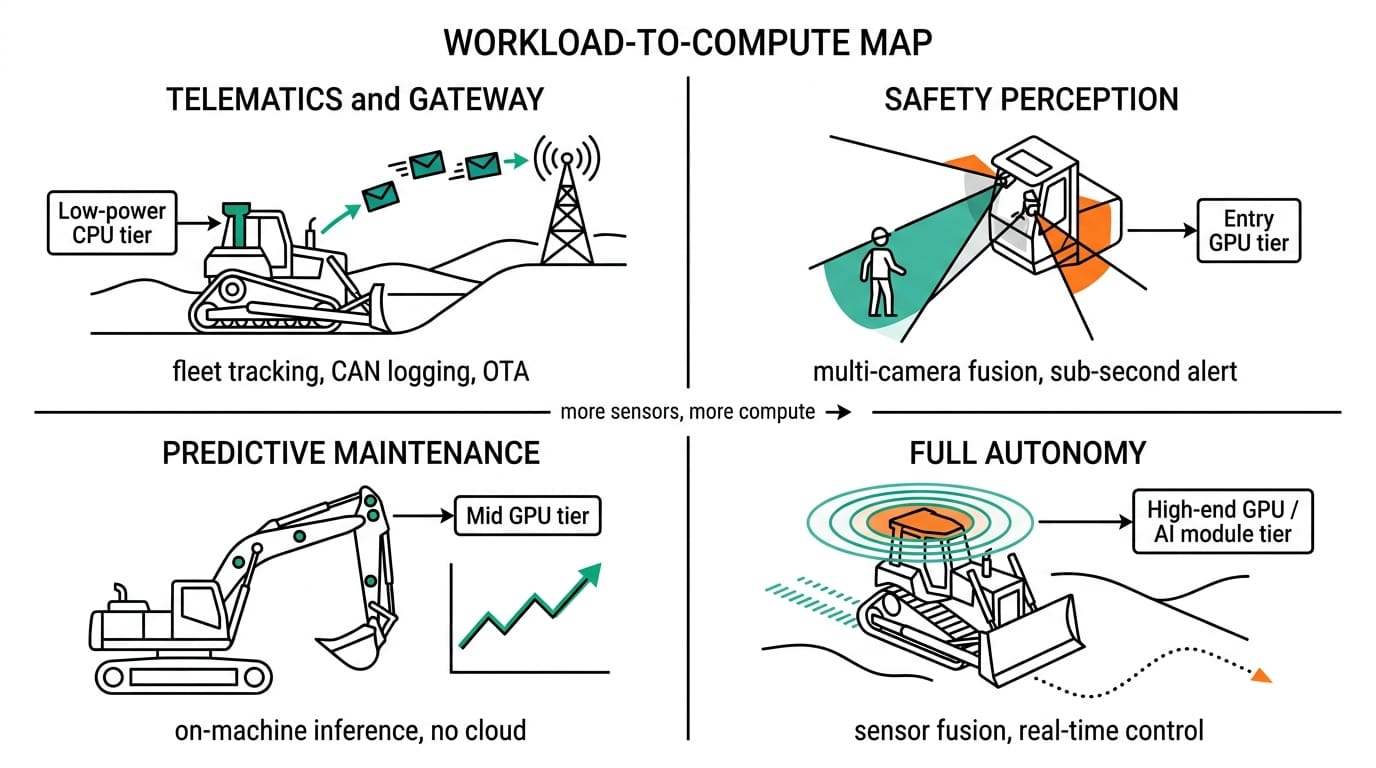
The workloads split cleanly, and the hardware should too. Not every machine needs a GPU, and over-speccing a telematics node wastes power and money.
| Workload | Compute need | Neteon platform |
|---|---|---|
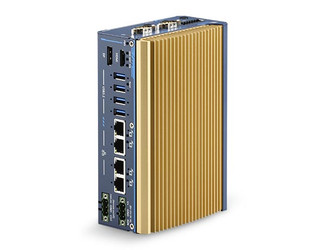
| Telematics, CAN logging, gateway | Low-power fanless CPU | POC-700 |
| Operator assist, single-camera safety | Compact CPU with NPU | Nuvo-11531 |
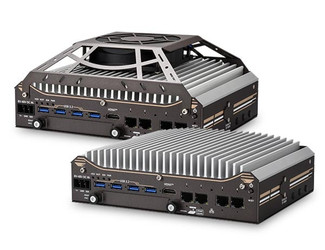
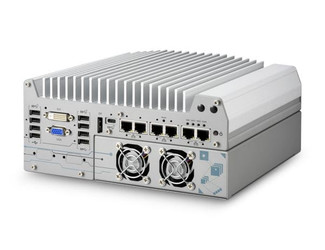
| Multi-camera perception, LiDAR fusion | RTX-class GPU | Nuvo-9160GC |
| Full autonomy stack | NVIDIA Jetson Orin | NRU-220 |
The POC-700 is a palm-sized fanless box for the cab, with wide-range DC input, ignition power control, and CAN FD, which makes it a natural telematics and gateway node. When a machine needs to reason about what its cameras see, the Nuvo-11531 pairs Intel Core Ultra with an integrated NPU in a footprint that still fits behind a seat. For multi-camera or LiDAR fusion, the Nuvo-9160GC adds an RTX-class GPU, and a full self-driving stack points at the Jetson Orin-based NRU-220.
What to watch, 2026 to 2030
Three questions will decide how fast this moves. Standards come first: as safety mandates tighten, perception systems will need documented compliance, not a vendor's word that "we tested it." Power comes second, because battery and hybrid machines change the voltage and thermal picture, and fanless designs with wide DC input handle that better than a box with a spinning fan on a dusty deck. Service life comes third. A computer installed in 2026 should still accept model updates in 2032, so memory headroom and OTA support matter more than a benchmark score you will forget by next quarter.
The realistic near-term win is not a driverless site. It is one retrofit box per machine that logs telematics, watches a blind spot, and updates over the air, earning its keep through avoided incidents and downtime.
Conclusion
Construction's move to the edge is steady rather than sudden, and it rewards equipment specced for a decade instead of a demo. Match the compute to the workload, budget for dust and vibration up front, and plan for updates from day one.
Follow Neteon on LinkedIn for more field-tested breakdowns, or reach us at [email protected] or www.neteon.net to scope a construction edge AI pilot.
Related Products

FAQs
Do construction machines really need on-board AI computers, or is the cloud enough?
Safety-critical perception, like blind-zone detection, cannot wait on a cloud round trip. Running the model on the machine keeps alert latency under a second even where cellular coverage is poor or absent.
What makes a computer construction-grade?
Wide-range DC input with ignition control, tolerance for shock and vibration, a wide operating-temperature range, and dust and moisture ingress protection. Fanless designs remove the fan, which is a common failure point on a dusty deck.
Does every machine need a GPU?
No. Telematics and gateway roles run fine on a low-power CPU such as the POC-700. GPUs like the Nuvo-9160GC or Jetson modules like the NRU-220 are for multi-camera fusion, LiDAR, and full autonomy stacks.
How long should a construction edge computer last?
Plan for the machine's service life, often 7 to 10 years. Memory headroom and over-the-air update support matter more than peak benchmarks, because the box has to keep accepting new models long after install.
What is the most practical first step toward edge AI on a fleet?
One retrofit box per machine that logs telematics, watches a blind spot, and updates over the air. It pays back through fewer incidents and less unplanned downtime well before full autonomy is on the table.
Sources and further reading
OSHA Construction Industry safety resources.
NIOSH Construction safety and health research.
NIST Artificial Intelligence Risk Management Framework 1.0.
About the author and technical review
Author: Olivia Parker covers product-to-market strategy for edge AI, AIoT, and embedded systems.
Technical review: Neteon Industrial Computing Editorial Team. Reviewed August 5, 2026 for source quality, product-specification links, standards references, and clear separation of measured results from reference-architecture assumptions.
Evidence note: Unless a linked primary source explicitly identifies measured field results, performance figures and system outcomes in this article are design targets or planning estimates, not guaranteed results.