TLDR
A container terminal replaced manual gate clerking with camera-based recognition running on a POC-700. The palm-sized fanless computer sits in the gatehouse, reads container ID codes and captures damage photos as trucks roll through, and hands clean records to the terminal operating system. Gate turnaround dropped by roughly 58%, and disputed damage claims fell because every box arrives with a timestamped image set.
Overview
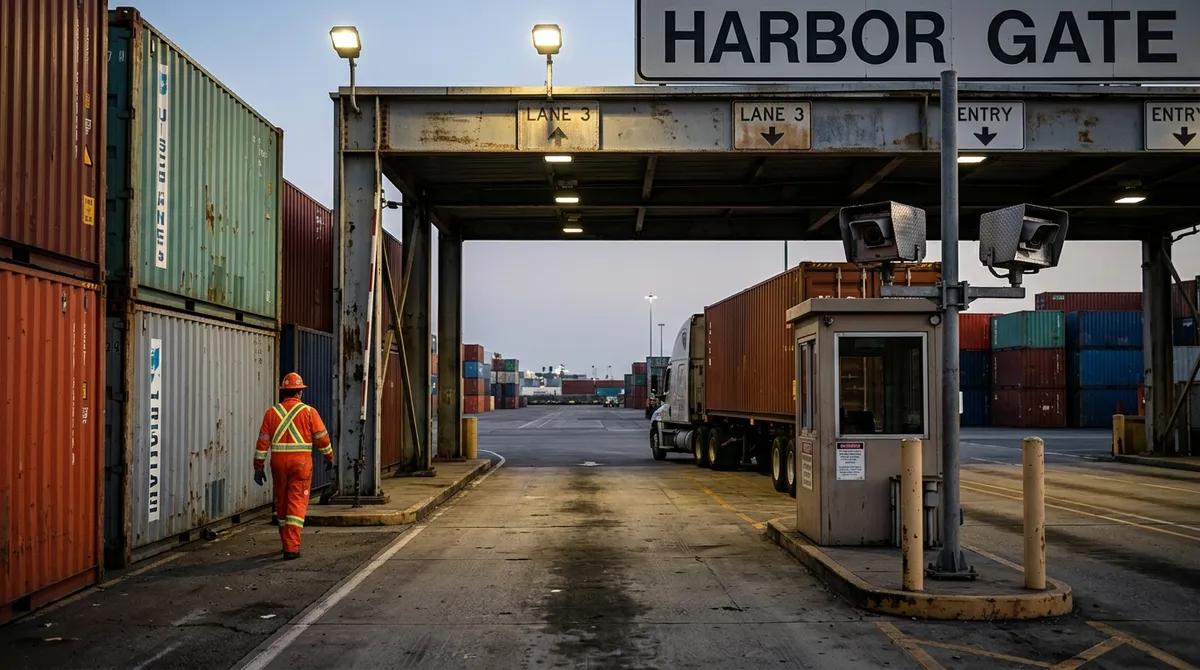
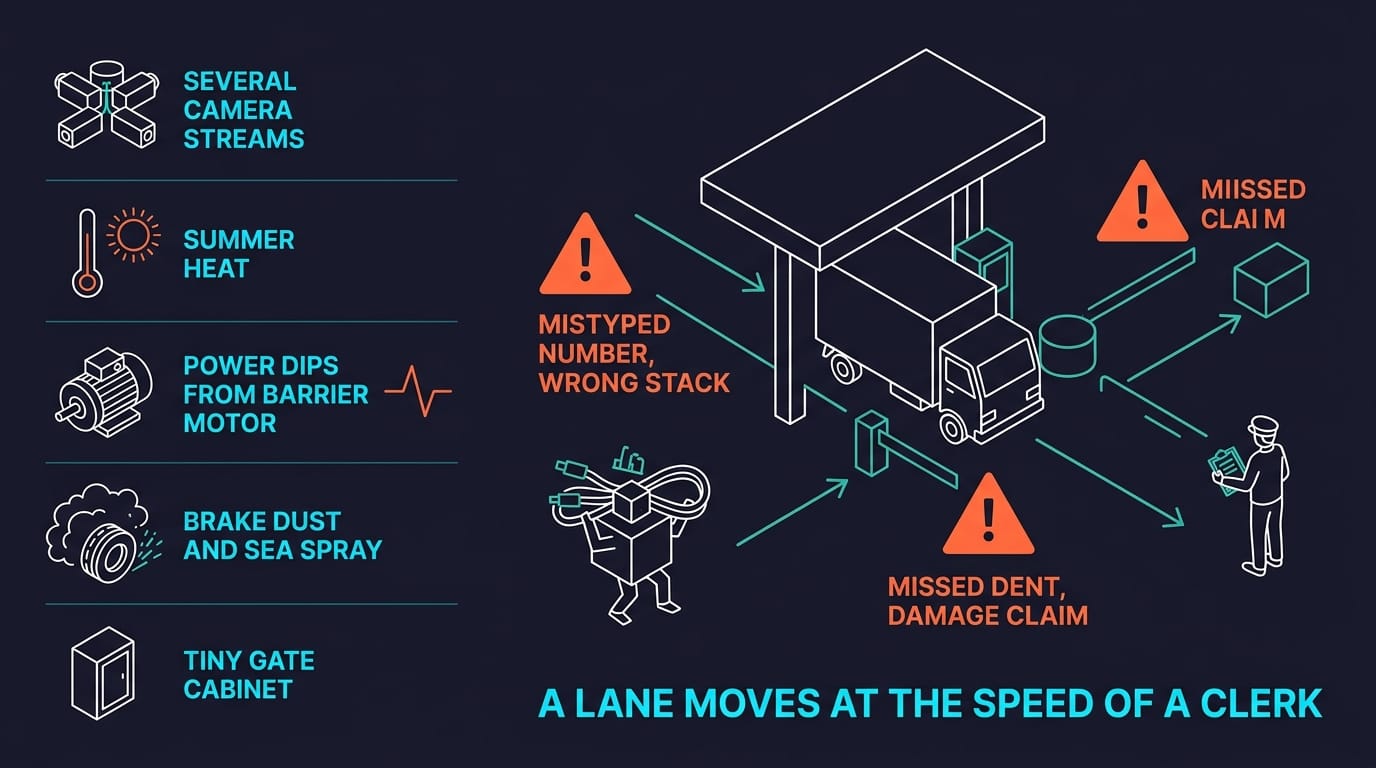
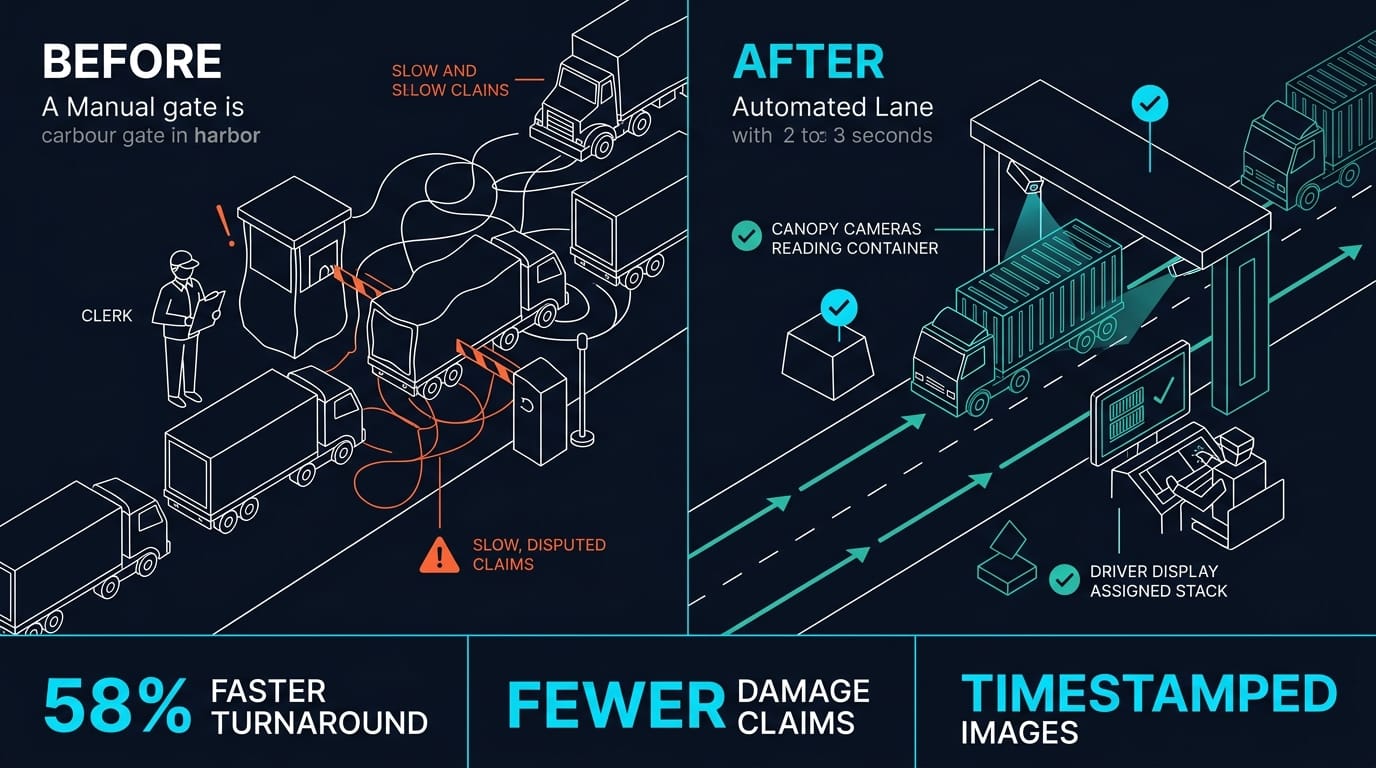
Harbor gates are a choke point. Every truck that enters or leaves a marine terminal has to be identified, its container matched against a booking, and its condition logged. Do that by hand and a lane moves at the speed of a clerk with a clipboard. The deployment documented by Neousys moved that work onto cameras and an edge computer at the lane itself, so recognition happens in the two or three seconds a truck is under the canopy.
We covered the wider picture in our look at edge AI in ports and container terminals. This post is narrower: the box in the gatehouse, why a compact fanless unit fits there, and what changed. The POC-700 is the same compact platform we profiled in urban transit fleets, and a gate lives near salt air and diesel exhaust, so the ruggedness standards that matter for outdoor mounting apply here too.
Challenge
A manual gate is slow, and the errors it makes are expensive. A mistyped container number sends a box to the wrong stack. A missed dent turns into a damage claim months later with no evidence either way. Adding lanes and clerks scales headcount, not throughput.
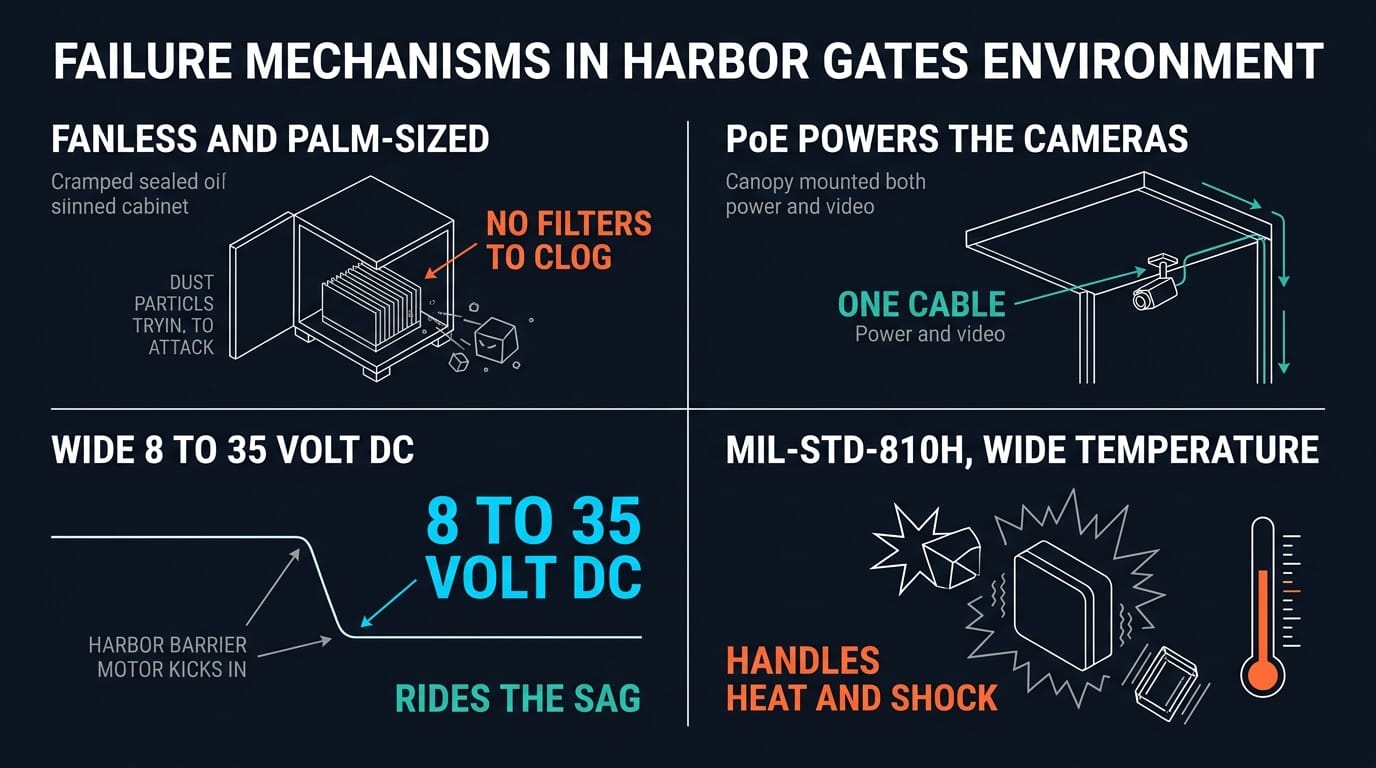
The engineering problem at the lane is space and heat. A gatehouse has a small cabinet, no room for a tower PC, and no clean air for fans in an environment full of brake dust and sea spray. Whatever goes in has to run several camera streams, hold up in summer heat, and keep working when the site power dips.
| Factor | Manual gate | Camera + edge recognition |
|---|---|---|
| Truck dwell at gate | 90-120 seconds | 35-50 seconds |
| Damage evidence | Written note, if any | Timestamped image set per box |
| Cabinet space needed | Booth and desk | Palm-sized DIN or shelf mount |
Solution
Cameras at the canopy feed a POC-700 mounted inside the gate cabinet. The unit runs container-code recognition on the front and rear of each box, matches the read against the booking in the terminal operating system, and stores condition images keyed to the container number. A driver display shows the assigned stack, so the truck moves without a clerk in the loop.
The POC-700 fits because of what it is. It is a fanless design in a palm-sized chassis, built on Intel Alder Lake-N (Core i3-N305 or Atom x7425E), with PoE ports that power the gate cameras over the same cables that carry video. Wide-range DC input from 8V to 35V rides out the voltage sag when a gate barrier motor kicks in, and the fanless build means no filters to clog with dust. It carries MIL-STD-810H for shock and vibration and runs across a wide temperature band, which is what an unconditioned gatehouse actually needs.
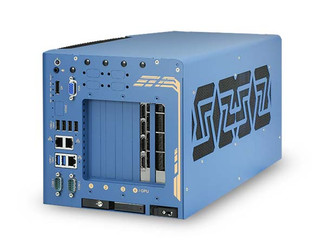
For lanes that need heavier optical-character work or more simultaneous 4K streams, the same software moves to a GPU box like the Nuvo-9160GC without changing the gate design.
| Metric | Before | After |
|---|---|---|
| Gate turnaround | 90-120 s | 35-50 s |
| Lanes per gate clerk | 1 | 3-4 supervised remotely |
| Container reads logged | Partial | Every pass, both ends |
| Damage disputes with evidence | Rare | Standard, image-backed |
Related Products

Conclusion
This gate works because the recognition runs at the lane, in a box small enough for the cabinet and tough enough to ignore the weather. The POC-700 covers the low end, and the same design scales up to a GPU platform when a lane needs it, without redrawing the gate.
Follow Neteon on LinkedIn for more deployment breakdowns, contact [email protected] or visit www.neteon.net for datasheets and to talk through a terminal gate pilot.
FAQs
What does the POC-700 do at a container terminal gate?
It runs camera-based container-ID recognition and damage capture at the lane. As a truck passes, the POC-700 reads the container code on the front and rear of the box, matches it against the booking in the terminal operating system, and stores timestamped condition images keyed to the container number.
Why use a fanless computer at the gate instead of a standard PC?
A gatehouse cabinet is small and full of brake dust and sea spray. The POC-700 is palm-sized and fanless, so there are no filters to clog, and it handles shock, vibration, and a wide temperature range without air conditioning.
How much faster is an automated gate?
In this deployment truck dwell dropped from about 90-120 seconds to 35-50 seconds, roughly a 58% cut, because recognition happens automatically instead of a clerk typing container numbers by hand.
Can the POC-700 handle multiple camera lanes?
It runs several PoE camera streams for a lane and powers those cameras over the same cabling. For heavier optical-character work or more simultaneous 4K streams, the same software moves to a GPU box like the Nuvo-9160GC without changing the gate design.
Does automated recognition reduce damage disputes?
Yes. Every container arrives with a timestamped image set, so its condition is documented on each pass. That replaces a written note, if any, and gives both sides evidence when a damage claim comes up months later.